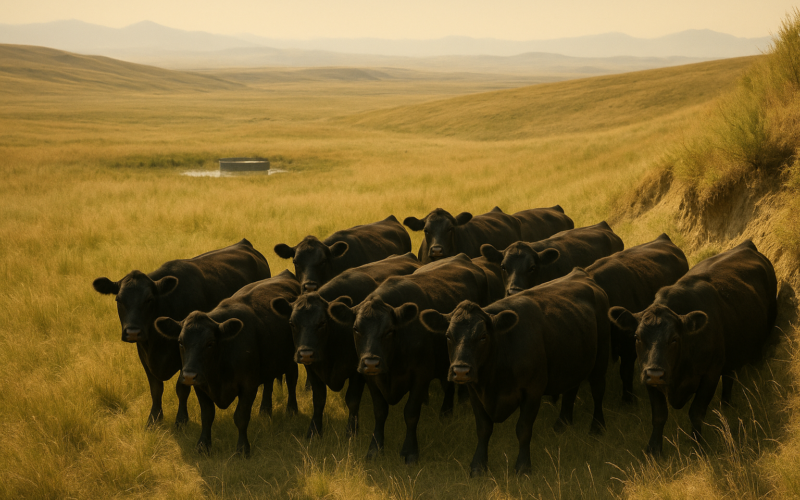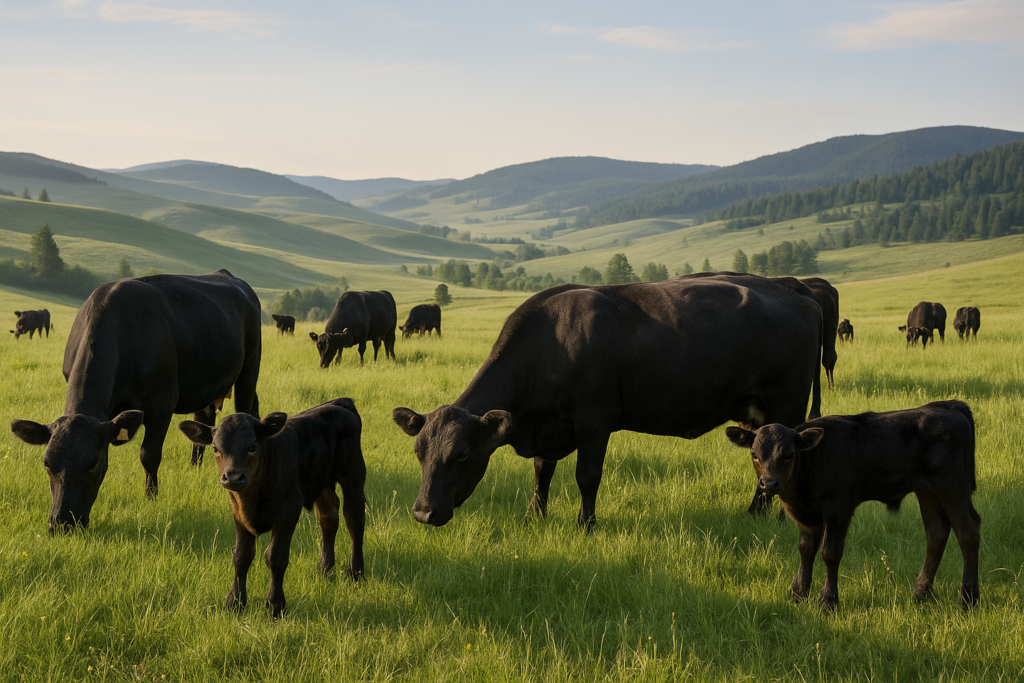
Walk a mid-June breeding pasture and the mature cows tell you one story: slick, deep-ribbed, half of them already bred back. Then you find the two-year-olds. Ribby down the flank, hips showing, a big hungry calf pulling on them every couple hours. Those first-calf heifers are the ones that lose you a breeding season, and the trouble usually starts long before you ever notice it.
A heifer that calved as a two-year-old is doing three jobs at once. She’s still putting on her own frame, she’s milking a fast-growing calf, and she’s supposed to cycle and settle inside a breeding window that closes fast. A mature cow only has to keep herself and milk. That’s the whole problem in one sentence. The young cow has the least body reserve to draw on and the most demands pulling on it, so she’s the first one to quit cycling when feed gets tight.
Why she’s the first to come up open
Cows have a pecking order when it comes to getting pregnant. A cow in good flesh and gaining weight will cycle early and breed on the first or second heat. A thin cow, or one that’s still losing condition after calving, pushes her whole reproductive system to the back of the line. Her body treats milking that calf and staying alive as the priorities. Cycling is what gets shut off first.
The two-year-old lands in the worst spot on both counts. She calves in later condition to begin with because she spent the winter growing instead of just maintaining. Then she’s asked to rebreed on roughly the same schedule as a mature cow that’s carrying a full fat cover. She needs to be back on a heat cycle within about 80 to 85 days of calving to hold a 365-day interval and stay in the herd. If she calved late in the spring, that clock is already tight in June.
You won’t see the damage now. She looks like a young cow that’s a little thin, which is normal, so it’s easy to walk past. The bill comes due at fall preg-check, when a run of your best-bred replacements comes up open and you’re loading two-year-olds you spent real money developing.
What actually moves the needle in June
The single most useful thing you can do is separate them. Run the first-calf heifers as their own group through breeding if your setup allows it, and put them on the best grass you’ve got. When they run with the mature cows they lose. Older cows boss them off the mineral, off the water, and off the best feed, and a timid two-year-old with a calf at side will stand back and take the leftovers.
Watch their condition, not just their bellies. A grass belly hides a thin topline. Run a hand across the ribs and hooks if you’re not sure. What you want is a heifer holding steady or gaining a little through the breeding season, not one sliding backward while she milks. On green June grass in a decent year that’s doable, but in a dry spring the young cows are the first to fall off, and that’s exactly when you might consider pulling their calves off a little earlier or offering some supplement to take pressure off the heifer.
A few other things stack in your favor:
- Give them a shorter, front-loaded breeding season if you can, but only if they’re cycling. A short season on thin heifers just makes more opens.
- Keep good mineral in front of this group specifically, in a spot they’ll actually use, since they get pushed off the mature-cow feeder.
- Don’t overload them with a heavy-milking bull’s daughters and then short them on feed. Milk you can’t feed is milk that keeps them open.
- If you synchronize or AI, the two-year-olds are the group where nutrition makes or breaks your conception rate.
Think a year ahead
The heifer that’s struggling to breed back in June didn’t get there in June. She got there by calving in thin condition, which traces back to how she was developed and fed as a bred yearling over the winter. Heifers that hit calving in solid shape have the reserve to milk and still cycle on time. The ones that calve thin are chasing that deficit all summer and usually don’t catch up.
So the June job is two-sided. Take care of this year’s two-year-olds so you don’t ship them open, and take a hard look at how you’re wintering the next set of bred heifers so you’re not fighting the same fire next June. A first-calf heifer that breeds back on time turns into your most productive cow. One that comes up open at two is money out the gate, and it’s almost always a nutrition problem wearing a fertility disguise.