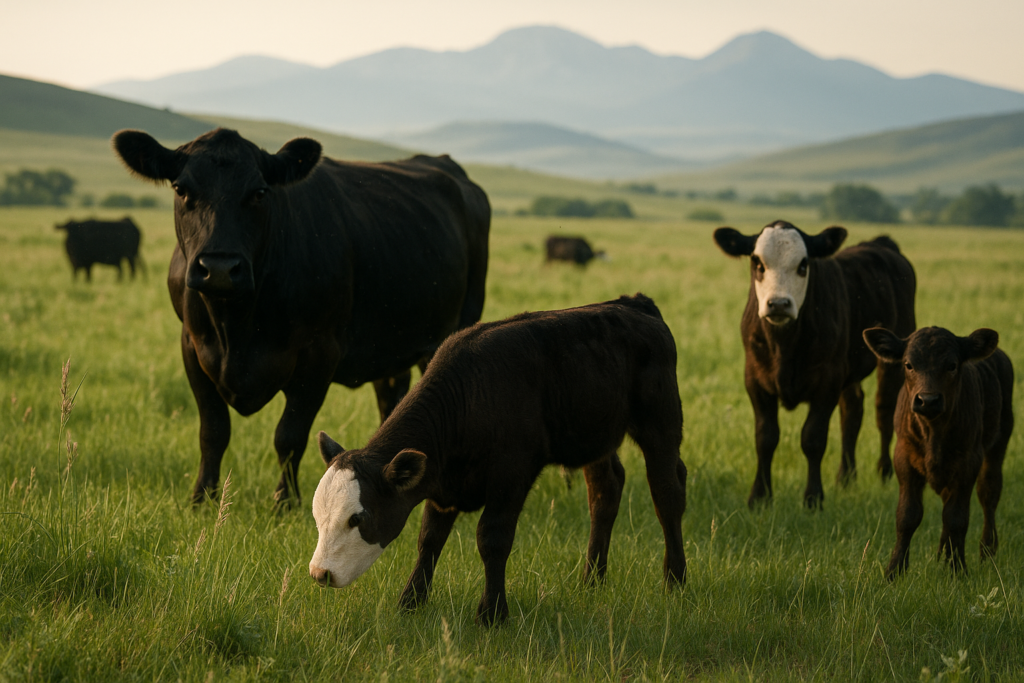
You ride through the pairs on a bright June morning and one calf hangs back with its head cocked and a wet streak down one cheek. Easy to write off as dust or a foxtail. Come back in three days and that eye is clouded over blue-white, squinted shut against the sun, and now two of its buddies are watering too. That’s pinkeye, and by the time you can see it plain in the pasture it’s already moving.
Infectious bovine keratoconjunctivitis is the long name. It’s a bacterial infection of the eye, and it’s one of the most common summer headaches on Montana grass. A bad outbreak knocks the shine off a whole calf crop. Ulcerated eyes hurt, so calves quit grazing hard and quit sucking as often, and the weight they don’t put on in July and August is weight you can’t buy back at weaning. A calf that goes blind in one eye is worth less, and one that scars over both is worth a lot less.
What actually spreads it
Pinkeye needs two things working together: something to irritate the eye and something to carry the bug from one animal to the next. In June and early summer both show up at once.
The irritants are everywhere this time of year. Ultraviolet light off long days beats on the eye, especially on calves with no pigment around the eyelid — those bald-faced and white-faced calves take the worst of it. Dust off dry two-tracks, seedheads on cheatgrass and brome that scratch the cornea when cattle graze through tall stuff, and the tail end of a windy, dusty spring all set the stage. A scratched, weepy eye is an open door.
Then the face fly walks in. Face flies don’t bite like horn flies do — they feed on the moisture around the eyes and nose. One fly feeds on an infected calf’s weeping eye, flies to the next calf, and carries the bacteria straight to fresh cornea. That’s why pinkeye runs through a bunch the way it does. It isn’t the wind or bad luck. It’s flies moving tear to tear across the pasture, and it’s why the outbreak tends to blow up right when face fly numbers climb.
Catch the first ones, and don’t let flies do the spreading
The single best thing you can do is find the early cases and pull them before the fly traffic turns one calf into ten. That first stage — a squint, a tear streak, a calf that keeps its bad side away from the sun — is the window. Treat then and you often clear it with one shot of a long-acting antibiotic labeled for it. Wait until the eye is ulcered white and the calf is head-shy and you’re looking at a longer fight and a scar that may never fully clear.
Talk to your vet about which antibiotic and dose before you’re standing in the chute in July trying to remember. A patch glued over the bad eye takes the sun and the flies off it and lets a treated eye heal in the shade of its own eyelid. It’s a chore to apply but it works, and it keeps that calf from being a walking fly station for the rest of the herd.
Cutting the fly pressure is the other half. The same face flies that spread pinkeye are the ones you’re already fighting, so the tools overlap: fly tags in both ears at turnout, pour-ons or a back rubber and dust bag set where cattle have to use it, or an insecticide the cows self-apply going to water and mineral. Tags lose punch by late summer, so timing them for when fly numbers peak matters more than hanging them the day you brand. Rotate the chemical class year to year so the flies don’t outrun it.
Take some pressure off the eye itself
You can’t shut off the sun, but you can knock down the things that scratch and irritate. Clipping or grazing off rank, seedy pasture before it heads out means fewer seedheads jabbing eyes. Where you can, keeping cattle out of dusty bunching spots helps. Good trace mineral through the summer — the same program that carries breed-up — keeps the eye and the immune system in better shape to shrug off a mild case.
There are pinkeye vaccines, and some outfits swear by them while others see mixed results, partly because several bug strains cause the disease and a vaccine only covers what’s in it. If you fight pinkeye every summer, it’s worth sitting down with your vet about whether an autogenous or commercial product fits your herd. But no vaccine replaces catching the weepy calf early and keeping the flies off the herd. Ride the pairs with pinkeye in mind this month, and you’ll pull the first case instead of doctoring the twentieth.