Walk out to the herd on a warm June morning and look at the backs and shoulders of your cows. If you see a dark, shifting crust of flies that lifts when the tail swats and settles right back down, you’ve got horn flies, and you’ve probably got more than you think. These are the small flies that sit head-down on the topline and belly, feeding on blood twenty, thirty, forty times a day apiece. One fly is nothing. A few hundred on a cow, day after day, is a slow leak.
The damage doesn’t announce itself. There’s no dead calf in the draw, no lame cow you have to doctor. Cattle just spend the summer bunched up, standing in ponds and shade, tails going, grazing less than they should. The calf that should have put on another three-quarters of a pound a day gives some of it back to flies and to the energy the cow burns fighting them. You don’t see it until weaning weights come in lighter than the grass and the genetics said they ought to be.
Learn what the load actually looks like
You don’t need to count every fly. Pick a few animals in different parts of the bunch and eyeball the topline and sides. A light load looks like scattered pepper. A load worth spending money on looks like the flies are stacked shoulder to shoulder, moving in a mass. When cattle start clustering on the highest, breeziest ground during the heat of the day, or crowding the water and standing belly-deep, the flies are winning.
Bulls and the older, darker cows usually carry the heaviest loads, and they’ll seed the rest of the herd. A herd bull covered in flies is worth watching for another reason: a fly-tormented bull spends his energy on his own hide instead of on cows, right in the middle of breeding season.
Pick a delivery method and start before the peak
The trouble with horn flies is that they build fast. A cow drops flies onto fresh manure, the maggots develop in the pat, and a new generation is on the wing in a couple of weeks. By July and August the numbers can run away from you. Getting something working in June, when the population is climbing but still catchable, is worth more than a heavier hit in August.
You’ve got several ways to deliver control, and each has a place:
- Insecticide ear tags. Cheap and easy if you’re already running cattle through the chute at turnout or branding. The catch is timing. Tag too early in spring and the tags are half spent before fly season peaks. Tag too many years running with the same chemical family and the flies quit dying. Pull the tags in fall so they don’t keep dosing a low fly population and breeding resistance.
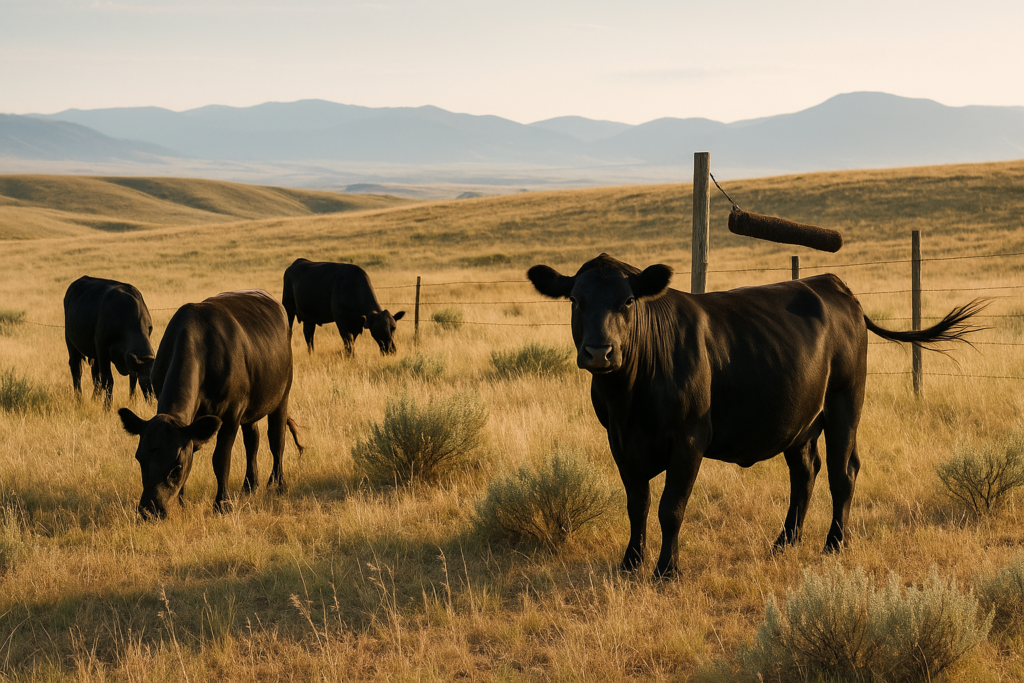
- Backrubbers and dust bags. Hang them where cattle have to pass through daily, on the trail to water or a mineral feeder, and they self-treat every day. They only work if cattle actually use them, so put them somewhere the herd can’t go around.
- Pour-ons and sprays. Good for knocking a load down fast, but the effect is short and you have to gather cattle to reapply, which nobody wants to do all summer.
- Feed-through products in mineral or a supplement. These pass an insect growth regulator through the animal into the manure, so the larvae never mature. They only touch the flies breeding in your own pats, not the ones drifting over from the neighbor, and they only work if cattle eat the mineral consistently through the summer. If your cows quit the mineral when June grass comes on, this won’t do much.
Rotate what you use and don’t fight it alone
Resistance is the real long-game problem. Horn flies have gotten used to the pyrethroid tags on a lot of outfits because that’s all anybody used for years. Switch chemical families year to year, or pair a tag with a different-mode backrubber, so you’re not selecting for a fly that shrugs off your only tool. Read the active ingredient, not just the brand on the box.
It also helps to remember these flies breed in fresh manure and stay close to the herd their whole life. Cleaning up around the corrals and not letting cattle loaf all summer in the same wet, manure-packed corner cuts down the nursery. On big country you’re not going to sanitize a pasture, but the principle holds: the fewer good places you leave for them to hatch, the less you’re spraying to catch up.
None of this is glamorous work, and the payoff hides in a weaning weight you can’t compare against the calf you didn’t grow. But a cow that grazes in the open in July instead of standing in the pond is putting groceries into a calf, and that’s the whole point of the summer.