Every June a few cows die on foothill range from the Rocky Mountain Front to the Absarokas, and the owner walks up on them the same way: down on the brisket, legs folded, sometimes still alive and trembling, sometimes stiff by the time the horse gets there. No wire down, no bloat from legumes, no sign of a fight. What killed them came up green in the draws and on the north slopes, and most years the cow ate a lethal dose of it before it ever showed a blue flower.
That plant is larkspur, and it’s about the most reliable killer on Montana summer range. It doesn’t get the attention water hemlock or blue-green algae does, partly because it works quietly. A cow grazes it, wobbles, goes down, and dies of respiratory failure out of sight in a coulee. Unless you’re riding that country close, the first you know is a carcass and a coyote.
Why the timing fools you
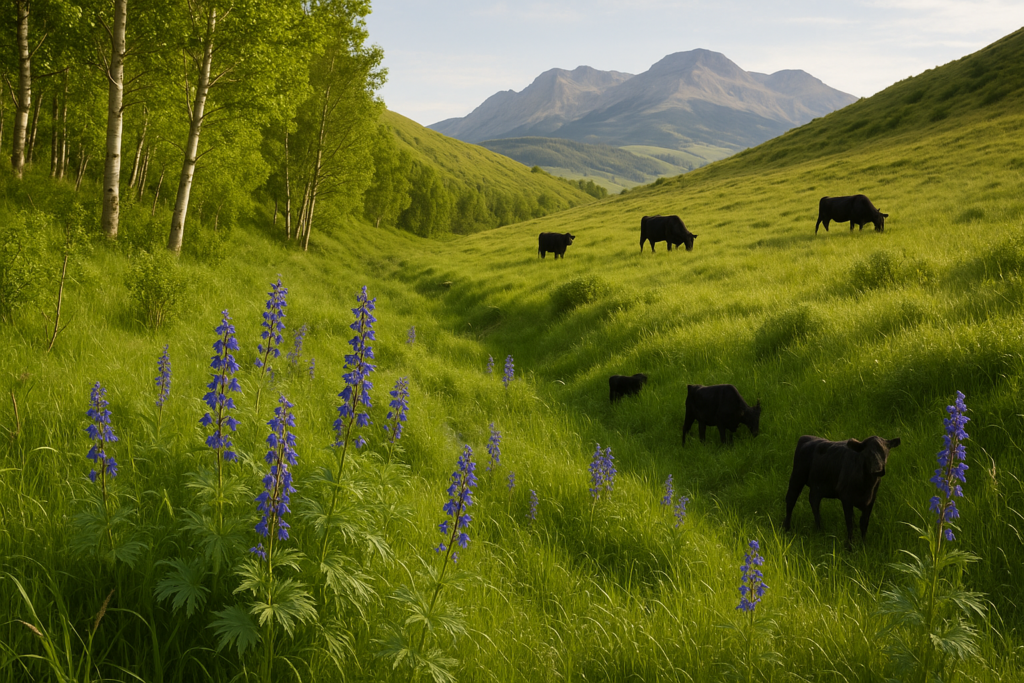
There are two kinds that matter here. Low larkspur comes on early, greens up on open slopes as the snow pulls back, and is usually gone by the time grass is up good. Tall larkspur is the summer problem — it grows in the wetter draws, aspen pockets, and along seeps, and it’s just hitting its stride in June.
Here’s the part that trips people up. Larkspur carries the most toxic alkaloids when it’s young and leafy, before and during early bud. That’s the same stage when it’s palatable and when there isn’t much else green in a shaded draw. As the plant matures into full bloom and then sets pods, the toxin concentration per pound drops. But the plant gets bigger, so total poison in a mouthful can stay dangerous well into the pod stage. The dangerous window isn’t a single date — it stretches from green-up through pod, and it shifts with elevation. A cow can graze low, safe-looking larkspur at turnout and be fine, then hit a tall-larkspur draw three weeks later at exactly the wrong stage.
Cattle are the animals that die. Sheep tolerate larkspur at levels that would kill a cow, which is one reason old outfits ran sheep to clean up patches. Horses fall somewhere in between and rarely eat enough. It’s your cows and yearlings you have to watch.
What it looks like on the ground
Larkspur poisoning is a nerve-and-muscle problem. The alkaloids block the signal between nerve and muscle, so the animal goes weak from the ground up. You’ll see a stagger, a wide stance, muscle twitching along the flanks, then the cow buckles. She may get up and go down again. What actually kills her is the diaphragm quitting — she suffocates, or she bloats because she can’t stay upright and belch, and the bloat finishes her. A cow found dead on her sternum after a good graze in larkspur country tells the story without a necropsy.
Stress makes it worse. Cattle that get worked up eat more in a hurry and then have to move, and both raise the odds of going down. Trailing a bunch through a larkspur draw, gathering hard, or pushing pairs across that country when they’re hungry is asking for a wreck.
How to keep cows out of the worst of it
- Learn where your patches are and time your grazing around them. If a pasture has a bad tall-larkspur draw, graze it early when the larkspur is short and cattle have better feed elsewhere, or hold cattle off until the plant is past pod and drying out, when the risk finally drops.
- Keep good grass in front of them. A cow with her belly full of green grass isn’t hunting larkspur. The dangerous grazing happens when the palatable feed is short and the larkspur is the greenest thing in the draw.
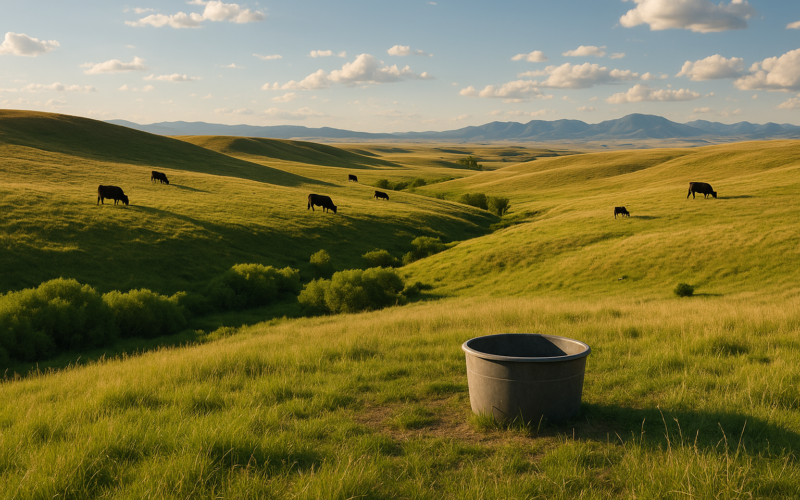
- Don’t gather or trail hard through larkspur ground, and don’t put salt, mineral, or water where it pulls cattle into a patch. Move the attractants to clean ground and let the draw sit.
- Ride the country. There’s no substitute for putting eyes on the wet draws in June and knowing what’s coming up green in them.
If you find a cow down and suspect larkspur, keep her calm and don’t force her to move — exertion is what tips a poisoned animal into respiratory collapse. Try to keep her upright and off her side so she can belch. Some pull through if the dose wasn’t quite fatal and they’re left alone. Call your vet before you dump money into treatment, because options are limited and handling itself is a risk.
Larkspur isn’t going to leave your foothill draws. The cattle that come through June clean are on outfits that know where the plant is, watch the stage it’s in, and keep enough grass under their cows that the blue flowers aren’t worth walking to.