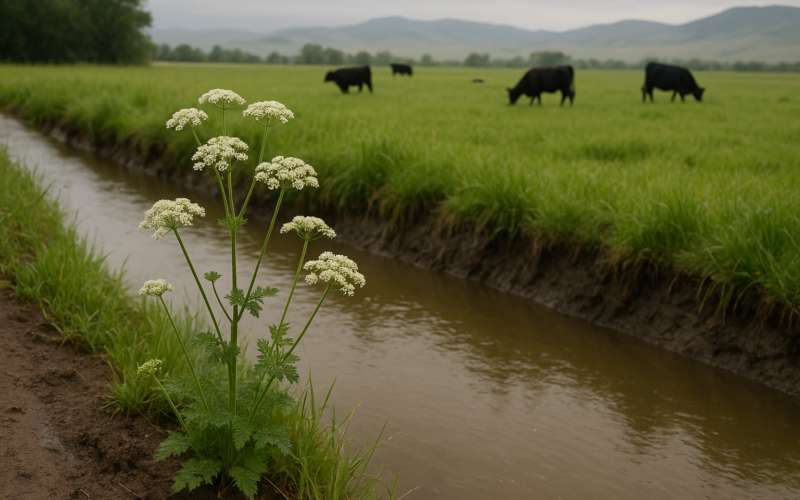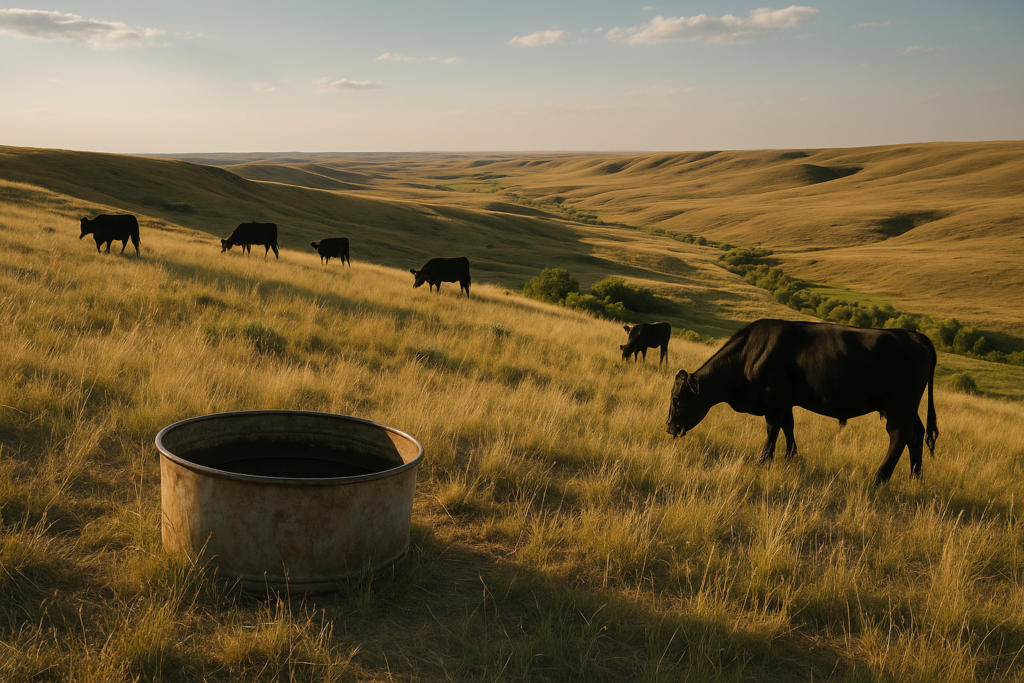
Turn a bunch of pairs into a section of rough country and watch them for a week. They find the creek, the flat green bottoms, the shade, and they stay. By August the riparian ground is chewed to the roots and the south ridges a half mile up still carry knee-high grass nobody has touched. You paid grazing fees or ate the carrying cost on the whole section, and the cattle used maybe a third of it.
That uneven use isn’t a cattle problem. It’s a management problem, and June is when you fix it, before the herd sets a pattern they’ll keep till you gather in the fall.
Cattle Are Lazy on Purpose, and You Can Use That
A cow does the least work she can to fill up and get to water. On flat ground with water in the middle she’ll graze pretty evenly. Add slope, distance, and a cold creek at the bottom of a coulee and she quits climbing. Most of the research on this points the same direction: cattle drop off hard once the grass is more than a few hundred yards from water, and they mostly quit grazing slopes past a certain steepness. They’ll walk down to water and shade all day long. They won’t walk up to grass unless you give them a reason.
The reason is salt and mineral. Cattle will travel for it. Set your salt and mineral where you want them to graze — up on the benches, out on the ridges, away from the water and the shade — and they’ll go get it, and they’ll graze on the way there and on the way back. Set it down by the creek where it’s easy to haul, and you’ve just told them to stay in the bottom and hammer it.
Where the Salt Goes
Put it a good ways off water. Quarter mile is a fair start on open country; you can push it farther on ground that grazes light. The idea is to make cattle leave the water to get to the mineral, so they graze the middle ground both directions instead of standing on the creek.
A few things that work:
- Set salt and mineral on the ridges and high benches, on ground that’s grazing poorly, not where the grass is already short.
- Move it. Once cattle have grazed down the country around a salt ground, drag the tubs or troughs to a new spot they haven’t used. Salt is a tool you steer with, not a thing you set once and forget.
- Keep it off the riparian ground entirely. Salt near a creek concentrates manure, hoof damage and grazing exactly where you least want it.
- Don’t bunch all of it in one place. Spread stations across the pasture so cattle don’t have to travel back to a single point.
Same logic runs the other way with water. If you’ve got the means — a solar well, a stock tank on a far pasture, a bit of pipe off a spring — a water point on the dry side of a section will pull cattle onto grass they otherwise never see. On a lot of Montana summer country, one reliable tank in the right spot does more for grazing distribution than any amount of salt.
Fence, Rubbing Points, and the Long Game
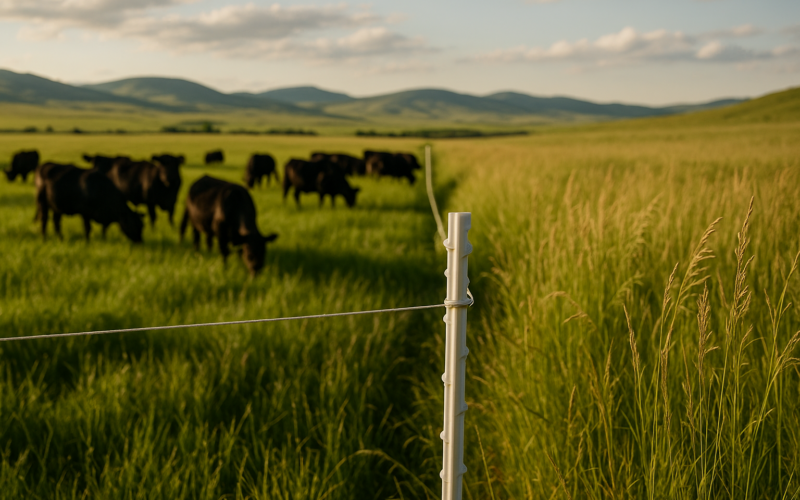
Where you can’t develop water, temporary electric fence does the same job by taking the easy ground away. Fence the cattle out of the creek bottom for a stretch, make them use the uplands, then let them back down. Even a single strand of poly wire across the mouth of a coulee changes where a herd spends its day.
Shade and rubbing oilers pull cattle too. If your fly oiler sits by the water, that’s one more reason they never leave. Hang it out where you want traffic.
None of this is quick. You’re training a bunch to use a pasture the way it ought to be used, and it takes a couple of seasons of moving salt and paying attention before the pattern holds. But the payoff shows up in grass. Even use means more total feed, less overgrazing on the sensitive ground, and range that comes back stronger the next spring. The cattle will graze the easy third of a section for free. Getting them onto the other two-thirds is worth a load of salt and an afternoon with the pickup.