Most outfits set out mineral at turnout and figure the job’s done. The tubs go out with the cows, somebody glances at them from the truck for a month, and by mid-July half of them are empty and the other half are full of rainwater and gravel. Meanwhile the cows are breeding, the grass is starting to lose its early-spring punch, and the mineral program that should be carrying them through both is running on autopilot.
Green June grass looks like it has everything a cow needs, and for a few weeks it nearly does. The trouble is what it’s short on doesn’t show up until fall, when you’re standing at the chute finding open cows you can’t explain. A lot of those come back to what was in the tub — or what wasn’t.
Phosphorus is the one that quietly costs you
Montana range is low in phosphorus over most of the state, and it gets lower as the season goes and the grass matures. Phosphorus is tied straight to reproduction. A cow short on it can cycle late, breed back slow, or not settle at all, and she won’t look sick doing it. She’ll hold decent flesh and raise a good calf right up until you preg-check her and find nothing.
The window that matters most is the 60 to 90 days around breeding — roughly the stretch you’re in right now. That’s when a phosphorus shortfall turns into next year’s short calf crop. A loose mineral with a real phosphorus level, not just salt with a fancy tag, earns its keep in June whether you can see it working or not.
Watch the guaranteed analysis, not the color of the bag. Salt is cheap filler, and a mineral that’s mostly salt reads impressive on the label right up until you get to the phosphorus and copper numbers. You’re buying those, not the sodium.
Trace minerals: copper, selenium, and the ones that hide
Copper and selenium are both spotty in Montana forage, and both matter for breeding, immunity, and calf vigor. Selenium-deficient country is well mapped, and white muscle disease in calves is the loud version of a problem that’s usually running quiet in the cows. If you don’t know where your ground sits, a forage test or a few blood samples through your vet will tell you more than guessing off the neighbor’s program.
High-sulfate stock water throws another wrench in it. Sulfates tie up copper and can pull a cow down even when she’s eating a mineral that looks adequate on paper. If your dams are getting alkali as they draw down this summer, your copper need goes up, not down. That’s a case where the standard mineral isn’t enough and a higher-copper or chelated product is worth the extra money.
Getting them to eat it — and eat the right amount
A mineral only works if cows take the target intake, usually somewhere around two to four ounces a head a day depending on the product. Most problems are one of two directions: they won’t touch it, or they gorge on it and clean a tub in three days.
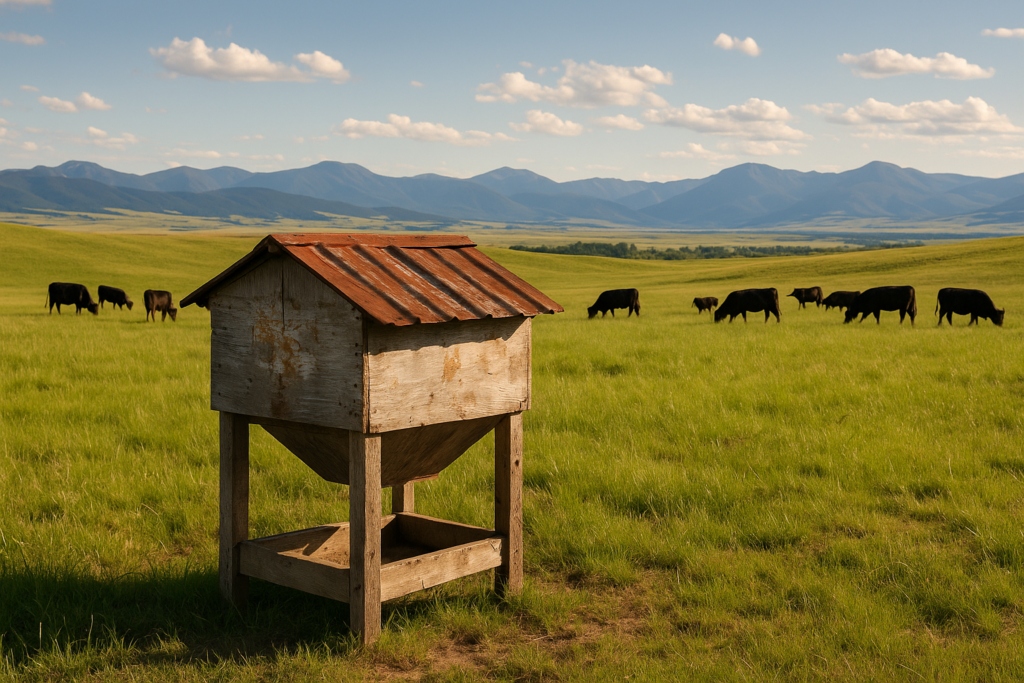
Where you set the feeder decides a lot of that. Cows won’t walk to mineral any more than they’ll walk to grass. Put it near water and loafing areas and they hit it every day. Set it up on the ridges you’re trying to pull them onto and you get double duty — it works like salt to move the herd off the creek bottoms and onto grass they’d otherwise ignore. Move the feeders every week or two along with the cattle and you spread both the grazing and the intake.
Keep it dry and keep it available. Mineral that’s caked hard in the bottom of an open tub isn’t feeding anything. A covered feeder that sheds rain pays for itself in a wet summer, and it keeps the product from turning to concrete after the first thunderstorm rolls through.
Salt intake works against your mineral intake, too. If cows have all the white salt they want on the side, they’ll fill up on that and leave the mineral alone. If they’re not eating enough mineral, pulling the plain salt block usually fixes it faster than switching products.
Track it with a pencil, not a hunch. Write down how much you set out and when, figure the head count and the days, and see if you’re anywhere near label intake. It takes five minutes and it’s the only way you’ll know whether the program you’re paying for is actually reaching the cow. An empty tub on the Fourth of July doesn’t mean the cows ate it right — it means you quit paying attention around branding.