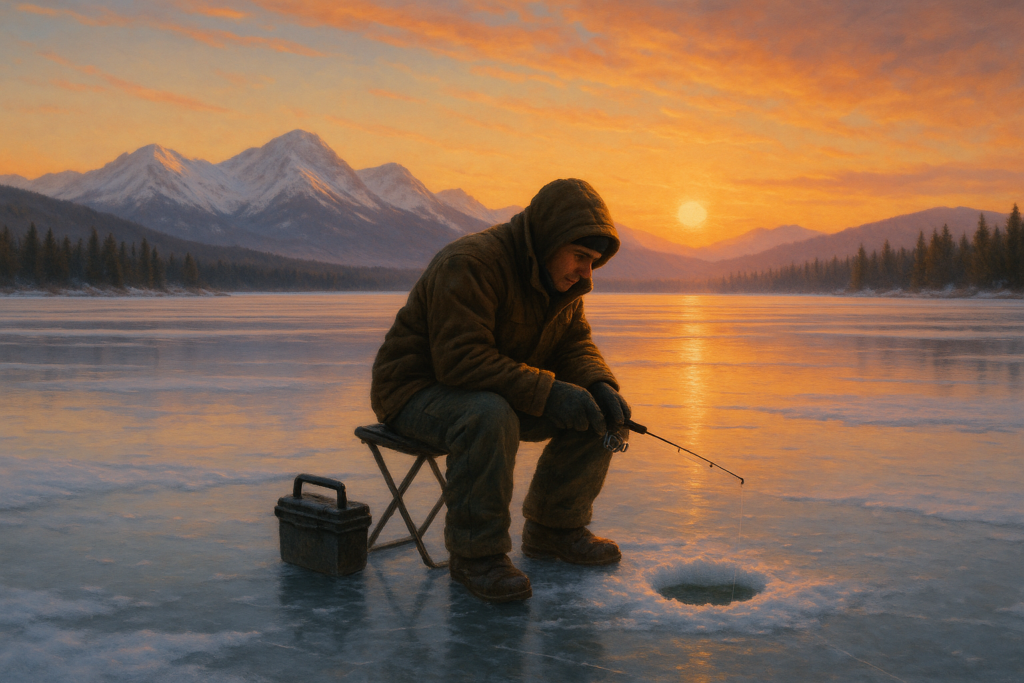
Imagine this: you’re knee-deep in the icy wilderness of Montana, the kind of cold where your breath forms tiny clouds that drift lazily into the air. Your line dips into the frigid water below, and you’re using every trick in the book to coax a walleye to bite. But here’s a twist—what if the secret isn’t in the motion of your lure, but in the stillness?
Key Takeaways
- The lift can draw attention, but the pause is often when walleye commit and strike.
- A good pause isn’t “dead slack”—it’s controlled stillness with subtle tension.
- Pause length matters: too short can miss bites; too long can lose interest.
- The “pause” approach is a fundamentals-first tactic that can outperform flashier jigging.
- This technique can be especially useful when fish are picky and unpredictable under ice.
That’s the intriguing insight shared by the folks over at WalleyeWranglers in their video, “Walleye eat the pause — not the lift.” It turns out, when it comes to ice fishing for walleye, less might actually be more.
The Science Behind the “Pause”
Walleye—those elusive, glassy-eyed predators of the freshwater world—are known for their picky eating habits. They’re notorious for being unpredictable, especially under ice. In the video, WalleyeWranglers suggests that the key isn’t the flashy lift of the lure, but rather the moment of stillness that follows.
When you’re jigging, the natural impulse is to create a dance of motion to attract fish. But the hosts explain that this motion can sometimes serve as a double-edged sword. The lift gets the walleye’s attention, but it’s during the pause—when the lure hovers tantalizingly still—that the fish often decides to strike. This pause mimics the natural behavior of prey, triggering the walleye’s predatory instincts.
Mastering the Technique (It’s More Than “Stop Moving”)
For those ready to test this theory, there’s a bit of a learning curve. The video takes viewers through the precise art of timing the pause. It’s not just about stopping the lure abruptly; it’s about maintaining a subtle tension, keeping the lure in a suspended animation that mimics a natural baitfish’s hesitation.
The creators at WalleyeWranglers demonstrate this with precision, showing how varying the duration of the pause can alter the fish’s response. Too short, and you might miss the bite. Too long, and the fish could lose interest. The sweet spot, they suggest, is often just a few seconds—long enough to entice, but short enough to keep the fish engaged.
If you’ve been following open-water walleye coverage on the site, it’s interesting to compare how “subtle control” shows up across seasons—whether it’s an under-ice pause or the way anglers work a hair jig in spring. For a warm-weather contrast, see First Run in Jacob Sweere’s New Vexus on the Mississippi River: Spring Walleye Hair Jigs, LiveScope Calls + On‑Water Breakdown (Video). You can also explore how timing and presentation shift when fish slide to classic spring spots in Spring Walleye Bite Is Heating Up: Tom Boley’s Live‑Bait Jig Pattern on Channel Points (First Run in a New Warrior Boat) [Video].
Real-Life Success Stories
Throughout the video, the team shares anecdotes from their own ice fishing adventures, underscoring the effectiveness of the pause technique. One story involves a particularly cold morning on a Montana lake where the team landed a whopping dozen walleye using this method alone. It’s these tales of success that lend credence to their advice, making it more than just theory but a proven strategy.
For seasoned anglers and newcomers alike, this video serves as a refreshing reminder that sometimes the most effective techniques are the simplest. In a world where technology and innovation often overshadow basics, the pause method brings things back to fundamentals.
As ice fishing continues to grow in popularity, especially in walleye-rich regions like Montana, tips like these can make all the difference. It’s a call to embrace patience and precision—qualities every great angler knows are essential. So next time you’re out on the ice, remember the power of the pause. You might just find that the quiet moments are where the magic happens.
Frequently Asked Questions
What is the pause technique in walleye ice fishing?
The pause technique involves stopping the lure’s motion briefly so walleye strike during the moment of stillness rather than during the lift.
Why do walleye prefer the pause over the lift?
As explained in the video, the lift can get a walleye’s attention, but the pause can mimic the natural hesitation of prey—often triggering the fish to commit and bite.
How long should the pause be when fishing for walleye?
The video suggests the sweet spot is often a few seconds—long enough to entice a bite, but not so long that a fish loses interest.
How do you “hold” the pause correctly?
It’s controlled stillness. Instead of going completely slack, maintain subtle tension so the lure stays suspended and you can detect light bites.
What should you do if you’re not getting bites on the pause?
Try varying pause length. If it’s too short, you may be pulling the lure away before the fish commits. If it’s too long, the fish may lose interest.
Is the pause technique only for picky or pressured fish?
In the video’s framing, it shines when fish are unpredictable and finicky under the ice—when a more aggressive presentation doesn’t seal the deal.
What equipment is best for walleye ice fishing using the pause technique?
Light to medium action rods with sensitive tips can help detect subtle bites that happen during the pause.
Where can I watch the video mentioned in this article?
You can watch the full WalleyeWranglers video embedded above from YouTube.
Related Reading
- First Run in Jacob Sweere’s New Vexus on the Mississippi River: Spring Walleye Hair Jigs, LiveScope Calls + On‑Water Breakdown (Video)
- Spring Walleye Bite Is Heating Up: Tom Boley’s Live‑Bait Jig Pattern on Channel Points (First Run in a New Warrior Boat) [Video]
- North Central Montana Jig Bite Is Back: Spring Warm-Up Triggers Fast Jigging Action (Video)