You spend the back half of June racing weather to get first cutting baled. The grass is heavy, the windows are short, and somewhere in there the temptation shows up: bale it a touch tough rather than let a thunderstorm dump on it overnight. Plenty of good hay gets put up that way. Some of it also burns down a stackyard three weeks later.
Hay fires aren’t a freak event. They’re chemistry. Bale hay before it’s cured down enough and the plant cells keep respiring, bacteria and molds go to work, and all that activity throws off heat. Pack that into a tight bale and stack the bales tight, and the heat has nowhere to go. The core temperature climbs, and if it climbs far enough you get spontaneous combustion — usually in the densest part of a big stack, a couple of weeks to a couple of months after baling.
Know your moisture before the baler ever rolls
Dry matter is what keeps a stack cool. The general rule most producers run by: small square bales want to be in the mid-teens for moisture, big rounds and large squares a little lower because they pack denser and shed heat slower. The bigger and tighter the package, the less margin you have. A round bale baled at the same moisture that’s fine for a small square can run hot, because the middle of a 1,200-pound round is a long way from open air.
The trouble is, the field doesn’t tell you the truth by feel alone. Hay can feel dry on the outside of the windrow and still be carrying moisture in the stems, especially heavy first-cutting grass or alfalfa cut thick. A moisture tester — even an inexpensive probe model — pays for itself the first season. Test the stems, not just the leaves, and test more than one spot in the field. Morning dew, a low spot that stayed wet, a heavy second swath rolled in — any of those can push one corner of the field tough while the rest is ready.
If you’re stuck baling marginal hay because a storm is coming, a preservative product can buy you a few points of moisture safely. That’s a legitimate tool, not a cheat. What gets people in trouble is baling tough hay with nothing and then walking away from it.
Watch the stack for the first six weeks
The danger window is after baling, not during. A stack that’s going to heat does most of it in the first two to six weeks. So the move is simple: check it.
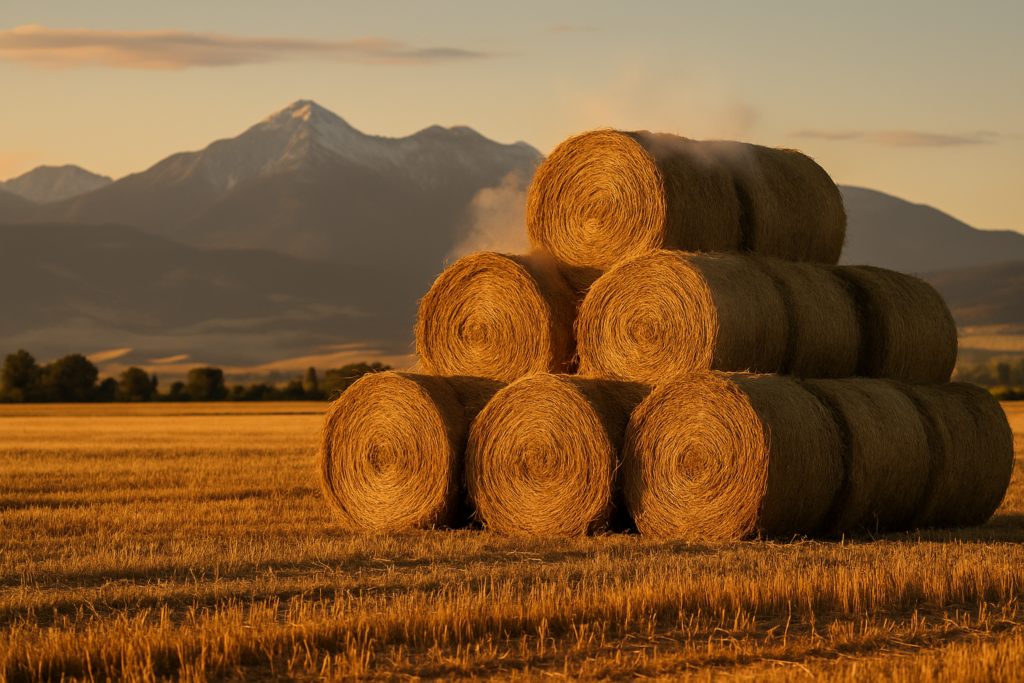
If you can smell a sharp, caramelized, almost tobacco-sweet odor coming off the stack, it’s heating. Steam or visible vapor rising off bales on a cool morning is another flag. The reliable way to know is to take the core temperature with a long-stem compost or hay thermometer, or a piece of pipe and a thermometer on a wire lowered down inside it.
- Under about 120°F — normal. New hay sweats some heat and settles back down.
- 130 to 140°F — keep an eye on it and check daily. It may peak and fall.
- 150°F and climbing — pull bales apart to let heat escape, and check it more than once a day.
- Around 175°F and up — treat it as a fire. Do not just start tearing into the stack.
That last point matters. Once a stack core gets hot enough, opening it up fast feeds oxygen to a smoldering pocket and can flash it. If you’ve got a stack reading that high, the smart play is to call the fire department before you move bales, and have water on hand. A pitchfork into a hot pocket can find a glowing core that lights the second air hits it.
Stack and store with airflow in mind
How you store the hay either helps it cool or traps the heat. Leave room between rows so air moves. Don’t stack questionable hay against a barn wall or jammed into a shed where heat can’t escape and a fire would take the building. Keep your driest, surest hay in the barn and put the marginal bales outside on their own where you can watch them and lose nothing but the hay if it goes wrong.
First cutting is the one most likely to go up, because it’s the heaviest and it’s baled in the most unsettled stretch of weather Montana hands you all summer. A moisture probe and a thermometer are cheap insurance against losing a winter’s worth of feed — or a barn — to hay you thought was fine.