By mid-June most of Montana’s hay ground is either down, about to be, or sitting under a sky that won’t make up its mind. First cutting is the biggest tonnage you’ll take all year off irrigated alfalfa, and on dryland and native meadows it might be the only cutting that matters. Get it right and you’ve banked feed that’ll carry cows through calving. Get it rained on at the wrong time and you’re feeding straw with a hay smell.
The hard part is that the two things that make good hay pull against each other. Quality wants you to cut early. Weather and tonnage want you to wait. You don’t get to dodge that tradeoff — you just have to decide where you’re going to land on it and commit.
Maturity decides the quality before you ever drop a swath
On alfalfa, the protein and energy peak before bloom and slide every day after. The standard rule that’s held up for generations: cut somewhere between late bud and about ten percent bloom for the best balance of quality and yield. Wait until full bloom and you’ll cut more tons, but the stems get coarse and woody, the leaves — where the feed value lives — start dropping, and a cow has to eat more of it to get the same nutrition. If you’re putting up hay for dry cows in good flesh, a little more maturity is fine and the extra tonnage is welcome. If it’s going to bred heifers, fall-calvers, or anything you’ll be feeding when it’s twenty below, lean earlier.
Grass hay and native meadow run on the same clock. The window is roughly boot to early head. Once timothy, brome, or wild meadow grass heads out and starts setting seed, the plant pours its energy into the seed head and the leaf quality falls off fast. The trouble is that on a lot of dryland and meadow ground you’re at the mercy of when it’s ready and when you can actually get on it, so the calendar often wins that argument whether you like it or not.
One thing worth checking before you cut: alfalfa weevil. If you’ve had larvae chewing leaves down to lace, sometimes the cleanest fix is to cut early and haul the windrow off promptly, which strands the larvae and cuts the population for second growth. Scout first so you know what you’re dealing with.
The drydown race
Cutting is the easy day. Curing is where Montana’s weather earns its reputation. Fresh-cut alfalfa comes off the field around 75 to 80 percent moisture, and you need it down near 18 to 20 percent for small squares, lower for big packages, before it’s safe to bale. Bale it too wet and it heats — at best you lose color and feed value to mold, at worst you’ve built a haystack that can catch fire weeks later. Bale it bone dry in the heat of the afternoon and the leaves shatter and blow away, taking your protein with them.
A few things that move the needle on drying time:
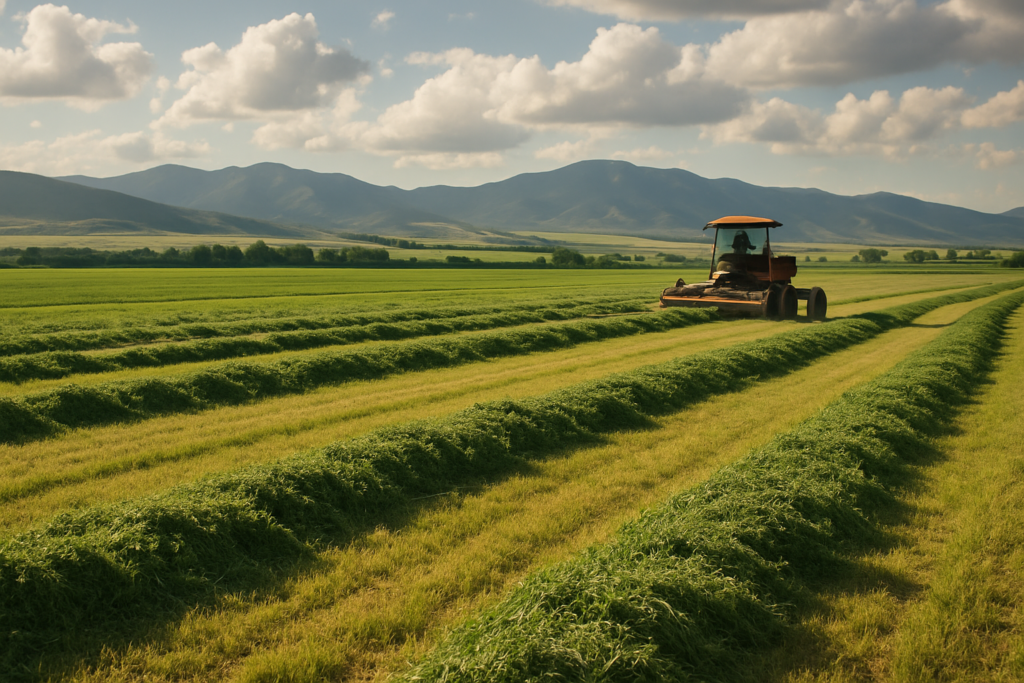
- Lay a wide swath. A windrow spread out to most of the cutter-bar width dries far faster than a narrow rope. Sun on the surface is what pulls moisture, and a wide swath catches more of it.
- Use a conditioner. Crimping or crushing the stems lets water escape from the part of the plant that’s slowest to dry. On heavy first-cutting alfalfa it can shave a full day.
- Rake and bale at the right moisture. Rake when the hay still has a little toughness in it — early morning dew or evening — so the leaves stay on instead of crumbling. Bale when the stems are dry but not brittle.
Watch the dew, too. Morning moisture can add a day to your curing, but a light dew before baling actually helps hold leaves on dry alfalfa. Plenty of producers cut in the morning, let it cure through a couple of good drying days, then bale in the evening when the leaves toughen back up.
Reading the sky and knowing when to gamble
The forecast is the whole game in June. A two- to three-day clear window is usually what you need for alfalfa with a conditioner; native grass can ask for more. If the radar’s showing a real chance of a soaking inside that window, you’ve got a call to make: cut and gamble, or hold off and let the crop mature a little more while you wait for a cleaner stretch.
If hay does get rained on, the damage depends on how cured it was. A light shower on freshly cut hay is far less costly than rain on a windrow that was nearly ready to bale and just lost most of its soluble nutrients to the runoff. Cured-and-rained hay isn’t garbage — it just slid down a grade, and you feed it accordingly. Test it if you’re unsure rather than guessing what’s in the bale all winter.
First cutting sets the tone for the year. Put up the early, leafy stuff for the cattle that need it most, save the coarser later-season hay for the easy keepers, and label your stacks so you know what’s what in February. The cows can’t read the tag, but you’ll be glad you can.