Every June a Montana hay producer plays the same game with the river. The snow comes off the high country, the ditch runs full for a few weeks, and then the flow drops and the senior rights start making their calls. If you’re a junior on your stream, the water you didn’t use in early June is water you won’t see in late July. The whole season turns on getting it on at the right time and not wasting the window.
This isn’t complicated, but it’s easy to get behind. Branding’s barely wrapped, the bulls just went out, and the first cutting is breathing down your neck. The ditch ends up being the thing that waits. That’s backwards. Right now, while the creek is high, is when you’ve got more water than you’ll have all year.
Read the runoff, not the calendar
Snowpack on the Beartooths, the Crazies, the Bridgers, and the Rockies doesn’t melt on a schedule. A cool, slow spring stretches the runoff into late June. A warm spell with a rain on top of it can dump the whole thing in ten days and leave you short before the Fourth of July. Watch the creek, watch the weather upstream, and watch what your senior neighbors are doing. When the river goes on call, junior priorities get shut off in order, and if you’re low on the list you can lose your turn fast.
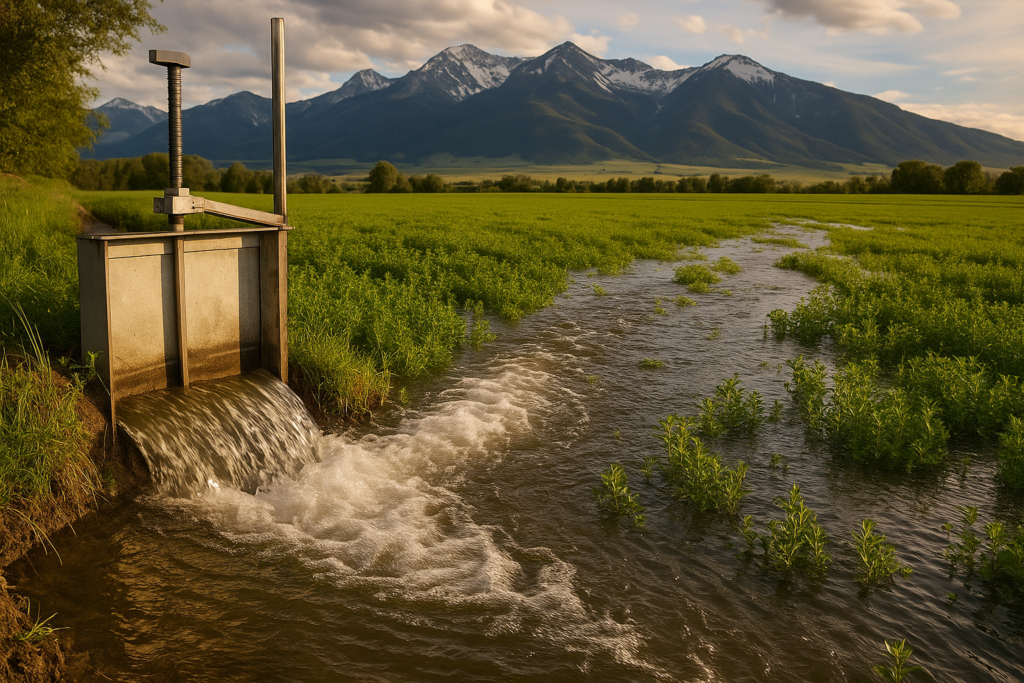
The practical move is simple: when the water’s running full, get it spread. Flood-irrigate the ground that holds moisture the worst first — the gravelly benches and south slopes that burn off by August. Save the heavy bottom ground for when flows tighten, because that dirt holds what you give it. You’re banking subsoil moisture while it’s cheap.
If you’re running pivots or wheel lines off a creek or a well, the same logic holds. A full soil profile going into July buys you slack when the heat sets in and the system can’t keep up with peak demand. Dry dirt under a pivot in late July is a hole you can’t dig out of with a quarter-inch a day.
Spend a day on the ditch before you spend a month fighting it
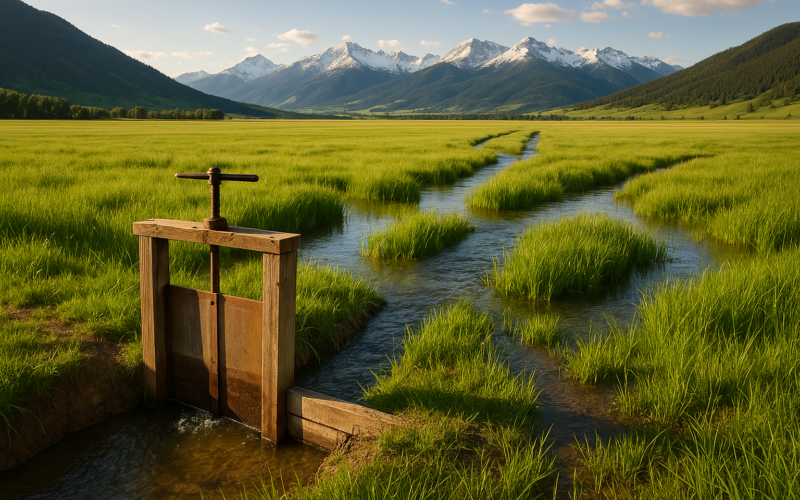
Head gates, check dams, and turnouts all took a beating over winter and through high water. Muskrats, washed-in gravel, a slumped bank, a packrat nest in a culvert — any one of them costs you head pressure and even coverage. Walk the whole ditch once, early, with a shovel and a few extra dams in the truck. Clear the trash racks. Make sure your measuring device is clean and you can actually read it, because in a call year the water commissioner will be reading it too.
Keep your water right paperwork straight and know your priority date and your flow rate cold. In a dry year a commissioner regulates by priority, and the people who get their full allotment are the ones who can show what they’re entitled to and aren’t taking more than that. Taking water out of priority is the fastest way to make an enemy of a downstream neighbor you’ll need to get along with for the next forty years.
Know when to shut it off
The flip side of getting water on early is getting it off in time to cut. Alfalfa and grass hay need to dry down before you can run equipment without rutting the field and dragging mud into the windrow. As a rule of thumb, quit irrigating a piece roughly a week to ten days ahead of when you plan to cut it, depending on your soil and the weather — heavy clay needs longer than a sandy loam. Cut that timing too close and you’re either tearing up the field or watching cured hay sit in a wet swath.
That’s the balancing act in June. You want the profile full going into summer, but you don’t want a soaked field when the haybine’s ready. Stagger it. Irrigate the fields you’ll cut last, let the early-cut ground dry, and keep the rotation moving so you’re never waiting on one or fighting the other.
Over-irrigating ahead of first cutting wastes water you’ll wish you had in August and leaches nitrogen past the root zone besides. More isn’t better. Enough, on time, in the right order — that’s the whole job. Get it right in June and the difference shows up in the stack and in what’s left of the creek when everybody else is dry.