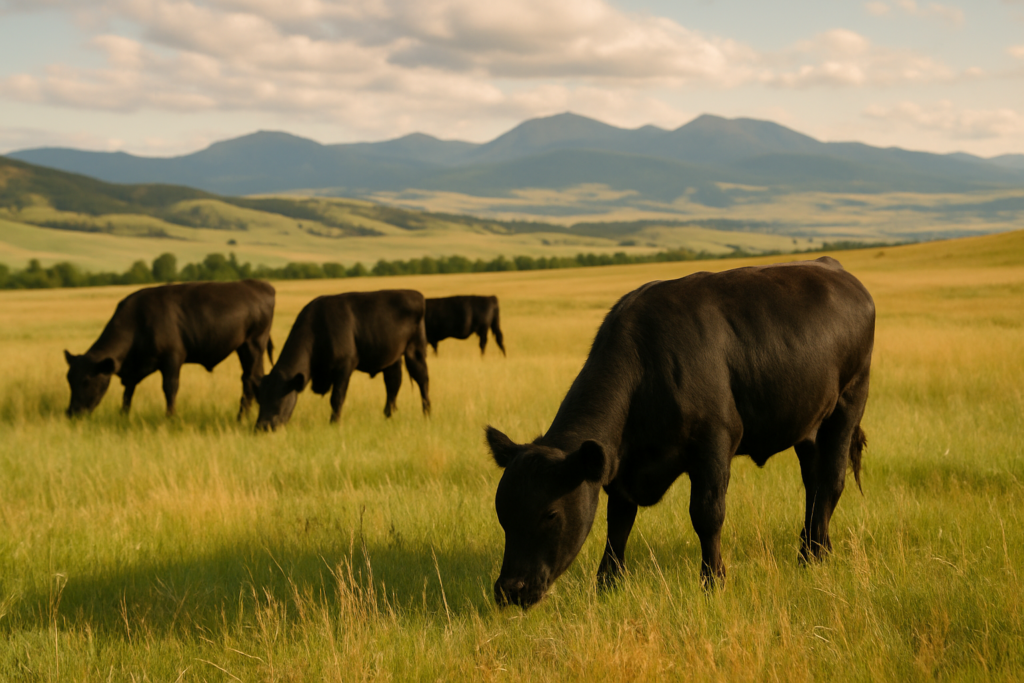
You can spend all spring getting cattle vaccinated, get a good calf crop on the ground, and still watch your yearlings stall out in midsummer for a reason you can’t see from the truck. Internal parasites don’t kill many cattle in Montana. What they do is quieter and more expensive: they shave off gain, dull the hair coat, and pull down conception in young females, and they do it on the animals that can least afford it.
The worms that matter most here are stomach and gut roundworms, with Ostertagia at the top of the list. The cattle carrying the heaviest loads are the young ones. A cow that’s been on grass for years has built up some immunity. A weaned calf or a yearling hasn’t, and those are exactly the animals you’re trying to push for pounds.
How the cycle works on Montana grass
Adult worms in the gut lay eggs that pass out in the manure. Larvae develop in the pat, then crawl out onto the grass when there’s moisture, and cattle pick them back up while grazing. That’s why pasture, not the cow, is the real reservoir. Cattle grazing low and tight over a wet spring and early summer are eating off the bottom inch or two of the plant, and that’s right where the larvae sit.
Cool, damp conditions move larvae onto forage. Hot, dry weather knocks them back. In a normal year a lot of the contamination builds through late spring and early summer, then bakes off when July turns dry. That timing is the whole point: the load your cattle pick up early shows up as worms by midsummer, right when you’d hope to see the best gains.
When deworming actually pays
Treating at turnout is the move most people already make, and it makes sense — it cleans up the load cattle carried through the winter before they start seeding the new pasture. But on yearlings and stockers held through the grazing season, a single spring treatment often runs out of road. By mid to late summer they’ve picked up a fresh dose off the grass, and that’s the burden that eats your July and August gain.
For replacement heifers the stakes are higher than weight. Heifers carrying a parasite load going into their first breeding tend to cycle later and breed back poorer. If you’ve got money in a synchronization program or a good bull, parasites are a cheap thing to take off the table.
Mature cows are usually the lowest priority. They’ve got immunity, they’re not gaining like a yearling, and blanket-treating every cow every year is how you burn through the products that still work. Spend the dewormer where the response is — the young, growing animals.
Don’t burn out the dewormers you’ve got
Resistance is real, and it’s been building in the pour-on ivermectin-class products especially. There aren’t new dewormers coming down the pipe the way there are new vaccines, so the ones in the barn are worth protecting. A few habits help:
- Dose by actual weight, not a guess. Underdosing a 700-pound yearling because you eyeballed it at 550 is how you train worms to survive. If you’ve got a scale or a tape, use it.
- Read the label and the route. A pour-on and an injectable in the same drug family don’t always perform the same, and a poured-on product running off a wet or filthy back isn’t doing much.
- Think about combinations. Using two different classes of dewormer together — say a white drench with a macrocyclic lactone — hits worms that survive one with the other. Talk it over with your vet before you change a program.
If you want to know whether your program is even working, fecal egg counts are cheap insurance. Pull samples before you treat and again about two weeks after. If the count didn’t drop the way it should have, you’ve got a resistance problem you’d rather find now than after a summer of flat gains.
None of this is a reason to start running everything through the chute twice a summer. It’s a reason to be deliberate. Hit the young cattle, dose them right, lean on your vet for the local picture, and let the dry weather do the rest of the work on your pasture. The cattle that gain through July are usually the ones somebody thought about in June.