By the middle of June most Montana cows are out on summer country and the branding trailer is parked. The mineral tub becomes one of the few chores that still puts you in front of the herd every week or two. It’s easy to treat it as a nuisance — drop the bag by the corral or the water tank and move on. But where you set that mineral decides more than whether the cattle are getting their trace minerals. It decides where they walk.
Green grass in June looks like it has everything a cow needs, and for energy and protein it mostly does. What it doesn’t reliably carry is the mineral balance a lactating cow chews through while she’s milking hard and breeding back. That gap is why the loose mineral or the tub earns its keep all summer, not just in a dry spell.
What lush summer grass is short on
Fast-growing forage runs high in potassium and moisture and comparatively low in the minerals that matter for a cow trying to conceive. Phosphorus is the usual weak spot on Montana range once grass matures, and it stays low through late summer. Magnesium matters early, when the grass is greenest — the same window that sets up grass tetany in older, heavy-milking cows. Copper, zinc, and selenium tie directly into breeding, immune function, and how well a calf handles the summer pneumonia and foot rot that show up later.
A cow won’t tell you she’s a little short. She’ll just breed back a cycle later, or her calf will scour easier, and you’ll blame something else. That’s the trouble with mineral — the cost of skimping doesn’t show up on a specific Tuesday. It shows up next spring in the open cows and the strung-out calf crop.
Free-choice is the practical way to deliver it on big country. Cattle self-regulate reasonably well when salt is the carrier and the mineral is available and fresh. Watch consumption. If they’re cleaning up far more than the tag calls for, they may be salt-hungry or the mineral got rained on and caked. If they won’t touch it, it’s usually stale, wet, or sitting somewhere they don’t travel.
The tub is a tool for spreading the herd out
Here’s the part that gets left on the table. Cattle will walk to salt and mineral. That means the mineral station is one of the cheapest ways you have to pull a herd off the creek bottom and onto the ridges and back corners they’d rather ignore.
Set the mineral where the grass is going to waste — up the slope, out toward the far fence, away from water — and the cows will make the trip. They’ll graze on their way there and on their way back. Set it next to the tank and you’ve told them to do exactly what they already wanted to do, which is stand in the bottom, hammer the good grass, and leave the top of the pasture untouched.
- Keep mineral a quarter to half mile from water on flat, roomy country so cattle travel to reach it.
- Put stations on higher ground and on the ridges cattle underuse, not in the shade where they already loaf.
- Move the location every couple weeks as the grazing shifts, so you keep pulling them into fresh ground instead of grinding one spot into a bare, fouled loafing area.
None of this works if the cattle can’t find fresh mineral, so it comes down to keeping up with it. On scattered summer range that might mean two or three stations in a big pasture rather than one central pile everybody has to find.
Keep it dry, keep it fresh, keep it counted
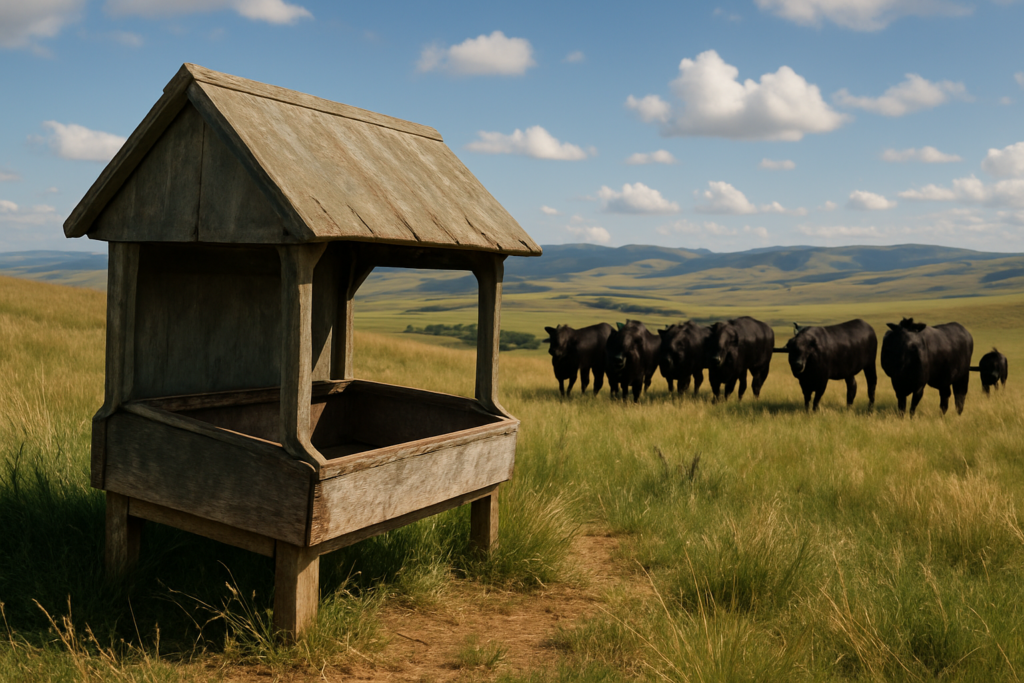
Loose mineral turns into concrete after a hard rain if it’s sitting in an open pan. A covered mineral feeder — even a homemade lid on a barrel or a tire feeder tipped to shed water — pays for itself in mineral you don’t throw away. Tubs handle weather better but cost more per pound and give you less control over intake.
Get in the habit of noting roughly how much a group is eating and how fast. That number is your early-warning system. A sudden jump in consumption often means the grass quality dropped or the cattle got moved onto ground short on something. A stall usually means the product went stale or the station is in the wrong spot.
The mineral program isn’t glamorous and it’s easy to shortcut in June when everything else is screaming for attention. But a cow that’s covered on minerals breeds back on time, and a mineral station in the right corner grazes a pasture more evenly than most fence you could build this summer. Both of those show up in the fall, when it’s too late to fix.