Most outfits do their real culling in the fall, after preg checking, when the empties get hauled and the tail end goes with them. That’s fine for open cows. But there’s a whole set of cows you already know are on their way out, and you’re looking right at them in June while you brand, doctor, or push pairs toward summer country. Every one of them is about to eat a summer’s worth of grass and a winter’s worth of hay on your dime before you finally load her.
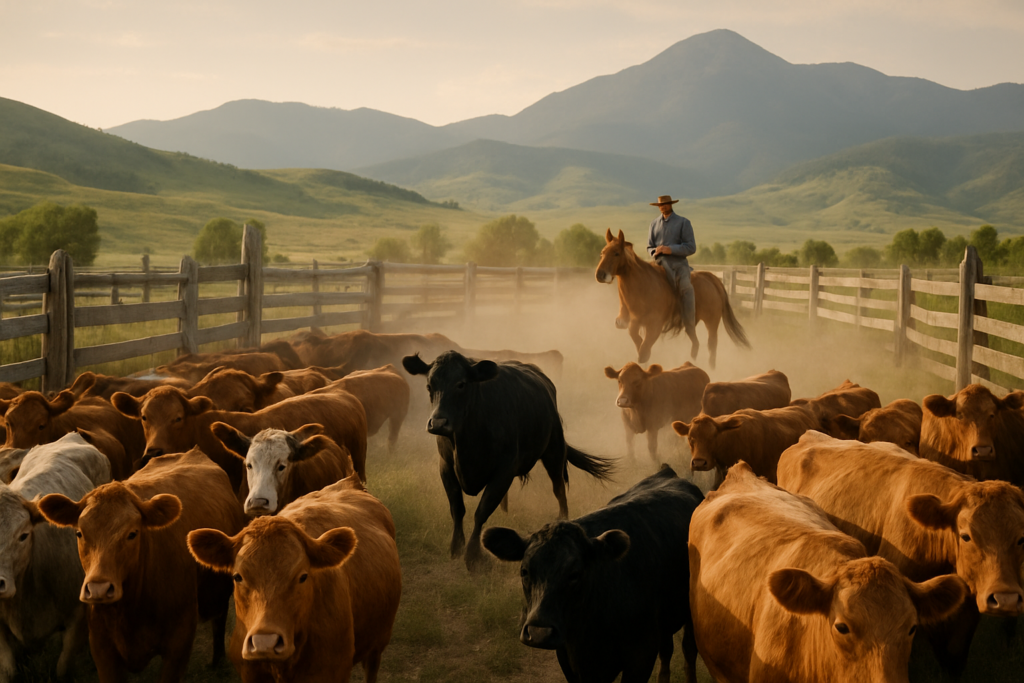
You’ve got the herd gathered and running through a chute or held in a corner already. That’s the cheapest look you’ll get at these cows all year. Take it.
What gives a cow away this time of year
Start with the bag. A cow with a blown quarter, a bag hanging low with the calf robbing off three teats, or teats a newborn can’t get onto is going to wean a light calf and probably breed back late. You can see it when she’s standing in the alley with a fresh calf on her. Mark her. Same goes for the cow whose calf looks gaunt next to the others—sometimes that’s the cow, not the calf.
Check mouths on the older cows. A broken-mouth or gummer can’t hold flesh on rough summer range or cold-weather hay, and she’ll be the first one thin come February. You don’t have to mouth every cow, but the ones that came through the winter poorer than the rest are worth a look while they’re in the chute.
Watch the eyes. Cancer eye starts small—a pink or white spot on the eyeball or the lid—and by fall it can cost you the whole cow at the sale barn, or a condemned carcass. A cow with an early lesion is worth selling now while she’s sound and the packer will still take her. Wait and you may be shooting her in the pasture.
Feet and legs tell on a cow fast in this country. A cow that’s sore, has a corkscrew claw, or is packing a foot rot that keeps coming back isn’t going to travel to water and grass on a big summer pasture. She’ll hang by the creek, get thin, and come up open. Post-legged and sickle-hocked structure that’s breaking down does the same thing over time.
Disposition counts more than people admit
The cow that tries to hook you at branding, tears up the corral, or takes the whole bunch on a run every time you show up is teaching her heifer calf to do the same. She’s also the one most likely to hurt somebody or a horse. If you’ve got a wild one you’ve been putting up with for a couple of years, June is a good time to quit putting up with her. The market for a sound, healthy cull cow is a lot better than for one you finally lose your temper with in the fall.
Mark them so you can find them again
The trick is remembering in October which cows you flagged in June. Use whatever you’ll actually trust—a paint stick stripe, a colored ear tag, a notch in the tag, or write the numbers down and keep the list where you’ll find it. A mark on the hide fades and paint runs when she sheds and rubs, so back it up on paper or your phone. If a cow’s problem is bad enough—a rotten quarter, a cancer eye already working—don’t send her back out at all. Sort her off and haul her when you’ve got a trailer going to town anyway.
None of this is about being hard on old cows. A good old cow that still raises a big calf and breeds back can stay till she quits doing it. The point is to stop feeding the ones that already quit. Every cull you spot now is grass and hay that goes to a cow that’ll actually give you a calf, and it’s one less trip and one less surprise when you’re gathering in bad weather this fall.
You’ve already gone to the work of gathering them. Look at them like a buyer would while they’re standing in front of you.