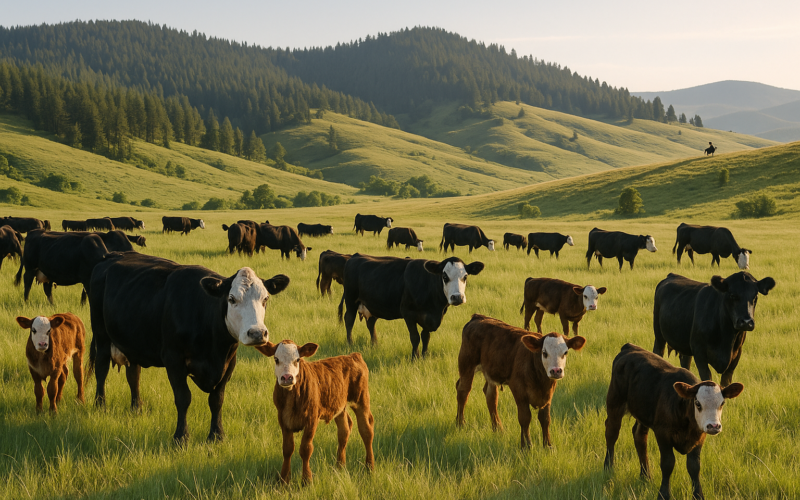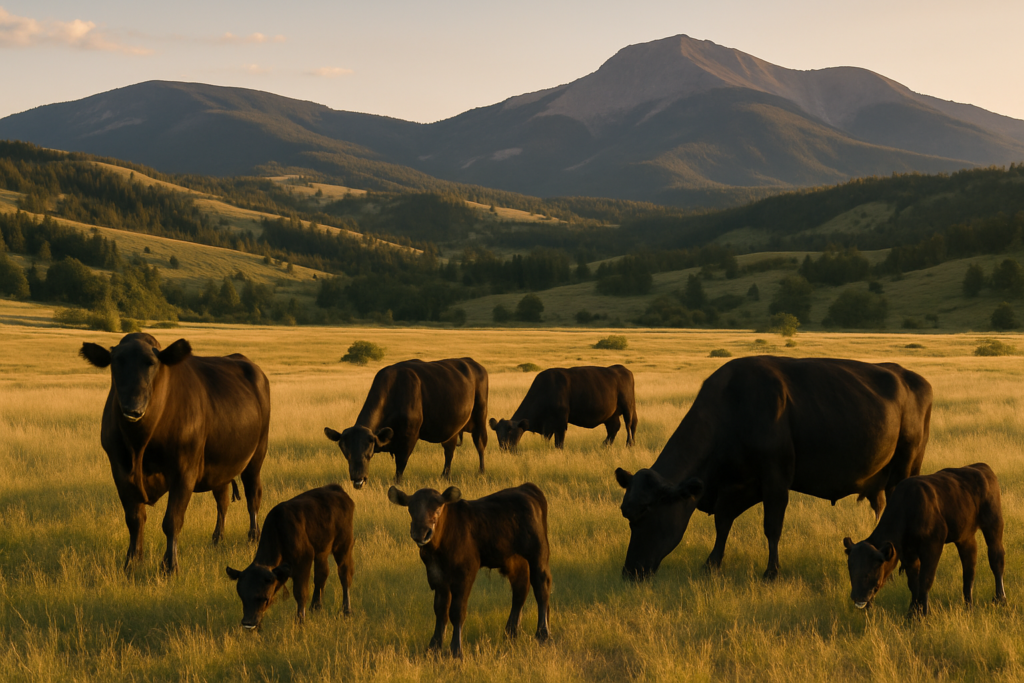
Most predator losses don’t announce themselves. You turn pairs out on the forest allotment or the big grass pasture in June, ride through in July, and the count is a little light. Maybe you find a scattering of hide and a rib cage picked clean. More often you find nothing at all, because a calf carcass on open range disappears fast between scavengers and hot weather. That’s the frustrating part of predation in Montana — by the time you know for sure, the calf is long gone and so is the animal that took it.
You’re not going to trap or shoot your way to zero. What actually moves the needle is stacking a handful of management decisions early in the season so the odds tilt your way before the cattle ever hit the summer country.
Know what you’re actually dealing with
The predator changes with the ground. On the plains and foothills east of the divide, coyotes are the steady problem, and they mostly take young, small, or sick calves. West of the divide and up against the mountain fronts, wolves and grizzlies come into the picture, and those two will pull down bigger calves and occasionally a cow. Black bears take calves too, especially in timbered draws and near cover.
Reading the kill matters. Coyotes tend to work the throat and hindquarters and leave a fairly small animal. A grizzly kill often shows crushing injuries, a dragged carcass, and a cache covered with dirt and brush. Wolves scatter a carcass and leave a lot of tracks and torn ground. If you’re losing calves and want any help from a trapper or a livestock-loss program, you need the carcass and the evidence intact — so leave it where it lies and get someone out to look before it’s gone.
The June decisions that hold losses down
Calving timing does more than almost anything. A calf that’s a month or two old and running with the herd is a much harder target than a wet newborn. If you’re turning out onto predator-heavy country, the older and stouter those calves are at turnout, the fewer you’ll lose. Late calves and the tail end of a strung-out calving season are the ones that come up missing.
Keep the herd bunched. Cattle scattered across a big pasture in singles and pairs are easy pickings; a tight bunch with cows that will bunch up and face down a coyote is not. Bringing in yearling replacements or a few older, aggressive cows can change the herd’s behavior. Some outfits run cattle in larger groups on the worst country for exactly this reason, even though it costs them some grazing distribution.
Watch where you turn out relative to cover. Calves get taken in the brushy draws, along the timber edge, and in the willows where a predator can work close without being seen. If you have any say in it, hold pairs on the open, higher ground during the vulnerable stretch and let them work toward the rough country later.
Don’t feed the problem. A cow that dies or a calf that’s lost to sickness becomes bait if you leave it near where the cattle graze or water. Grizzlies especially will move in on a carcass and then stay in the neighborhood. Haul dead stock well away from the herd and away from water and salt.
Ride, and ride often
Presence is the cheapest deterrent there is. A range rider or just an owner who shows up at odd hours breaks up the routine predators depend on. You catch trouble early — a limping calf, a cow off by herself bawling, tracks around the water — instead of finding the aftermath weeks later. Guardian dogs earn their keep on some outfits, though they take management and don’t fit every operation.
Keep a record of where and when you lose calves. Over a couple of seasons the pattern usually points at the same draw, the same timber pocket, the same stretch of fence line, and you can shift turnout or grazing to keep pairs out of the killing ground during the weeks that matter.
None of this is glamorous, and none of it is a silver bullet. But the outfits that keep predator losses to a nuisance instead of a wreck are the ones making these calls in June, not the ones reacting in August after the calves are already gone.