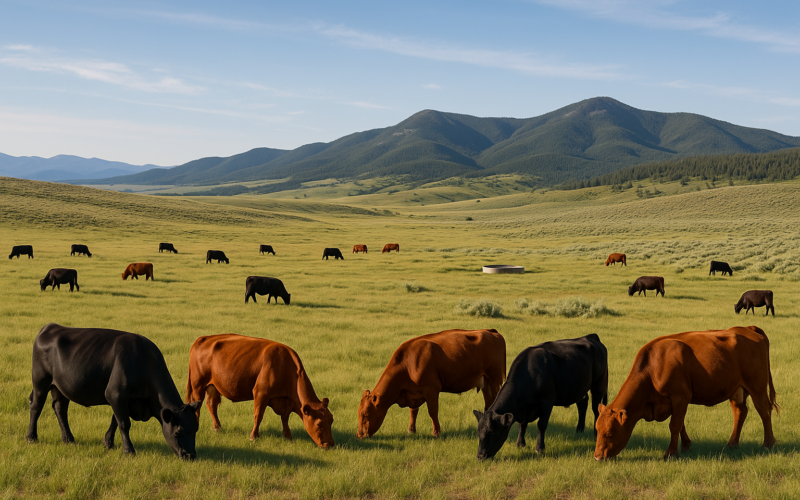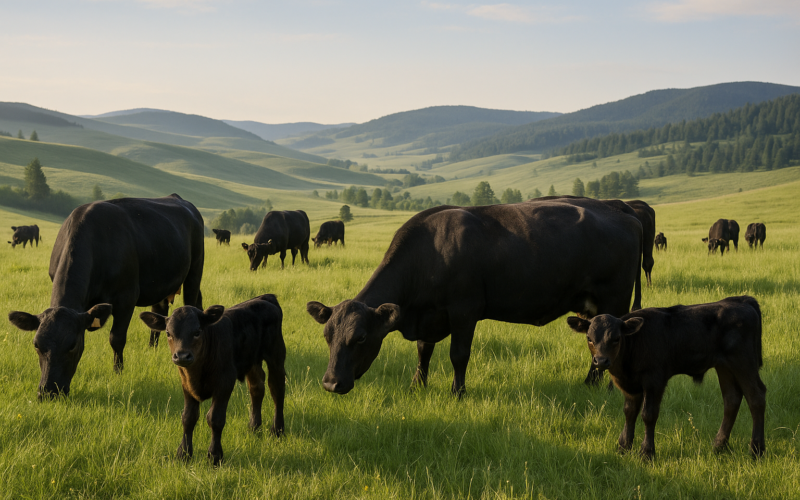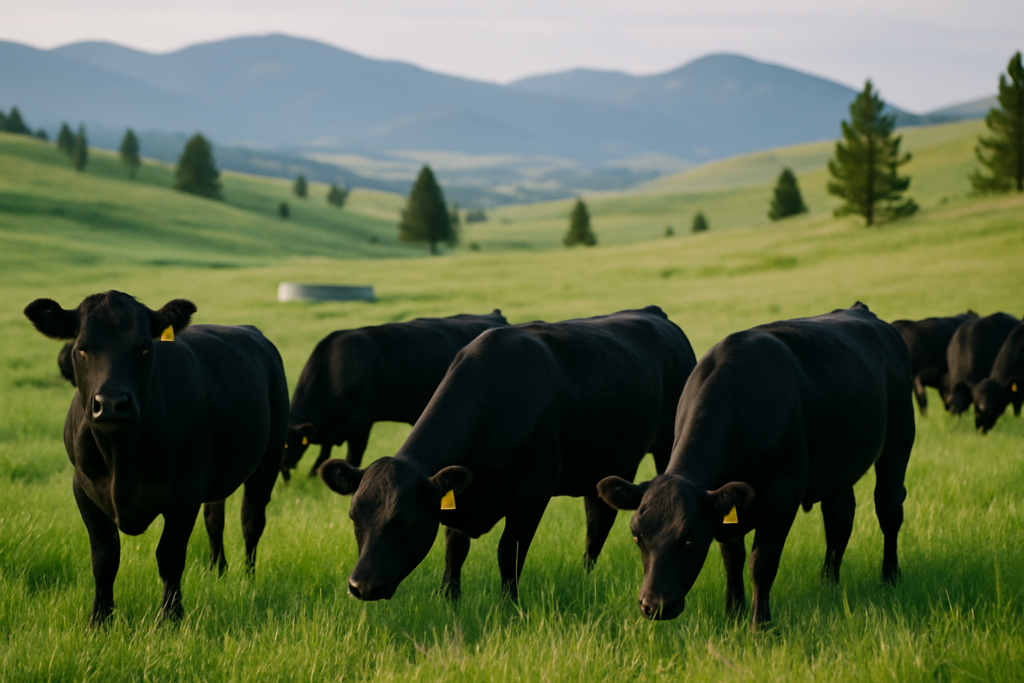
The cows mostly take care of themselves once the bull’s out. Heifers don’t. A yearling heifer is still growing, still filling out her frame, and now you’re asking her to settle a calf on top of all that. She’s the animal on the place with the least margin for error, and June is when the errors show up—or don’t.
Most outfits breed their replacements a couple weeks ahead of the main cow herd. There’s a good reason for it. A heifer that calves first the following spring gets more time to recover before you turn the bull back in, and she’s got a longer window to breed back for her second calf. That second-calf slump is where a lot of good heifers fall out of the herd, so anything you do now to give her a head start pays off two springs down the road.
Weight is the switch that turns her on
A heifer needs to reach roughly two-thirds of her expected mature weight before she’ll cycle reliably. On a lot of Montana ranches that pencils out somewhere north of 800 pounds, but the number depends on your cow size, not the neighbor’s. If your mature cows run 1,300, your heifers need more groceries than an outfit running 1,100-pound cows.
The trouble is you can’t eyeball it. A heifer can look big and rangy and still be light, or look chunky and be right on target. If you’ve got a scale, run them across it before the bull goes in. The ones dragging bottom on weight are the ones that’ll come up open in the fall, and you’d rather know now than feed them all winter for nothing.
Fat is its own problem. Push heifers too hard on grain and you lay fat into the udder and cut their milk down for life. You want them gaining steady and moderate, not slick and overconditioned. Good June grass does this about as well as anything, which is convenient, because it’s also the cheapest feed you’ll ever put in front of them.
Don’t let the gain stall right at breeding
Here’s the piece people miss. It’s not just the weight a heifer carries when the bull walks in—it’s whether she’s still gaining. A heifer that’s climbing on the scale, even a little, breeds up faster and cleaner than one whose gain has flattened out. Momentum matters to her body the same way it matters to a cow coming off a hard winter.
So the worst thing you can do is get heifers to target weight, then park them on burned-out or overgrazed pasture right during the breeding window. If the grass they’re on has already gone to seed and quit growing, they’ll coast, and coasting is what you don’t want in the middle of June. Put them on your best green feed while the bull’s with them. Save the rougher stuff for after they’re settled.
Water figures in too. Heifers won’t travel as far to drink as an old cow will, and if they’re standing around thirsty they’re not eating. Keep the tank clean and the pressure up on whatever pasture you’re breeding them in.
Use enough bull, and use the right one
Turn a young, inexperienced bull in with a bunch of heifers and you can get a wreck—too much riding, too little settling, and a bull that runs himself down chasing every heifer in the bunch. An older, proven, sound bull with some sense generally does a better job on heifers, provided he’s not so heavy he hurts them. Whatever you use, check his feet and his condition before he goes out, same as you would for the cow herd.
And mind the calving-ease numbers. A heifer doesn’t have the pelvis of a mature cow, and a hard pull on a first-calver in a March blizzard costs you the calf, sometimes the heifer, and always your sleep. Breed calving ease into that bunch even if you use a growthier bull on your cows.
Watch them during the breeding period the way you’d watch anything you’ve got real money in. If you see heifers standing to be ridden three weeks after turnout, some of them didn’t settle the first round, and it’s worth knowing whether that’s normal cleanup or a bull that’s not getting the job done.
The heifers you keep this summer are the cow herd you’ll be running in five years. Getting them bred right, a little early, and on a rising plane of feed is about the highest-return work you can do in June, and none of it costs much beyond paying attention.