Every summer there’s a cow standing off by herself, head down, holding one hind foot a little light. By the time you notice her from the pickup she’s already been favoring it for a day or two, and she hasn’t walked to water in this heat like the rest of the bunch. That’s foot rot, and June sets the table for it.
The bug that causes it lives in the ground and in manure. It gets into the foot through broken skin between the claws, and it needs two things to do damage: moisture to soften that skin, and something to nick it. A wet June gives you the first for free. The second comes from rock, cut stubble, frozen-then-thawed mud that dries into sharp ridges, and the churned-up ground where cattle stand around.
Look at where they stand, not where they graze
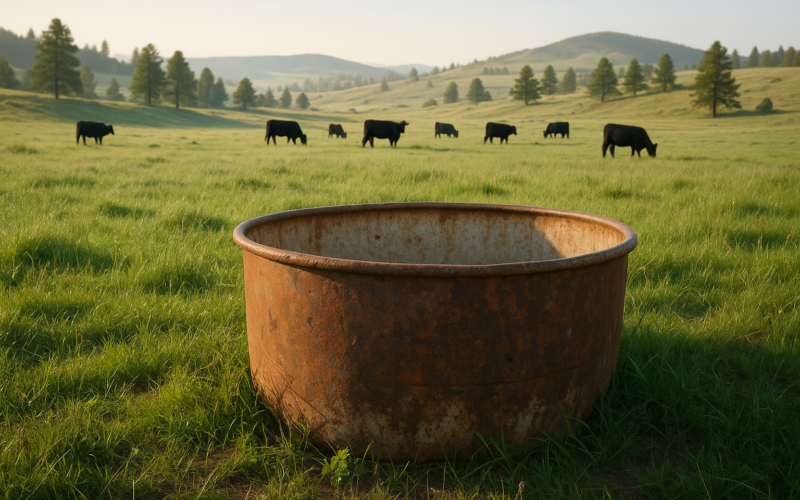
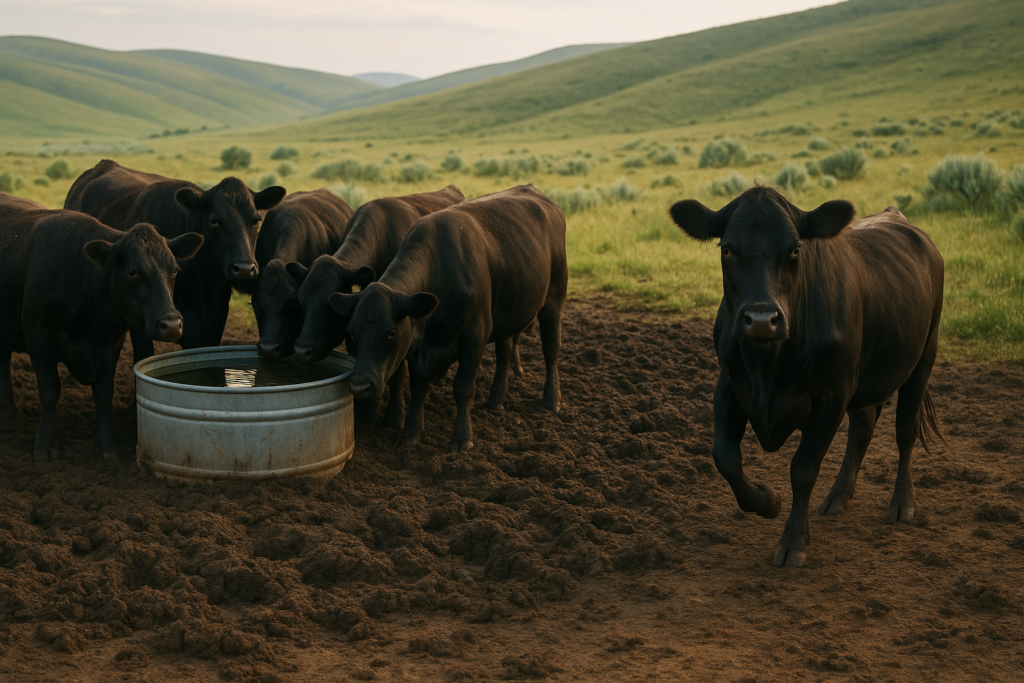
Foot rot doesn’t start out on clean grass. It starts in the corners where cattle congregate and the ground never dries out. The apron around a stock tank. The gate they mill through twice a day. The trail down to the creek. The shade under one big cottonwood where a hundred head pack the dirt into soup. Salt and mineral grounds too, if you’ve set the feeder in the same low spot for three years and it’s a mudhole.
Anything you can do to spread those pinch points out helps more than any medicine. Move the mineral feeder to higher, drier ground and move it again when it gets pugged up. If a tank overflow is making a bog, fix the float or run the overflow off downhill so the standing water isn’t right where the cattle stand. Gravel or rock at a chronic wet gateway pays for itself over a few summers. You’re not going to dry out the whole country in a wet year, but you can keep the worst mudholes from being exactly where the herd spends its time.
Catch the limp early
Foot rot moves fast and it’s easy to spot if you’re looking. The foot swells evenly, up above the hoof and around the whole pastern, and the swelling splits the two claws apart. There’s usually a crack or a raw spot in the skin between the toes, and it stinks. That even, symmetric swelling is what separates it from a foot abscess or a rock bruise or a sole injury, which tend to show up in one claw and swell unevenly. If you’re not sure, that’s a call for your vet, because you treat those other things differently and antibiotics won’t fix a bruise.
The reason to catch it in the first day or two is simple. Early on, a cow with foot rot responds well to treatment and is back with the bunch quickly. Let it run and the infection can move up into the joint and the tendon sheath, and once it’s in the joint you’re often looking at a cow that never comes fully sound again. On summer range, a lame cow is also a cow that won’t travel. She quits going to water in the heat, she drops off the good grass on the far ridges, and if she’s a pair, that calf slips backward with her. A young calf can get foot rot too, and a limping calf lays up while the herd drifts.
Treatment is straightforward with the right drug and it works, but which product, what dose, and the withdrawal time are things to go over with your vet ahead of time so you’re set up before you find a lame one. Don’t guess your way through the medicine cabinet in the corral. Have the right stuff on hand in June instead of scrambling for it.
Get her caught before she can’t be caught
The practical problem on big country is roping and doctoring a cow miles from the corral. That gets harder the longer you wait, because a sore-footed cow doesn’t want to move and a really sore one won’t. Better to spot her while she can still be driven to a set of portable panels or a trap than to leave her three days and have to rope a cow that can barely walk. Keep a doctoring kit in the pickup or on the saddle through the summer so finding one and treating one happen the same day.
One case doesn’t mean you’ve got an outbreak. But if you’re pulling several out of the same pasture, that’s the ground telling you something. Look hard at the wet, packed-up spots where they gather, and get them moved off of them. In a wet Montana summer, foot rot is mostly a plumbing and standing-ground problem wearing the disguise of a health problem.