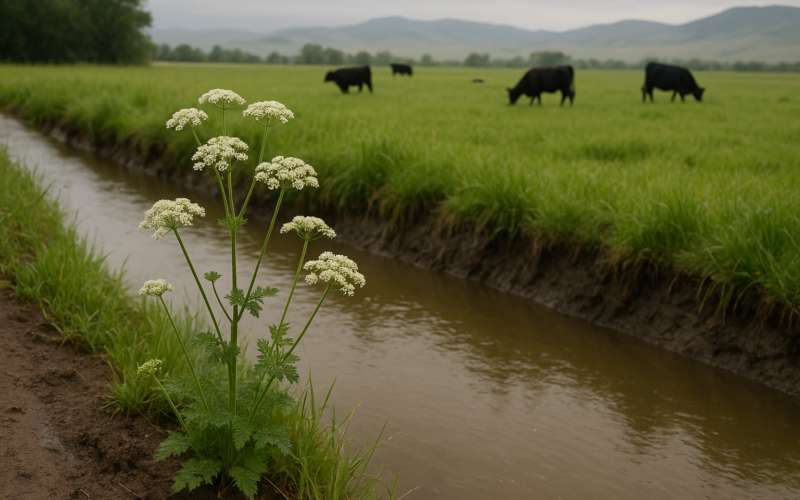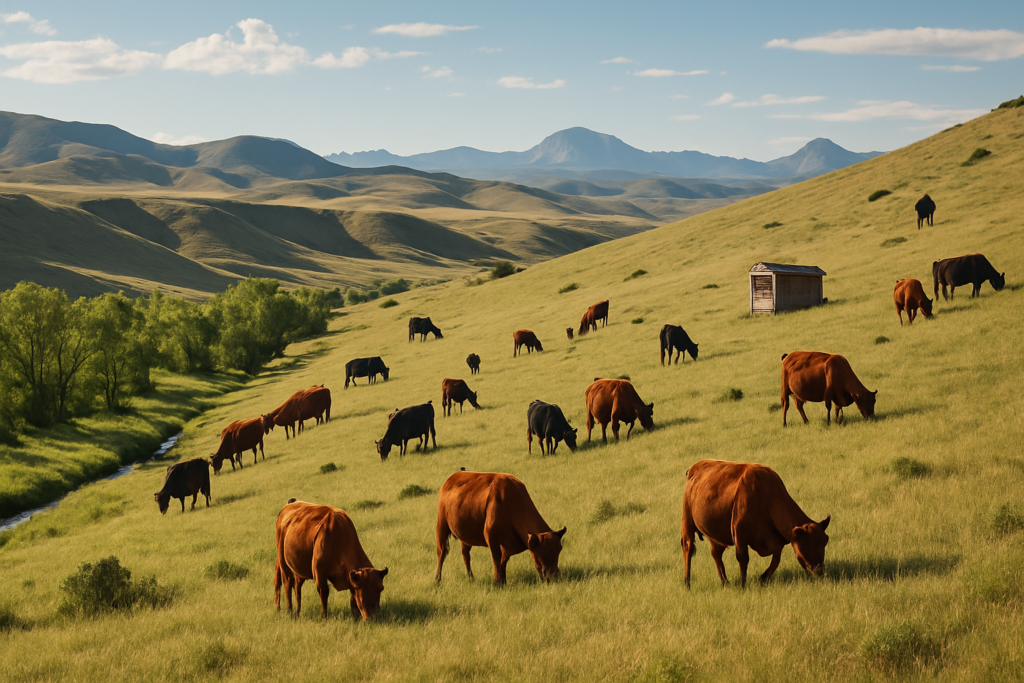
Turn a bunch of pairs into a section of summer range and watch where they end up. Within a week they’ve beaten a trail to the creek, camped in the cottonwoods, and grazed the bottom down to dirt. Meanwhile there’s knee-high grass on the north slopes and in the back corner that nobody’s touched all summer. The fence says they have the whole pasture. The cattle disagree.
That uneven use costs you two ways. The bottoms get hammered every year, which favors weeds and knocks back the good grass over time. And the feed you’re not using is feed you paid for—in lease dollars, in fence, in the water development you put in. You bought the whole pasture. You’re grazing maybe two-thirds of it.
Cattle graze on a budget of steps
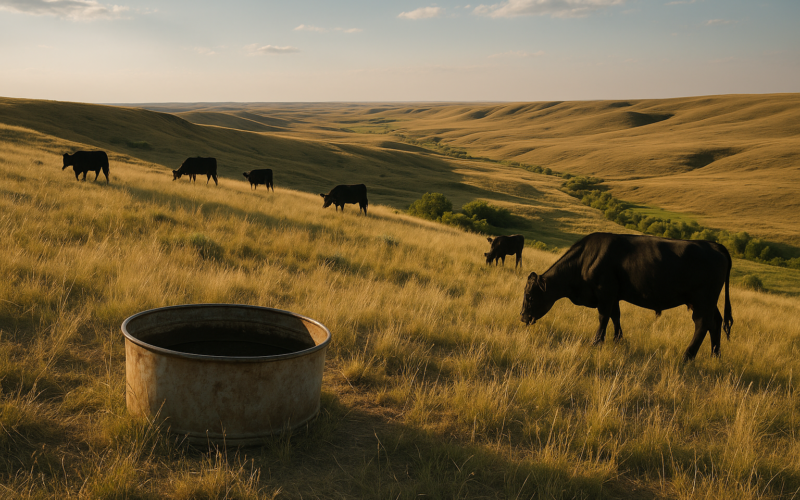
Cows are lazy about distance and lazy about slope, and they should be. Hauling a calf around burns energy. Left alone, they’ll settle within about a half mile of water and stay on the easy ground. On flat country that half-mile circle covers a lot. In the coulees and foothills where a lot of Montana summer range sits, the terrain does the fencing for you—cattle won’t climb a steep face to graze if there’s anything left down low.
You can’t argue them out of that. What you can do is move the things they want. Water, salt, and mineral are the three levers, and salt is the cheapest one to move.
Put the salt where the grass is, not where it’s handy
Most outfits set the mineral feeder by the corral or the water gap because that’s where you drive. That’s exactly where you don’t want it. You’re piling attraction on top of attraction, and the cattle never have a reason to leave the bottom.
Pull the salt and mineral back away from water—a quarter to a half mile is a reasonable pull, farther if the country’s open and gentle. Set it up on the benches and in the underused corners, on the good grass you want grazed. Cattle will travel to salt, and once they’re up there they’ll graze on the way and graze the walk back. You’re using the salt as bait to spread them across country they’d otherwise skip.
A few things that make it work:
- Move it. Salt in one spot for the whole summer just builds a new sacrifice area. Shift the location every couple weeks to pull grazing across the pasture in sections.
- Don’t set it next to shade or a rubbing post, or they’ll loaf there instead of grazing out from it.
- Watch the trails. If a new trail beats in to the salt, that’s the cattle telling you they’re using the country. Good.
- Keep it far enough from the fence that you’re not baiting your neighbor’s cattle onto your salt or wearing a path down the line.
Loose mineral works the same way—set the feeder out on the ground you want hit. Just be honest about wind and rain; a covered feeder holds up better set out in the open than an open tub does.
Water and a little pressure finish the job
Salt moves them a half mile. Water moves them the rest. If you’ve got a stock tank or a developed spring sitting idle in a far corner, that’s a second center of use, and cattle will build a whole new grazing pattern around it. A temporary tank fed off a poly line, or even hauling water for a stretch, can open up a chunk of range that’s been sitting empty because it’s too far from the creek. Water development is the biggest lever there is for distribution—it just costs the most.
Then there’s the low-cost tool: your horse. On big country it pays to ride out once a week and push the cattle off the bottom and up onto the fresh grass. You don’t have to herd them hard. Bump them out of the trees at mid-morning, drift them toward the salt, and a lot of them will settle up there. Do it a few times early in the season and they learn the pattern.
None of this replaces cross-fencing and rotation if you’re building toward that. But most summer pastures aren’t going to get split this year, and the salt is already in the shed. Move it uphill, move it around, ride the country, and you’ll graze more of what you’re paying for while giving the creek bottom a rest it’s needed for years.