You turn out a clean set of pairs in late May, everything looks good through branding, and then sometime in July you’re horseback pushing bulls and you notice a calf standing off by itself with one eye squeezed shut and streaming down its cheek. Look closer and there’s a white spot dead center. That’s pinkeye, and by the time you’re seeing it in one calf, the flies have usually already spread it to a dozen more.
Pinkeye—infectious bovine keratoconjunctivitis, if you want the mouthful—is one of those problems that costs you quietly. A calf with a bad eye doesn’t graze as hard, doesn’t travel to water, and loses weight you never get back. Bad cases scar over and leave a permanent blue or white eye that docks you at the sale barn even after the calf heals up. It’s rarely fatal, but it’s a steady drag through the exact months you want calves gaining fastest.
What actually sets it off
The bug people blame is a bacterium, but the bacterium almost never acts alone. It needs the eye irritated and open first, and summer range hands it plenty of help. Face flies feeding at the corner of the eye scratch the surface and carry the infection cow to cow—one fly working down a whole line of pairs bunched in the shade. Dust off a dry trail does the same thing. So does bright UV sun beating on cattle with no shade.
The worst offender in a lot of Montana country is tall grass gone to seed. When cheatgrass, foxtail, or brome throws up a coarse seedhead, calves walking through it get poked right across the eyeball. That scratch is the open door. If you’ve got a pasture that’s headed out and rank, you’ve built yourself a pinkeye pasture whether the flies are bad or not.
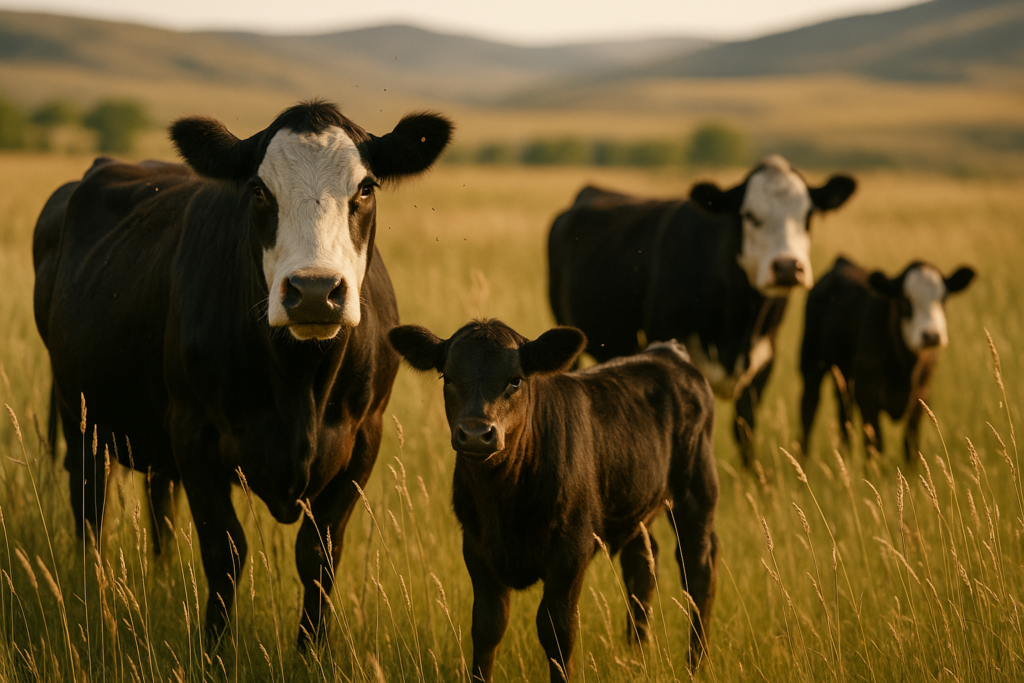
You’ll notice it hits calves harder than cows. Younger animals haven’t built up any resistance, and they’re the ones nosing through the tall stuff. White-faced cattle and anything with light pigment around the eye tend to get it worse than dark-eyed cattle, though nothing’s immune.
Get ahead of it instead of chasing it
The whole game is keeping eyes from getting irritated in the first place, because once it’s running through a herd on flies, you’re playing catch-up all summer.
- Knock down face flies. The same fly tags, pour-ons, dust bags, and oilers you’d run for horn flies help here, but face flies feed on the head and are stubborn—dust bags and back-rubbers set where cattle have to use them to reach mineral or water get product onto the face better than a back pour-on does.
- Clip or graze off rank, seeded-out pastures before you turn calves into them, or save those pastures for later once the seedheads have shattered off. If you can time your rotation so calves aren’t walking through headed-out grass at eye level, you’ve cut a big share of the risk.
- Keep dust down where you can—salt and mineral off the dusty corners, water gaps that aren’t a churned-up dirt wallow.
- Talk to your vet about a pinkeye vaccine if you fight it every single year. Results are mixed depending on the strain you’re dealing with, so it’s worth an honest conversation rather than assuming it’ll fix everything. Good mineral and a solid trace-mineral program don’t hurt either, since run-down calves take it worse.
When you find one, treat it like it’ll spread
Catch a calf early—weepy eye, squinting, before the ulcer clouds over—and treatment goes a lot better. Work with your vet on the antibiotic; a long-acting injectable is the common route, and some outfits patch or glue a cloth over the eye to keep flies and sun off while it heals. A patch also tells you at a glance which ones you’ve already doctored.
Handle the sick ones last if you can, and don’t run a fly-covered doctored calf right back into the middle of a bunched-up herd if you’ve got any way to give it a little separation. Pinkeye moves fast in a bunch standing nose to tail in the shade swatting flies.
The frustrating part is that summer range makes checking harder right when checking matters most. Calves are scattered, they’re a mile from the corral, and you’re not putting eyes on every one every day. That’s why the fly control and the pasture management up front pay off—they cut how many you’ll be roping out and doctoring in July when you’d rather be putting up hay. Ride through slow now and again, watch for the one hanging back with a runny eye, and deal with it before it turns into a set of scarred, cloudy-eyed calves you’re apologizing for come fall.