The pairs are out, the trucks are parked, and it’s tempting to think the fence work is done for the year. It isn’t. High water doesn’t wait for you to finish branding. Every creek that ran hard through May and into June has been working on your water gaps the whole time, and the boundary fence you strung last fall has had a full winter of frost heave, elk, and blown-down timber to loosen it up. The hole is already there. The only question is whether you find it or your neighbor calls to say your cows are in his hay meadow.
June is the right time to walk the line because the ground has settled, the creeks are dropping off their peak, and you still have daylight to spare after the day’s other chores. Wait until July and you’re chasing strays in the heat with the grass already short on the wrong side of the fence.
Water gaps take the worst of it
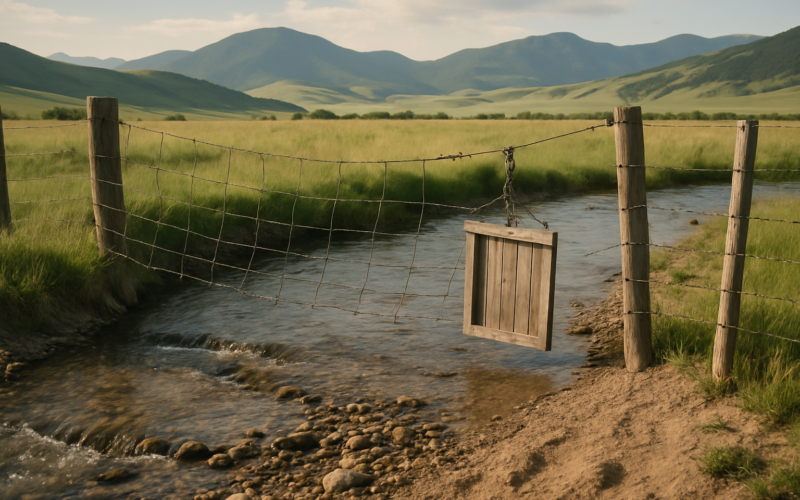
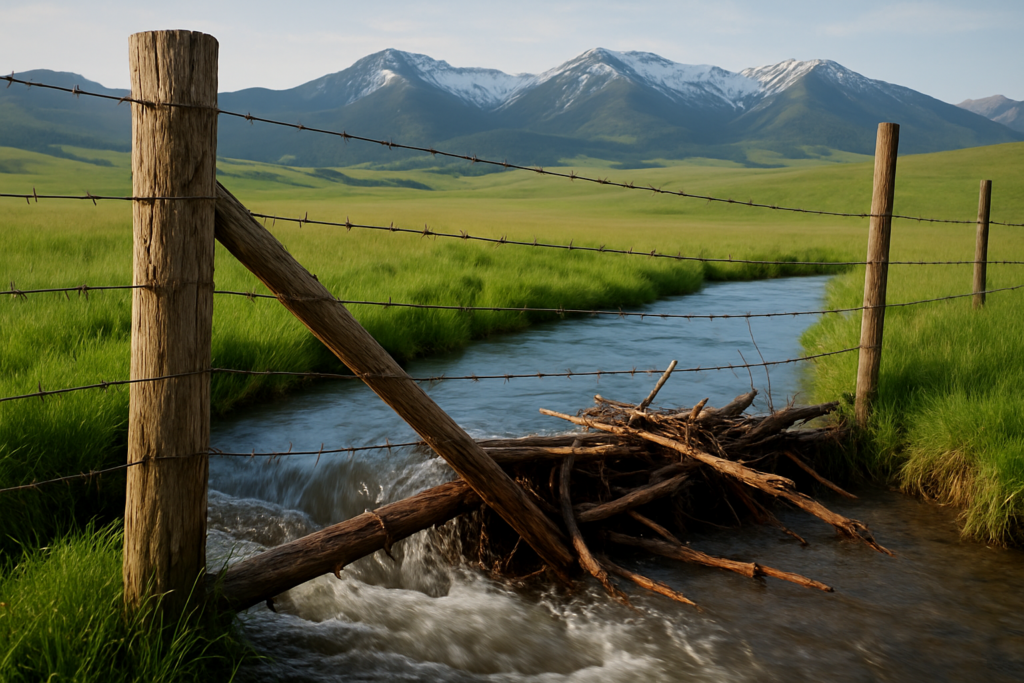
A water gap is the weak spot in any fence that crosses running water, and spring is exactly when it earns that reputation. Runoff piles brush, ice chunks, and whole cottonwood limbs against the wire until something gives. Sometimes the panel folds flat and the debris rides over it. Sometimes the anchor post pulls and the whole thing swings downstream and hangs there, wide open, looking fine from the road.
Get down to the creek and look at each crossing straight on, not from horseback fifty feet up the bank. Pull the trash out while the water’s still moving enough to help carry it, because a gap plugged with brush becomes a little dam, and the next hard rain will blow it out worse than before. Check that the bottom of the gap actually reaches the low water line. A cow will walk right under a gap that’s been lifted a foot by debris, and calves will do it first.
If you’re still fighting the same crossing every single spring, this is the year to build it to swing. A hanging gap made of light panel or a section of wire on a top cable, weighted so it drops back down when the water falls, will ride out a lot more than a rigid fence stapled to two posts. It costs an afternoon and saves you the annual rebuild.
The whole line, not just the low spots
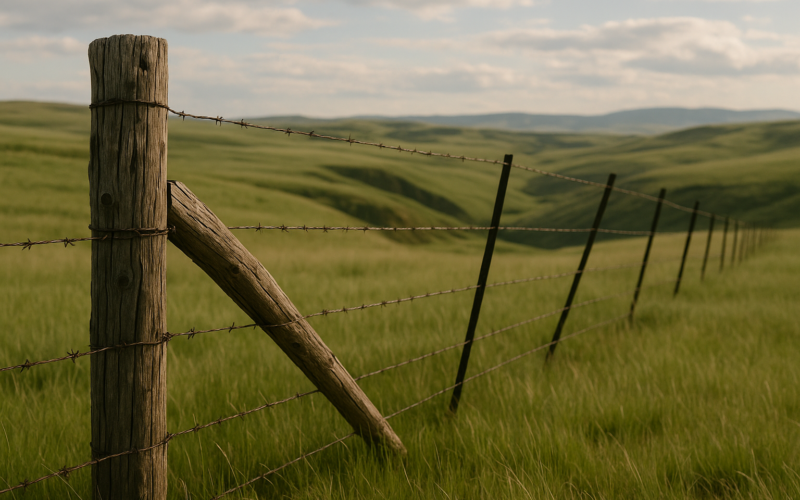
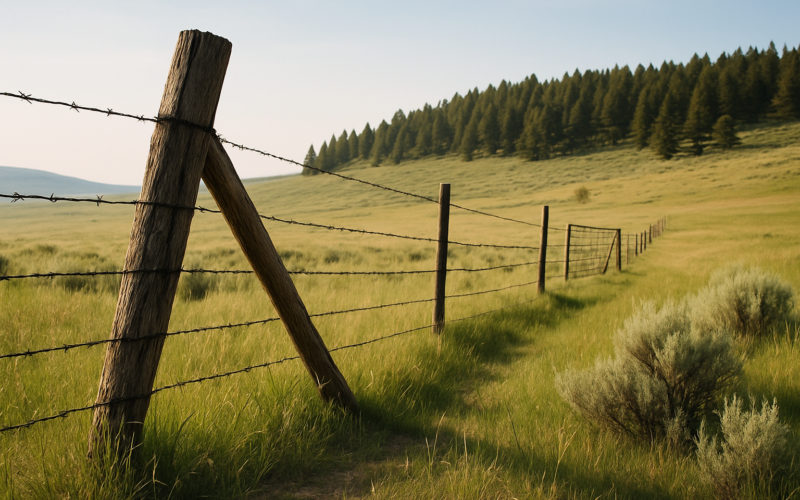
Water gaps get the attention, but the rest of the fence quietly comes apart over winter too. Frost lifts posts, especially the shallow ones in gravelly ground and the corner braces you were in a hurry on. Walk the line and shake the posts. A brace that rocks isn’t holding tension, and a slack fence is a fence cattle learn to lean through.
Look up as much as down. On timbered summer range, a single dead lodgepole across the wire will mat it to the ground, and elk finish the job crossing where the fence is already down. Snow load bends top wires and pops staples on the shaded north slopes. Carry a stretcher, a bag of staples, a spool of wire, and a few steel posts on the four-wheeler or in the saddlebags so you’re fixing as you go instead of noting problems you’ll never get back to.
Pay attention to the corners of the pasture where cattle bunch on flies and mud. That’s where they lean, rub, and push, and it’s usually where the fence fails midsummer. A little extra wire or a post driven now beats gathering pairs off the highway in August.
Fix the cause, not just the wire
When you find a hole, ask why the cattle went through it before you patch it and move on. A fence that gets crossed in the same spot year after year is usually telling you the cattle want something on the other side. Water on your side has gone dry, the salt’s in the wrong corner, or the grass is grazed off while the neighbor’s is fresh. Splicing the wire tighter won’t hold cattle that have a reason to leave.
Keep a running note of the crossings that give you trouble and the gaps that wash every spring. Over a couple of seasons that list tells you where to spend real money, on a permanent gap, a rebuilt corner, or a new stock tank that keeps cattle home. Fence work never really ends out here, but the ranchers who ride the line in June do a lot less gathering in the heat of July.