The first sign most people catch is a field that looks a little off color from the road — a grayish or bleached cast across the top of the stand where there ought to be dark green. By the time it shows up at pickup speed, alfalfa weevil larvae have already been working the tip growth for a week or more. They eat the newest, richest leaves first, which is exactly the part of the plant you’re baling for.
This is a first-cutting problem in Montana, and it lines up with the same stretch of June when you’re trying to decide whether the hay’s ready. Warm springs push the larvae along faster. A cool, drawn-out spring spreads the feeding out but doesn’t spare you. Either way, the weevil is one of the few insects that can knock real tonnage and protein off a cutting before you’ve got the swather greased.
What you’re actually looking for
The adult weevil is a small, dull brown snout beetle, but it isn’t the one doing the damage you care about. The larvae are. They start pale and turn a light green with a white stripe down the back and a dark head — small enough that you’ll miss them if you don’t go looking. They tuck into the folded tip leaves during the day and feed there, so the top of the plant takes the hit while the lower stem still looks fine.
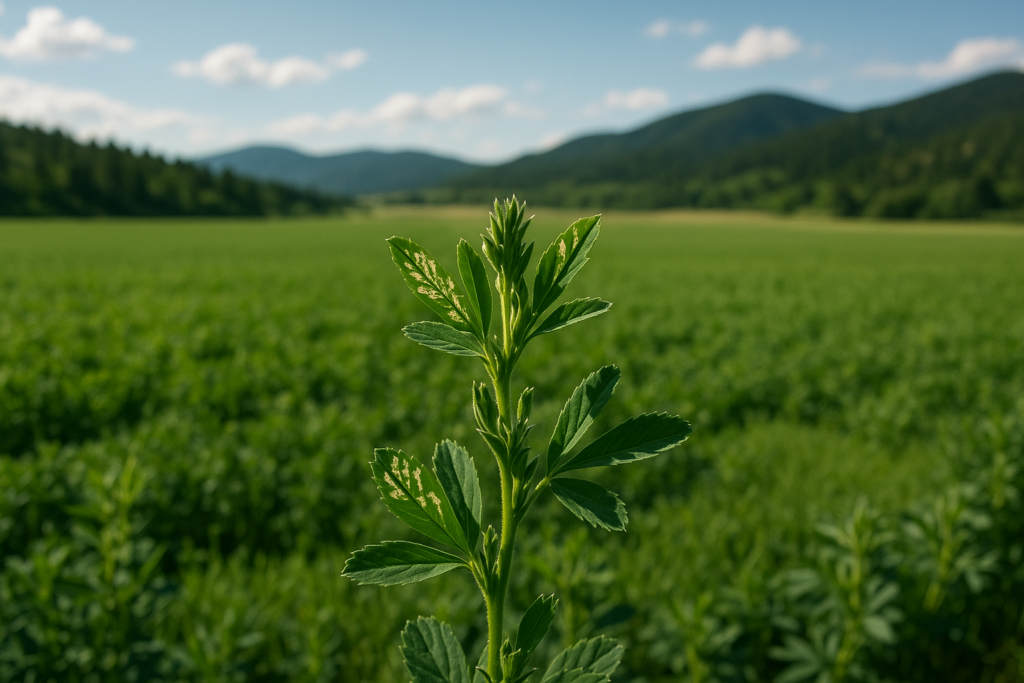
Get out of the truck and walk the field. Pick stems and shake or pull them apart over your hand or a bucket. Look in the growing tips, not down the stem. The classic damage is pinholing and skeletonized tip leaves — the green tissue eaten off between the veins, leaving a lacy, frosted look. That whitecast appearance across the canopy is a lot of skeletonized tips reflecting light.
Check more than one spot. South-facing slopes and the warmer, earlier-greening parts of a field tend to show larvae first. A stand that’s short on vigor coming out of winter feels the loss harder than a thick, well-fertilized one, because there’s less leaf to lose in the first place.
Cut early, spray, or ride it out
You’ve got three basic moves, and the right one depends on how close the hay is to cutting and how heavy the larvae are.
If the field is near ready, cutting early is often the cleanest control you’ve got. Laying the crop down strips the larvae of the tender tips they live on and exposes them to sun and heat in the windrow. It costs you nothing extra and it can end the problem for that cutting. The catch is the regrowth. Larvae that survive will move to the new shoots and stall your second cutting before it gets going, so you can’t cut and forget about it.
If the hay is still a couple weeks out and the larvae are thick, an insecticide may pay. This is where you have to read the label and mind the pre-harvest interval — the number of days you’re required to wait between spraying and cutting or grazing. In a June where the crop is moving fast, that interval can back you into a corner, so pick a product that fits your cutting date, not one that forces you to leave the hay standing longer than you want. Bees work blooming alfalfa hard, so timing and product choice matter for more than just your own crop.
If the larvae are light and the stand is vigorous, you may be money ahead doing nothing but keeping an eye on it. Not every field with a few larvae needs treating, and spraying a light infestation just to feel busy costs you cash and knocks out the beneficial insects that help hold the next generation down.
Don’t quit watching after the first cutting
The stubble is where a lot of people get burned. Weevil larvae that rode out the cutting crawl to the crowns and start eating the regrowth as soon as it pushes. A field that greens up unevenly and slow after first cutting — patchy, yellowish, stalled — is often getting grazed off by survivors, not short on moisture. Walk the stubble a few days after you bale and look at the new shoots the same way you looked at the tips.
Keep a few things in the back of your mind for next year, too. Vigorous stands shake off weevil pressure better than weak, thin ones, so fertility and stand age carry over into how much this bug costs you. And the fields that showed larvae first this June will likely be your early-warning fields next June. Mark them, and start walking them before the crop ever looks frosted from the road.