Every dry June, somebody puts up a beautiful-looking crop of oat or barley hay off a field that quit growing halfway through the season, and it turns out to be loaded. Nitrate poisoning doesn’t look like much until it’s an emergency. A cow that was fine at breakfast is staggering, breathing hard, and down by afternoon, with blood the color of chocolate. By the time you’re standing over her, the odds aren’t good.
This is a drought problem, and the early-summer stretches when a promising stand of cereal grain or annual forage stalls out for lack of rain are exactly when the risk climbs. It’s worth understanding before you cut anything for hay or turn cattle into a stressed field.
Why stressed plants stack up nitrate
Plants pull nitrate out of the soil and convert it into protein as they grow. That conversion needs steady growth and sunlight. When drought, hail, frost, or a cloudy stretch checks the plant, it keeps taking up nitrate through the roots but can’t turn it into protein fast enough, so the nitrate piles up. It concentrates in the lower third of the stem more than in the leaves or seed head.
The usual suspects in Montana are the cereal grains grown for hay or grazing — oats, barley, and wheat — along with annual forages like sorghum-sudangrass and millet. Certain weeds pile it on too. Kochia, pigweed, and lambsquarter are notorious for it, and those are the plants that green up and hang on in a dry pasture after the grass gives out.
A rain after a long dry spell makes it worse, not better. The plant surges to take up nitrate before it can catch up on the protein side, and the highest levels show up in the first several days after that rain. If you’re thinking about cutting a stressed cereal crop, don’t do it right after a shower. Give it a week of good growing weather.
How to keep from feeding a loaded crop
The only way to actually know is to test. You can’t judge nitrate by looking at hay, and a stressed crop can test high even when it cured out nice and green. Most feed labs and your local Extension office can run a nitrate test, and there are quick field test kits that at least flag whether you’ve got a problem worth sending in.
A few things that lower the risk when you’re making hay:
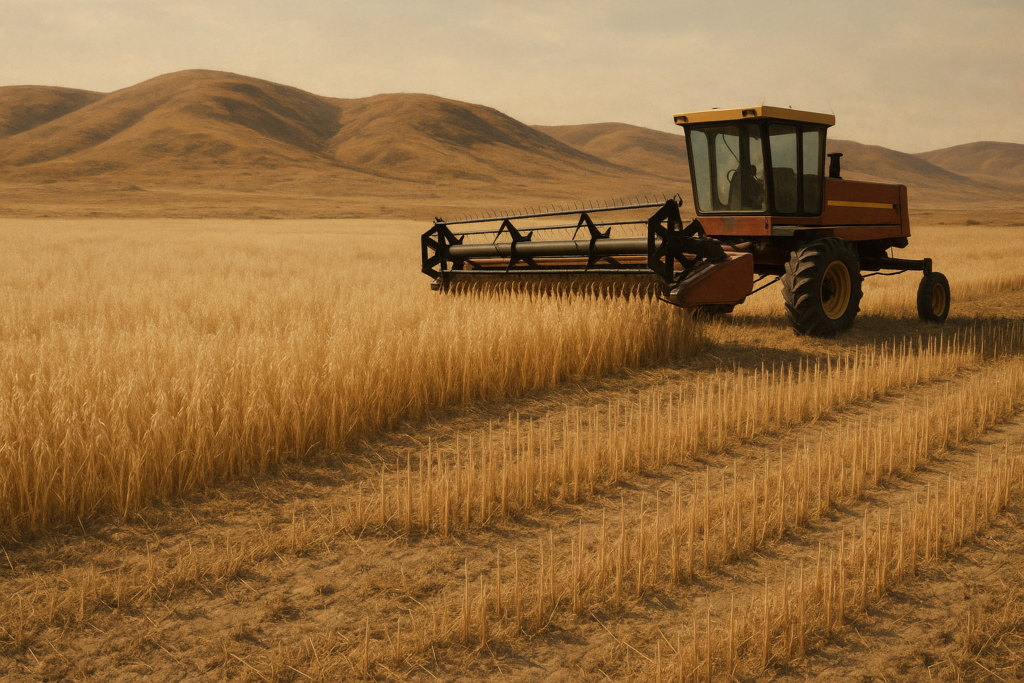
- Raise the cutter bar. The bottom of the stem holds the most nitrate, so leaving four to six inches of stubble on a suspect field leaves the worst of it behind.
- Don’t cut right after rain breaks a drought. Wait for the plant to resume steady growth.
- Test before you commit the whole stack to a feeding group, especially any hay off a field that quit growing or got hailed.
One thing to know about ensiling versus dry hay: the fermentation in silage or baleage can cut nitrate levels, sometimes substantially. Dry hay locks the nitrate in — it doesn’t break down in the stack the way it does in a silo. So a crop that’s questionable as dry hay may be safer put up as baleage, though you’d still want it tested.
Grazing and feeding around it
Hungry cattle turned onto a stressed cereal field or a weedy, drought-hit pasture are the ones that get into trouble, because they eat fast and eat the whole plant, stems and all. Fill them up on safe forage first. Turn them in later in the day rather than starving them overnight and dumping them onto a hot field in the morning.
If you’ve got hay that tested moderate rather than dangerous, you can often feed it by diluting — mixing it with clean hay so the total ration stays under the risk threshold, and bringing cattle onto it gradually so their rumen microbes adjust. Adapted cattle handle nitrate better than a fresh set of cows hitting it cold. Standing water helps too; keep clean water available, because dehydrated cattle concentrate everything.
Watch for the signs when you’re feeding anything suspect: rapid, labored breathing, weakness, staggering, muddy or brownish membranes around the mouth and eyes. It moves fast. Nitrate poisoning is treatable if you catch it early — a vet can give an injection that reverses it — but the window is short, so having your vet on the phone matters more than anything you’ll do yourself.
None of this means you can’t feed drought forage. Plenty of good winter feed comes off short cereal crops in dry years. It means you find out what’s in the stack before you build the ration around it, instead of finding out with a dead cow.