You notice pinkeye. You notice foot rot. Horn flies you mostly don’t, because the damage doesn’t limp or weep—it just quietly shows up as a lighter calf in October. By the middle of June the flies are building on the backs and bellies of your cows, and if you wait until the herd is black with them to do something, you’ve already given away part of the summer.
Horn flies are the small ones that sit in clusters along the topline and shoulders, heads pointed down, and lift off in a gray sheet when a cow shakes or a horse pushes through the bunch. Unlike face flies, they don’t come and go from the manure and the eye. They live on the animal. A horn fly feeds on blood again and again through the day, and it does that right there on the cow’s back where it hatched from and where it’ll stay.
What they actually cost you
The bleeding itself is part of it, but the bigger drain is behavior. Cattle carrying a heavy load of flies quit grazing to fight them. They bunch up, stand in the wind, stomp, throw their heads, and spend energy on the flies that ought to be going into milk and gain. Nursing cows with fewer flies milk better, and their calves show it at weaning. The calf never gets bitten much itself—it’s small and it moves—but it pays anyway through a mother who’s distracted and losing condition.
The number people generally use is around 200 flies per animal as the point where control pays for itself. You don’t need to count them. If the cows have a solid gray patch across the shoulders and back and they’re fighting instead of grazing at midday, you’re well past it. Watch the bulls, too. Flies pile onto herd bulls worse than anything, and a bull that spends June and July stomping and standing in the shade instead of covering cows is a problem you’ll read in next year’s calving book.
Pick a delivery you’ll actually keep up
There’s no single right tool—there’s the one that fits how you run and how often you see your cattle. Insecticide ear tags are easy and they work, but timing matters. Tag too early, in May, and the tags are running low on chemical by August when the flies peak. Most people are better off tagging closer to when the flies build. Pull the tags in the fall so the flies aren’t sitting on a weak dose all winter, which is exactly how resistance gets started.
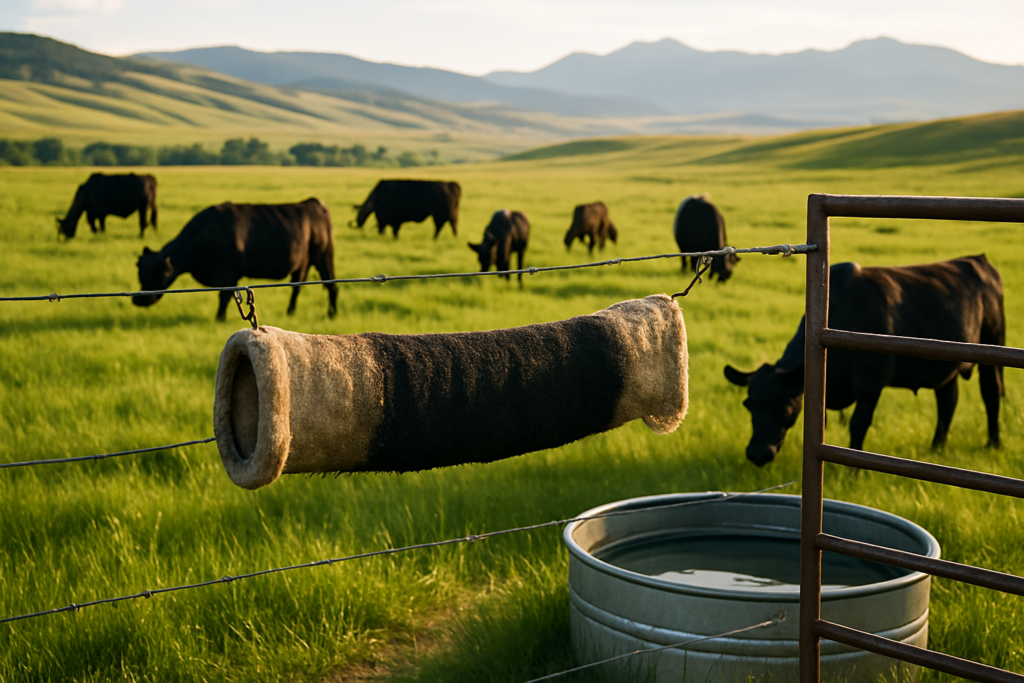
Dust bags and back rubbers work well if you can hang them where the cattle have to use them—in a gate they walk through to water or mineral, so they treat themselves every day. A rubber that’s dry and cracked, or hung where the cows can dodge it, does nothing. Charge it and check it.
Pour-ons knock flies down fast but don’t last long, so they’re better as a mid-summer cleanup when the herd’s already tight and easy to bring in, not as your only plan. And a feed-through insecticide in the mineral works from the other end—it passes into the manure and kills the larvae before they hatch. That only helps if the mineral stays out and the cows keep eating it, and it won’t touch flies drifting in off the neighbor’s cattle across the fence.
Rotate, or you’ll breed a fly you can’t kill
Horn flies build resistance fast, and the mistake that drives it is using the same class of insecticide year after year. The pyrethroid tags and the organophosphate tags are different chemistries—switch between them across years instead of reaching for the same box every June. If a treatment that used to clean them up stops working, that’s your sign, and buying more of the same product won’t fix it.
None of this has to be a big production. Most outfits do fine with a rubber or dust bag on the water gate and a set of tags timed to the fly build, then a pour-on if things get out of hand in the heat. The point is to stay ahead of them. Once the cows are standing in a bunch at ten in the morning slinging their heads instead of grazing the cool of the day, the flies have already taken their cut—and it’s coming out of the calf.