You can do everything else right at summer work — good crew, quiet cattle, the whole book run through the chute — and still turn out calves that aren’t protected. The reason usually isn’t the product. It’s what happened to that product between the cooler and the animal. Vaccine is a live or fragile thing, and June and July in Montana are hard on it.
Most producers around here run their branding and any summer boosters through weather that swings from a frosty morning to eighty-five degrees by mid-afternoon. The bottle rides on the flatbed, sits open in the sun, gets drawn up an hour before it’s used. None of that shows up when you’re pushing pairs through. It shows up in August when a calf you thought was covered comes down sick anyway.
Heat and light are the two killers
Modified live vaccines are the touchy ones. Once you mix the powder with the diluent, the clock starts, and heat speeds it up. A reconstituted bottle sitting on the chute in direct sun can lose most of its punch inside an hour. The old rule of mixing only what you’ll use in the next hour or so isn’t fussiness — it’s the difference between a live product and a bottle of expensive water.
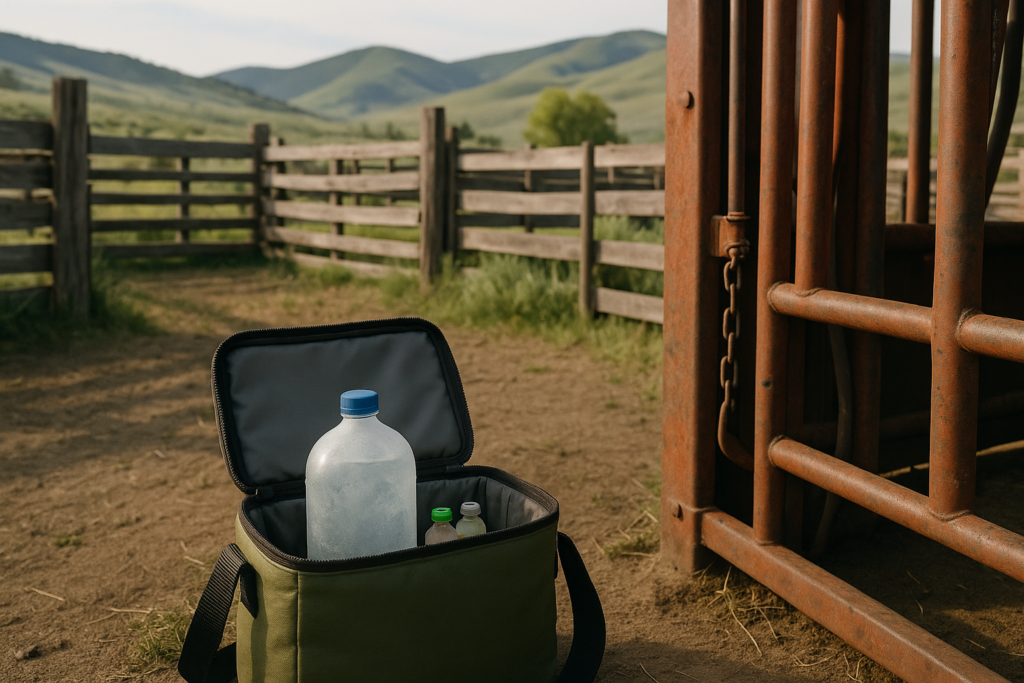
Ultraviolet light does its own damage. Sunlight breaks down the virus fast, so a bottle standing on the tailgate in the open is cooking even if the air feels cool. Keep bottles in the cooler and only pull them when you’re loading the gun. A lot of hands run a small soft cooler right at the chute with a frozen jug in it and drop the working bottle back in between draws.
Cold matters on the other end too. Vaccine that freezes on the way out in a cold snap, or sits against the ice pack all day, can be ruined just as surely as one that got hot. You want it cool, around refrigerator temperature, not frozen solid. A thermometer in the cooler tells you more than a guess. So does checking that the fridge at the house is actually holding temperature before you ever load up — a lot of shop refrigerators run warmer or colder than the dial says.
The needle and the transfer
Killed and modified live both suffer from sloppy handling at the syringe. Drawing vaccine through a needle you’ve been sticking calves with pushes manure and hide bacteria back into the bottle. That contaminated bottle can then seed an injection-site abscess in the next fifty head. Use a clean draw needle, keep it in the bottle if you’re using a transfer setup, and don’t jab the working needle back through the stopper.
Change needles often. A burred or bent needle tears tissue, and a dull one on a thick summer hide means you’re not always getting the dose where it belongs. Broken needles happen when cattle jump — mark that animal and deal with it, because a needle left in muscle is a real problem down the line for anybody who eats or sells that beef.
Give it subcutaneously in the neck when the label allows, tented up under the loose hide. That’s the low-value cut, and it keeps injection-site knots out of the parts that bring money. Space two products a hand’s width apart so a reaction to one doesn’t muddy the other.
Little things that quietly cost you
Read the label on mixing two products in one syringe — some can’t share a barrel without one killing the other. Don’t top off a partly used bottle with fresh product. Pitch the leftovers at the end of the day rather than saving a half-mixed bottle for the strays next week; it won’t be worth carrying.
Rough handling matters more than people think. Vaccine works best in an animal that isn’t already stressed to the edge. A calf that’s been chased, overheated, and dehydrated in a hot corral doesn’t mount much of a response no matter how good the product is. Work cattle early in the day when you can, keep water in front of them, and don’t hold a full bunch packed in the sun waiting on the chute.
Keep a simple record of what went in, the lot number, and the date. If a bunch breaks with something you vaccinated against, that lot number and your handling notes are the first thing worth checking. Half the time the answer isn’t a bad batch. It’s a bottle that spent the afternoon warming up on the pickup seat while the crew ate lunch, and by the time it hit the calf, there wasn’t much left in it to work with.