You spot the first one riding through the pairs in late June — a calf hanging back with one eye clamped shut, tears streaking the hair down its face. Leave it a week and that clear eye clouds over blue-white, then ulcers, and by the time you get a chance to run them the whole draw has three or four squinting into the shade. Pinkeye doesn’t kill many cattle, but it steals gain off calves that ought to be putting on weight, it drops a heifer’s sale value, and a bad case leaves a permanent white scar or a blind eye you’ll cull for later.
The bug behind most of it is Moraxella bovis, and it needs help getting from one animal to the next. That help shows up in June as face flies, dust, dry seedheads, and hard UV coming off long summer days. Any one of those irritates the eye. Once the surface is scratched and weeping, the bacteria take hold, and the same face fly that fed on that weepy eye carries it straight to the next calf’s face. One infected animal becomes a source the flies work off of all day.
What sets it off in a Montana summer
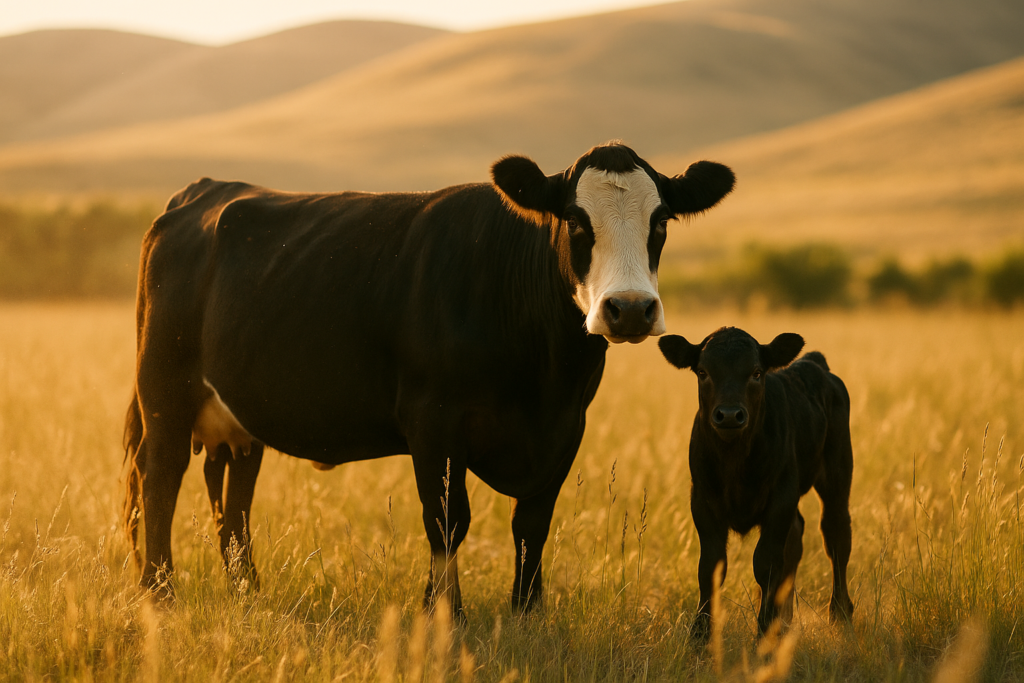
Pinkeye rarely comes out of nowhere. Something roughs up the eye first. Cheatgrass and foxtail awns catch calves running through tall growth. Ryegrass and mature native grass throwing seedheads brush eyes as cattle graze. Blowing dust on a dry June wind does the same thing, and so does the glare — bright sunlight on a bare-faced calf makes the eye more vulnerable, which is part of why calves with dark pigment around the eye tend to fare better than baldy-faced ones.
Then the face flies show up. They feed on the moisture around eyes and nostrils, and they don’t stay put on one animal. A calf with a running eye becomes a feeding station, and the flies spread it down the whole bunch. If you’re already fighting horn flies, you’ve got the fly pressure that carries pinkeye right along with it.
Cut the fly load and the spread slows down
You can’t sterilize a pasture, but you can knock the odds down. Fly control does double duty here — the same tags, pour-ons, dust bags, and oilers you’d run for horn flies help cut the face fly traffic that moves pinkeye around. Face flies are harder to control than horn flies because they only spend part of their time on the animal, so dust bags and oilers hung where cattle have to use them, over a mineral feeder or a gateway, tend to earn their keep better than a tag alone.
Clipping or grazing down rank, seedy pasture before you turn pairs in takes away the awns that scratch eyes in the first place. If you’ve got a trap or a smaller pasture, keeping the tallest, roughest growth off the young calves helps. Some outfits mow the tops off pastures headed out to seed for exactly this reason.
Watch the mineral, too. Cattle short on copper and other trace minerals seem to fight infection worse, and green June grass fools people into pulling the mineral tub right when the herd still needs it.
When you find one, treat it and separate it
An early case caught while the eye is just weepy and cloudy responds a lot better than one that’s already ulcered. The standard treatment is a long-acting antibiotic labeled for it — talk to your vet about what fits your operation, because product choices and withdrawal times change. Getting the drug in early matters more than which one it is.
Give the eye some cover. Gluing a patch over a badly affected eye keeps the flies off it, cuts the sunlight, and gives the surface a chance to heal while it also stops that eye from being a fly buffet the rest of the herd feeds off. A cheap patch on the worst two or three animals can slow an outbreak more than you’d think.
If it’s practical, pull the actively infected calves away from the clean ones. On big summer country that’s often not realistic, but even moving pairs to a different pasture breaks up the fly-and-face cycle a little.
Vaccines exist and some producers swear by them, but they’re aimed at particular strains and results are mixed — they work better as one piece of a fly-control-and-management plan than as a standalone fix. If pinkeye hits your herd hard every summer, that’s a conversation worth having with your vet over the winter, before turnout, not in the middle of an outbreak in July.
The calf you catch squinting on the first day is a warning. The flies are already carrying it. What you do that week — flies, patches, early treatment — decides whether you doctor three head or thirty.