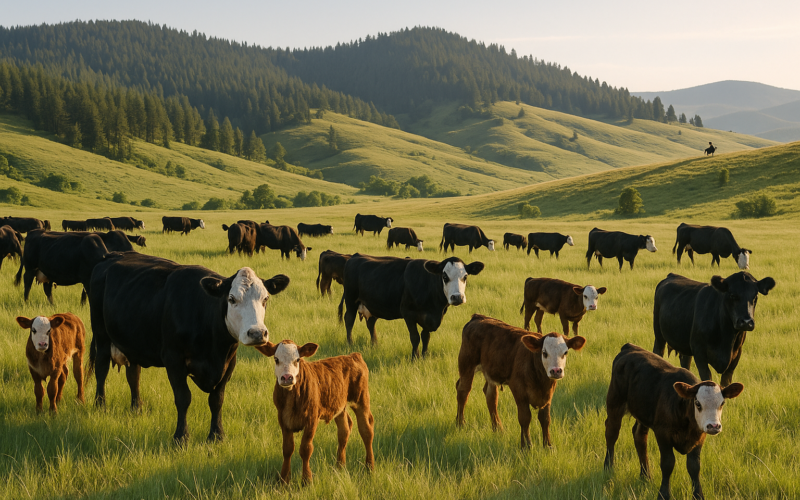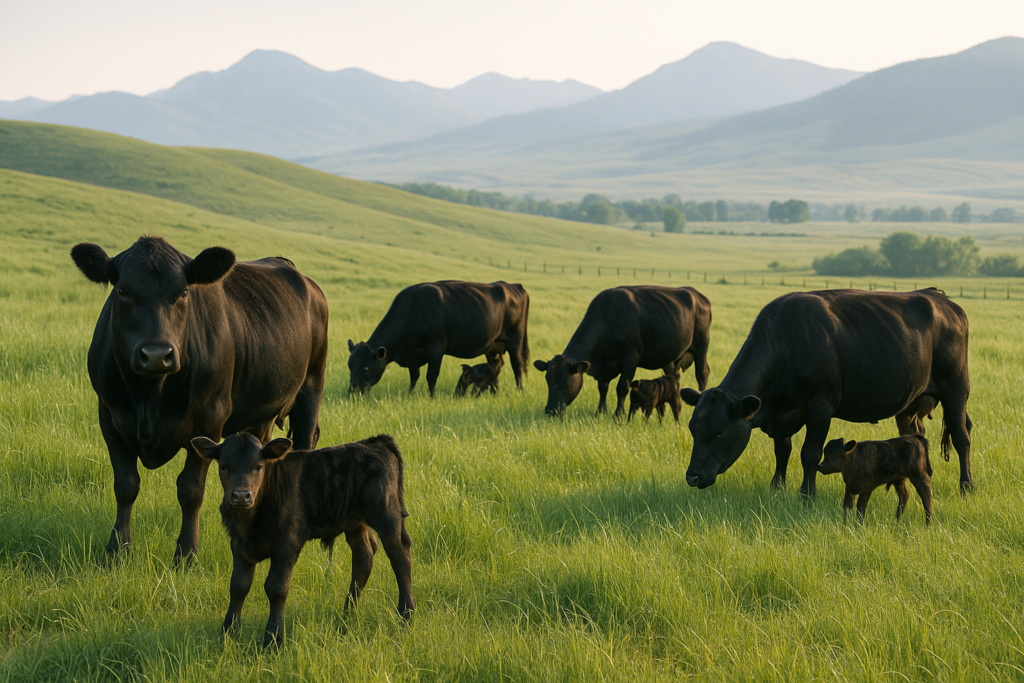
Walk your breeding pastures in mid-June and the mature cows look fat and settled. They raised a calf, shed off, and they’ll cycle back on time without much help from you. The animal to worry about is the two-year-old with her first calf at side. She’s doing three jobs at once — finishing her own growth, milking hard, and trying to breed back on schedule — and she’s got the smallest tank to draw from. When a group comes up short in the fall, the opens skew heavy toward that age.
Nobody plans to lose their best young cows. It happens because a first-calf heifer looks fine at a glance in June. She’s slick, she’s got a calf sucking, she’s out on green grass. What you can’t see from the pickup is that she calved later than the herd average, took longer to start cycling again, and now she’s trying to catch a breeding window that’s already half gone.
Why she’s behind before breeding even starts
A heifer that calves as a two-year-old isn’t a finished cow. She’s still putting frame and weight on herself, and every pound of milk she makes for that calf comes off the top of what’s left. Her body handles that math in a fixed order: maintenance first, then growth and lactation, and reproduction dead last. A cow that’s short on groceries doesn’t cycle. It’s that simple, and it’s why the thin ones and the young ones are the ones that don’t settle.
The other piece is the postpartum interval — the stretch after calving before she starts cycling again. A mature cow might come back into heat in five or six weeks. A first-calver runs longer, sometimes ten weeks or more, especially if she’s carrying too little condition. Turn the bull out and she may not have cycled a single time yet. She’s not open because the bull failed. She’s open because her body wasn’t ready to be bred.
Run them separate and feed them like they need it
The single most useful thing you can do is stop treating first-calf heifers like the rest of the cow herd. Pull them into their own group for breeding if you can. In one bunch they compete with big mature cows for the best grass and lose, and they get bred behind a bull that’s spending most of his effort on cows that are already cycling.
In their own pasture, a few things go your way. You can put them on your better grass without a boss cow shoving them off. You can run a younger, sound bull at a tighter ratio so heifers that do cycle actually get covered. And you can watch a smaller, more uniform group and actually notice who’s slipping.
Condition is the lever you’ve got. A first-calf heifer wants to come into breeding carrying a little more flesh than a mature cow, not less, because she’s still spending on growth. If she calved thin last spring, June grass alone may not dig her out of the hole in time. Green grass is high in moisture and can move through a young cow fast without loading her up the way it looks like it should. Keep mineral in front of her, watch phosphorus and copper, and don’t assume lush pasture is covering everything.
The decisions that follow you into next year
Breeding heifers a couple weeks ahead of the main cow herd is old advice that still pays. It gives the ones that settle a longer recovery window before they have to breed back as three-year-olds — the second-calf slump is real, and a heifer that calved late her first year is set up to calve late or come up open her second. Getting her bred early the first time takes pressure off every year after.
When you preg check in the fall, look hard at when the young cows are due, not just whether they’re bred. A first-calver carried in the tail end of the calving window is a cow that’ll fight the calendar for the rest of her life in your herd. Some outfits give a late-bred two-year-old one more chance; others cut her and move on. Either way, the decision is a lot cleaner when you kept the group separate and know exactly where each one stands.
None of this is complicated, and none of it is new. It’s just easy to skip in June when everything’s green and the young cows look better than they are. The heifers you sort off and manage now are the ones still in the herd, calving on time, four years from today.