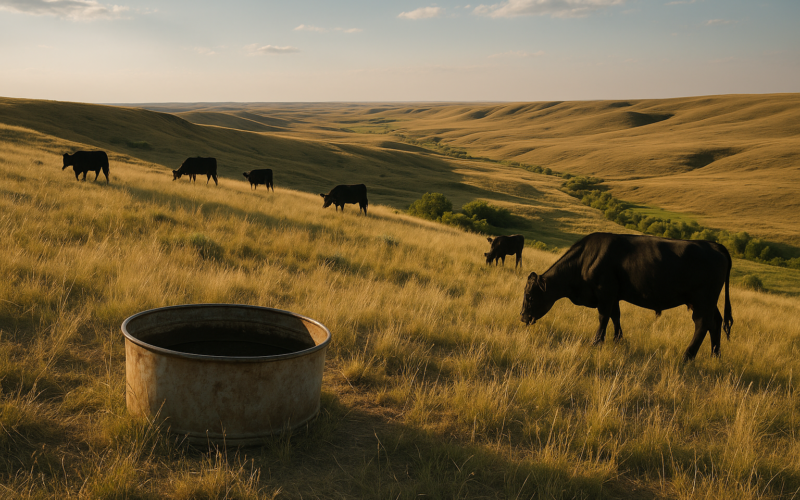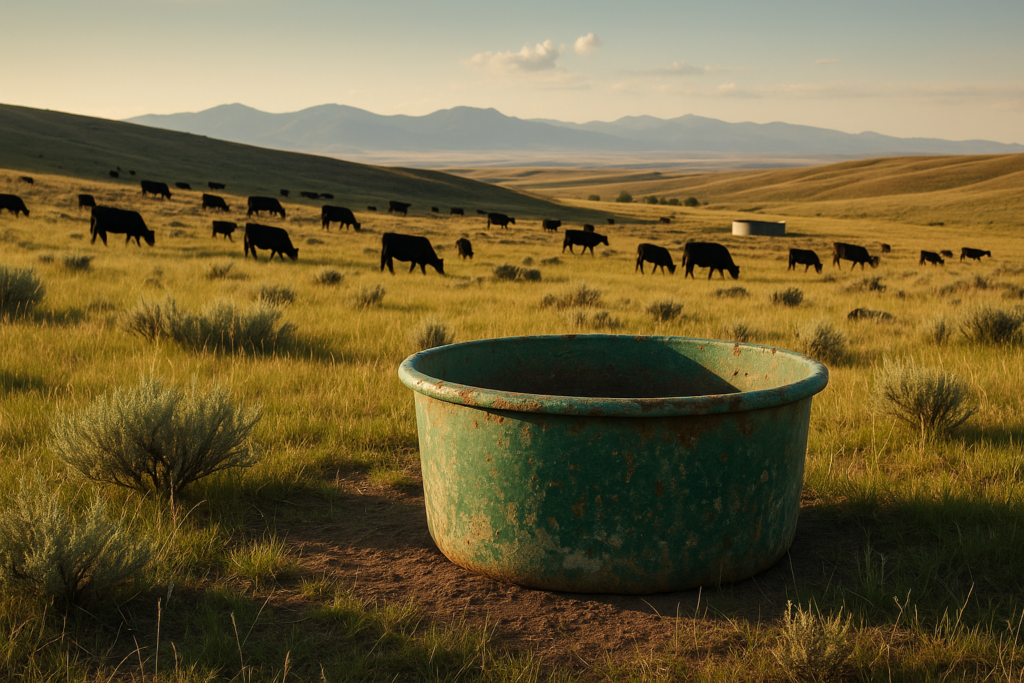
Walk any summer pasture in late June and you can read where the cows spend their day. The grass by the water is mowed to the dirt. The trail from the gate is bare. Ride out to the back fence or up the ridge behind the coulee, and there’s a stand of grass nobody’s touched since turnout. Same pasture, same cattle, and half of it carries the whole load while the rest goes to seed and gets rank.
Cows are lazy the same way water is lazy. They take the easy country first — flat ground, close to the tank, near the shade. Left alone they’ll hammer that ground for weeks and never climb the hill or cross the draw to the grass you’re paying rent or taxes on. Fencing fixes it, and water development fixes it, but both of those cost real money and take time you may not have this summer. Salt and mineral placement is the tool sitting in the back of the pickup right now.
Move the Salt Away From the Water
The single most common mistake is setting the mineral tub or the salt right by the tank. It feels convenient — one stop when you check water — but it stacks two attractions on top of each other. The cows were coming to water anyway. Putting salt there just gives them another reason to camp in the one spot that’s already overgrazed.
Put the salt where you want the cattle to be, not where they already are. On big country that means a quarter mile to half a mile off the water, out on the underused ground. Cows will travel to salt. They’ll get a drink, then drift out to the mineral, graze around it, and lay up out there instead of loafing at the tank all afternoon. You’re using their salt appetite to spread the herd across the pasture.
Set it uphill and back in the parts they’ve been skipping. If there’s a bench above the creek bottom that never gets touched, that’s where the tub goes. Cattle will pull up onto ground they otherwise wouldn’t bother with, and they’ll graze it on the way to and from. Move it every couple weeks as the grass around the last spot gets used, and you keep chasing them onto fresh feed.
Don’t Skimp on the Mineral Itself in June
Green grass fools a lot of people into pulling the mineral, and that’s a mistake for reasons that show up at preg check, not now. Fast-growing spring and early-summer grass can run short on the minerals a cow needs to breed back, and this is the stretch when she’s trying to cycle and settle. If you’re going to keep a loose mineral in front of them all summer, the placement trick costs you nothing extra — you’re buying the mineral anyway, so put it to work moving the herd while it does its other job.
Loose mineral in a covered tub or a mineral feeder works better than a block for this in wet weather, since a rained-on block turns to mush and cattle quit licking it. Whatever form you run, keep it dry and keep it out where you want the grazing pressure. Watch consumption — if a tub sits full and untouched for two weeks, the cows either aren’t finding it or don’t need it, and you’ve learned something about where they’re traveling.
Salt Is a Herder, Not a Fence
Be honest about what this does and doesn’t do. Salt placement nudges cattle. It won’t hold them off a wet meadow or keep them out of a riparian bottom the way a wire will. On steep, rough country with a long pull to water, cows may still refuse to climb no matter where you set the tub, and no amount of mineral fixes a pasture that’s simply too big for one water source. Those situations need fence or another tank.
But on a lot of Montana summer pasture, the difference between grazing half the country and grazing most of it is a couple of tubs hauled to the right spots and moved on a schedule. It’s the cheapest grass management going. You’re already handling the salt and mineral — the only decision is where the pickup stops to unload it. Stop out on the ridge instead of at the tank, and by August you’ll have grass in corners that used to be bare, and less of the overgrazed, weed-prone dirt that shows up around every water hole by fall.