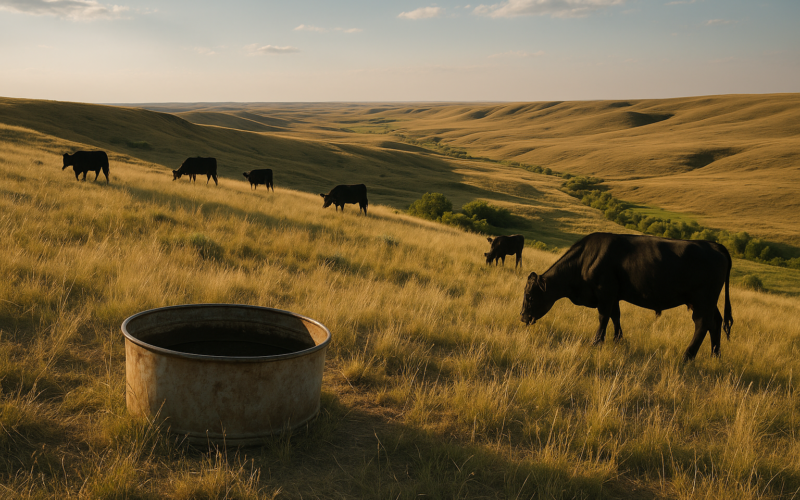
Turn a bunch of pairs into a section of native range in June and watch what they do. They don’t graze it even. They walk to the green bottoms, hit the same tender plants over and over, and leave the ridges and the coarse stuff standing rank. By July that pasture looks half grazed and half wasted, and the cows are gaunt in the middle of plenty. The grass isn’t the problem. The way it’s getting bitten is.
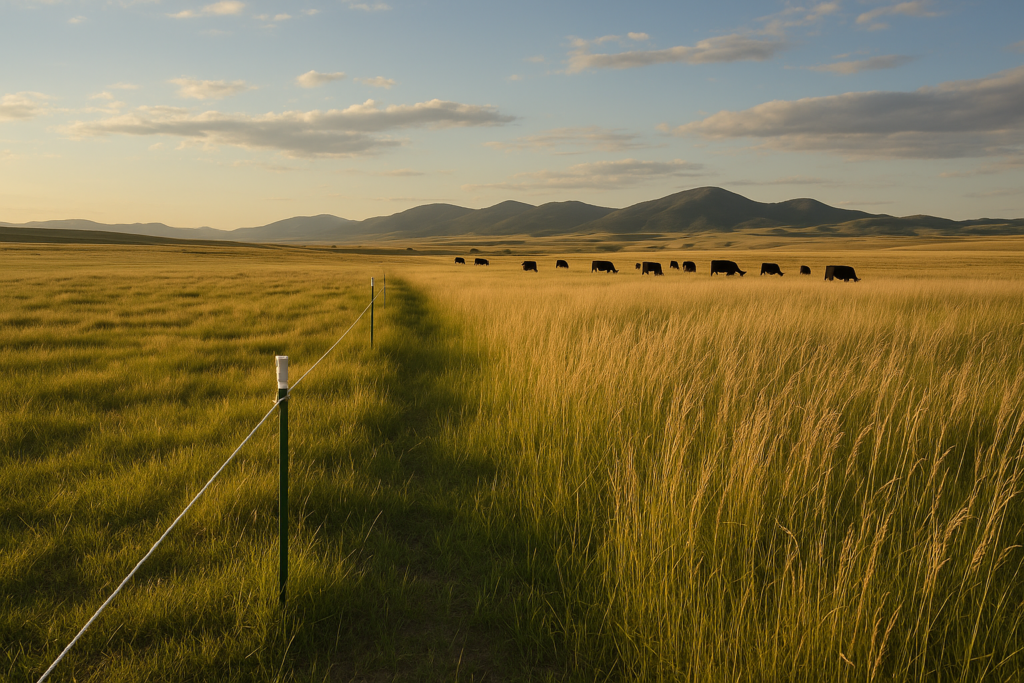
The fix most ranchers already own is a spool of poly wire and a sack of step-in posts. You don’t need to trench in permanent fence to change how a pasture grazes. A single hot strand run across the middle of a big field, moved every few days to a week, will pull more feed off the same ground and leave it in better shape going into the dry part of summer.
Why continuous grazing shorts you
A cow is a picky, efficient animal. Given a wide-open pasture, she grazes the plants she likes best first, then comes back to the regrowth on those same plants because it’s tender. That’s a second and third bite on a plant that hasn’t had a chance to rebuild its roots. Meanwhile the plants she skipped keep growing, head out, and go stemmy. You end up overgrazing your best forage and undergrazing the rest, all in the same fence.
The overgrazed plants are the ones that quit on you in August. A grass that gets bitten to the dirt and then bitten again spends its energy pushing new leaves instead of holding moisture and staying green. Rest is what lets it recover. In continuous grazing there is no rest, because the cows can always circle back.
Split that pasture in two and graze one half while the other sits. Split it in four and you’ve given each piece three-quarters of the season to grow back before the cows return. You haven’t added an acre. You’ve just stopped letting the cattle take the same bite twice.
What it takes to run temporary wire
You can build a working single-wire subdivision out of a hand reel of poly wire, a couple dozen step-in posts, and a good energizer. On a big pasture, a solar charger or a battery unit fenced off from the cattle will run a long stretch of single wire if the grounding is decent. Poor ground is the reason most electric fence doesn’t bite, so put in enough ground rods and check the fence with a tester, not with the back of your hand.
One hot wire holds cattle better than people expect, but only if they respect it. Train them where they’ll notice it. Run the wire across a small trap or along a lane the first day or two so a cow that walks into it gets a clear jolt and learns the wire means stop. After that, most pairs will honor a single strand across open country. Green calves are the ones that duck under, so set the wire high enough that they hit their backs, not their bellies.
The piece people forget is water. Every paddock has to reach water, or the split does you no good. If your tank or your creek sits in one corner, run your temporary wires like spokes off that water so every division still touches it. Where the water is fixed in one spot, a short lane fenced with two strands lets cattle walk back to drink from any paddock without turning the whole pasture into one grazed strip.
Moving in June, before the grass gets ahead
Mid-June is when this pays the most, because cool-season grass is growing faster than the cows can eat it. Move them through the paddocks quick now, taking the top off before it heads out, and the plants stay leafy and keep growing. Move them too slow and the grass in the paddock they’re standing in gets stemmy while the piece ahead of them gets rank and wasted.
Watch the grass, not the calendar. When a paddock is grazed down to where the plants are bitten but not scalped, roughly half the leaf gone, move on. Leaving that much residual is what fuels the regrowth and keeps the soil shaded and cooler through the dry stretch. Graze it to the dirt and you’ve traded a little more feed today for a bare, slow-recovering paddock in August.
You don’t have to fence the whole ranch the first year. Take your worst pasture, the one that always grazes uneven and comes up short late, and put a wire across the middle of it. Run the cattle through it once the way you’d run them through a two-paddock rotation. Come August, compare the rested half to what that pasture usually gives you. The grass will make the argument better than anybody can.