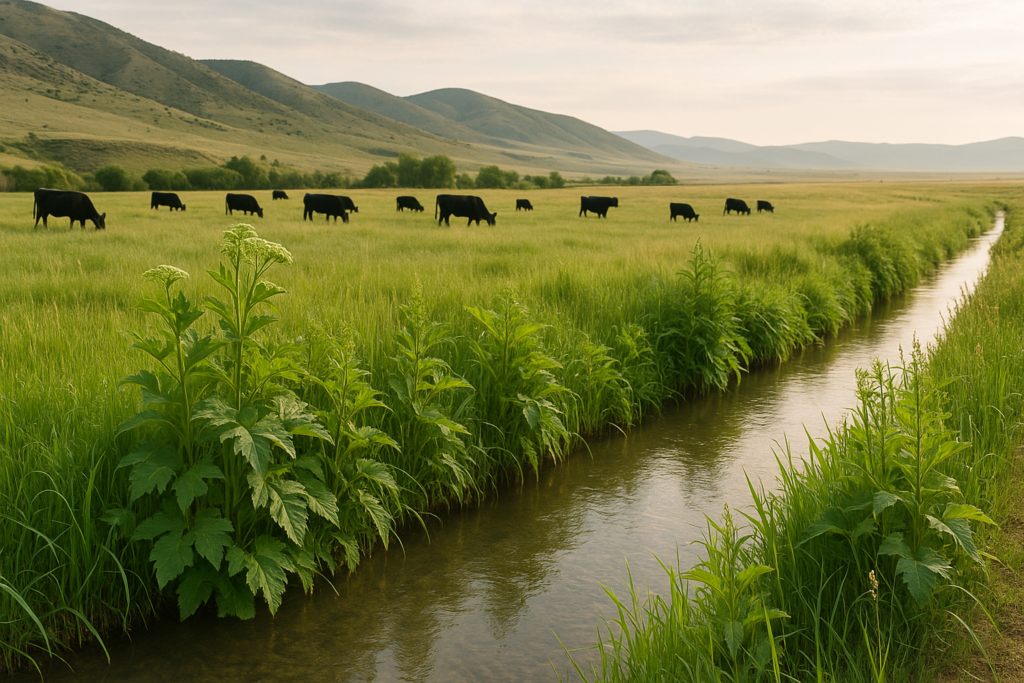
Larkspur gets the attention on the foothill range, but the plant that will drop a cow faster than anything growing in Montana lives down in the wet ground. Water hemlock comes up along irrigation ditches, creek bottoms, seep springs, and the low corners of a meadow where the water stands. In June it’s green and leafy while a lot of the upland is still coming on, and that timing is the problem. Cattle turned onto early pasture look for the green, and the green is often right where this plant is.
The dangerous part isn’t the leaf. It’s the root. Water hemlock has a thick, tuberous rootstalk, and when you cut it open the inside is chambered — hollow crosswise partitions, sometimes with a yellowish oily liquid. That liquid is loaded with cicutoxin, and it doesn’t take much. A cow that pulls a root out of soft, saturated ground and swallows it can go down and be dead inside an hour. This isn’t a slow poisoning like some of the mineral problems. It’s fast, it’s violent, and by the time you notice the animal is missing, it’s usually over.
Learn to tell it apart
Water hemlock is easy to confuse with a few harmless neighbors, and the mistakes cut both ways — people either ignore it or panic over the wrong plant. It grows two to six feet tall with hollow, sometimes purple-streaked stems. The leaves are divided into narrow, toothed leaflets, and here’s the field mark worth remembering: the veins in the leaflet run to the notches between the teeth, not to the tips. It carries small white flowers in flat-topped clusters, like an umbrella, later in the season. But the root is the giveaway — chambered inside, with that oily smell some people compare to raw parsnip.
Don’t confuse it with the cow parsnip that grows big and coarse in the same wet draws, or with the ditchside weeds that are just weeds. If you’re not sure, dig one and split the root lengthwise. The horizontal chambers settle it. Wear gloves and wash up after, because the toxin gets into you through a cut just fine.
When and where cattle get into it
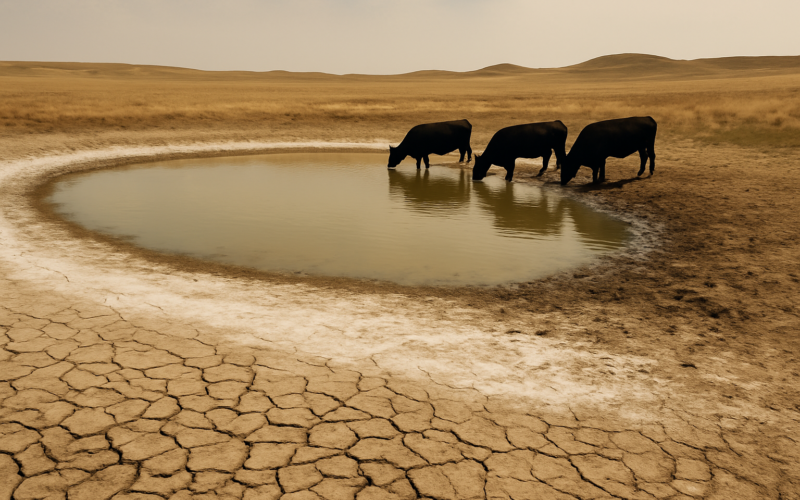
The trouble runs highest in spring and early summer for two reasons. Ground is soft from runoff and irrigation, so a cow grazing the leaf gets the root too. And the plant is at its most palatable and its most potent early in the growth. Trampling along a ditchbank or a pond edge loosens roots and floats pieces to where an animal will find them. Cattle crowding water in a wet corner, or pushed into a fresh meadow with hungry cows first thing, are the ones that get bit.
A few things keep the losses off your outfit:
- Walk your wet meadows, ditch runs, and creek crossings before you turn out. Look at the low, standing-water ground first — that’s where it lives.
- Dig and haul off the plants you find, root and all, and burn them or bag them. Don’t leave pulled roots lying where stock can reach them. Grubbing works because the population in a given spot is usually small and clustered.
- Fence cattle back off the worst ditchbanks and boggy corners during the early-summer high-risk window, or at least don’t make them graze those spots down hard when they first come on.
- Turn cows out with a full belly, not empty and grabbing at the first green thing they hit.
Spraying can knock it back, but a small patch is often faster to grub out, and grubbing gets the root that the spray sometimes doesn’t finish. Whatever you do, mark the spots. This plant comes back in the same wet places year after year because the seed and the crowns sit right there in ground that never really dries out.
Once a cow’s down, there’s not much time
The signs come on hard — nervousness, drooling, muscle tremors, then violent convulsions. There’s rarely a window to treat by the time you see it, and calling the vet is more about confirming what killed her than saving her. That’s why this one is a prevention game start to finish. A morning spent walking the ditchbank in June is cheaper than the cow you find stretched out at the water’s edge in July, and a lot cheaper than the second one that finds the same root you never pulled.