The first real heat of the year usually shows up in June, and it catches people who have been working in a jacket at daylight for two months. You feel fine at seven in the morning. By two in the afternoon the black cows are standing with their heads down, mouths open, backs humped, and you’re wondering why the bunch that trailed easy last week won’t move off the water.
Cattle don’t handle heat the way we do. They sweat poorly, and a lot of their cooling happens through breathing. A rumen full of forage is a furnace running all day, and the peak internal heat load hits a cow hours after the peak air temperature — often into the evening. That lag is the part people miss. The cow that looked stressed at four o’clock is still shedding that heat at nine, and if the night doesn’t drop below the low sixties, she never fully unloads before the next day stacks more on top.
Read the cow, not the thermometer
Air temperature alone doesn’t tell you much. Humidity, still air, and direct sun all pile on. A muggy 88-degree afternoon with no wind is harder on a cow than a dry 95 with a breeze. Watch the animals instead of the gauge.
Early stress looks like cattle bunching, seeking shade or water, and standing rather than lying. As it climbs they start open-mouth breathing, then drooling, then breathing with the neck stretched out and the tongue out. A cow panting with her head low and her sides heaving is in trouble, and pushing her at that point can kill her. Black-hided cattle, fat cattle, and anything with a heavy hair coat that hasn’t fully shed take it worst. Fescue-affected cattle are worse yet, though that’s less of a problem on most Montana grass than it is back east.
Work early, then quit
The old rule of working in the cool of the morning isn’t just about your comfort. Handling generates heat inside the animal, and that heat comes on top of whatever they’ve already banked. Gather, sort, haul, and process before mid-morning if you can. If you’re gathering a summer pasture to move pairs, be done and off them by ten or eleven on a hot day.
Don’t fall for the idea that early afternoon is safe because the air hasn’t peaked. The cow’s heat load peaks later than the air does, so the middle of the afternoon is exactly when you’ve got the least room to spare. If you can’t finish in the morning, wait until evening — but understand that on a night that won’t cool off, evening isn’t the relief it looks like.
A few things that help when you do have to handle them:
- Keep bunches small in the corral so cattle aren’t packed together with no airflow.
- Don’t let cattle stand jammed in an alley or a hot trailer any longer than it takes. A parked, loaded trailer with no air moving is one of the fastest ways to lose an animal.
- Move slow. Every extra push adds heat you can’t take back.
- Have water available in the working facility, not just out in the pasture.
Water is the whole ballgame
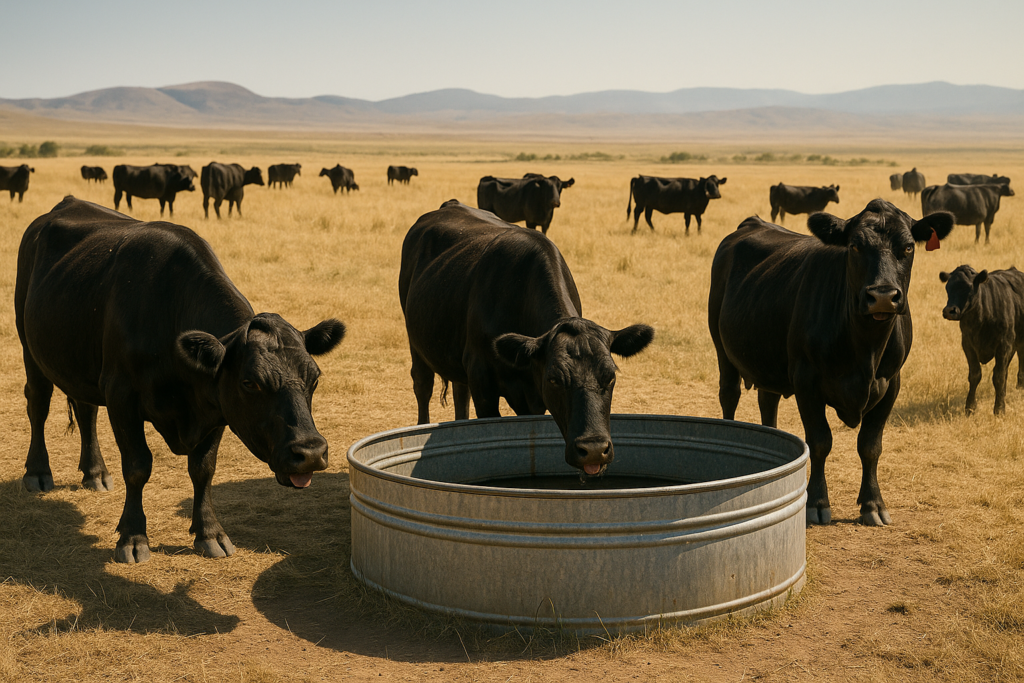
A cow’s water intake can more than double in hot weather, and shortfall shows up fast. The trouble usually isn’t the total in the tank — it’s flow and access. A float valve that keeps up fine in May can’t refill fast enough when the whole herd wants to drink in the same two-hour window in the evening. If cattle are lined up and shoving, or if the tank’s dry by dark, your recovery rate is the problem, not the storage.
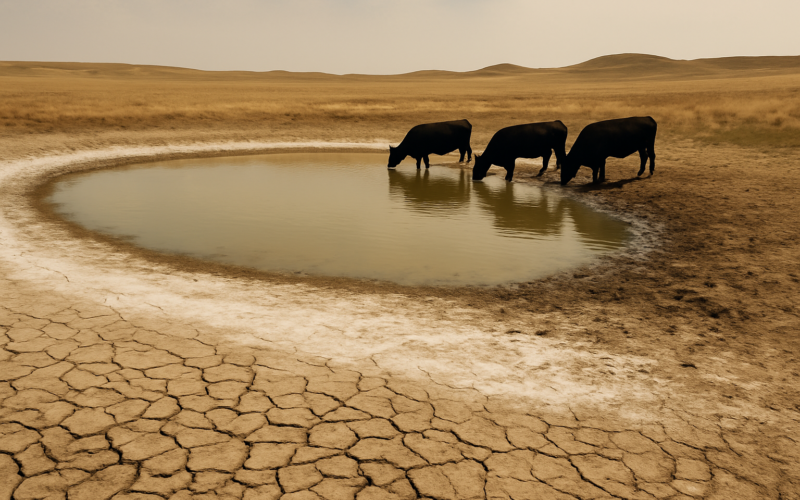
Check that every tank and every stock pond a pasture depends on is actually running, and that timid cattle and small calves can get to the edge without getting run off. On the miles of country a lot of us summer, one plugged pipe or one dropped float leaves a whole bunch short on the worst possible afternoon, and you may not find out until you count a death loss.
Shade helps if you’ve got it, but most Montana summer range doesn’t offer much beyond a coulee or a line of timber, and cattle will bunch under a lone tree — which brings its own lightning problem. Airflow matters more than shade anyway. Cattle strung out on an open ridge in a breeze often fare better than cattle packed in the still air of a brushy bottom.
None of this is complicated. The mistake is treating a hot day like any other and getting your work done on your schedule instead of the cow’s. Gather early, keep water ahead of them, and when the afternoon builds, leave them alone.