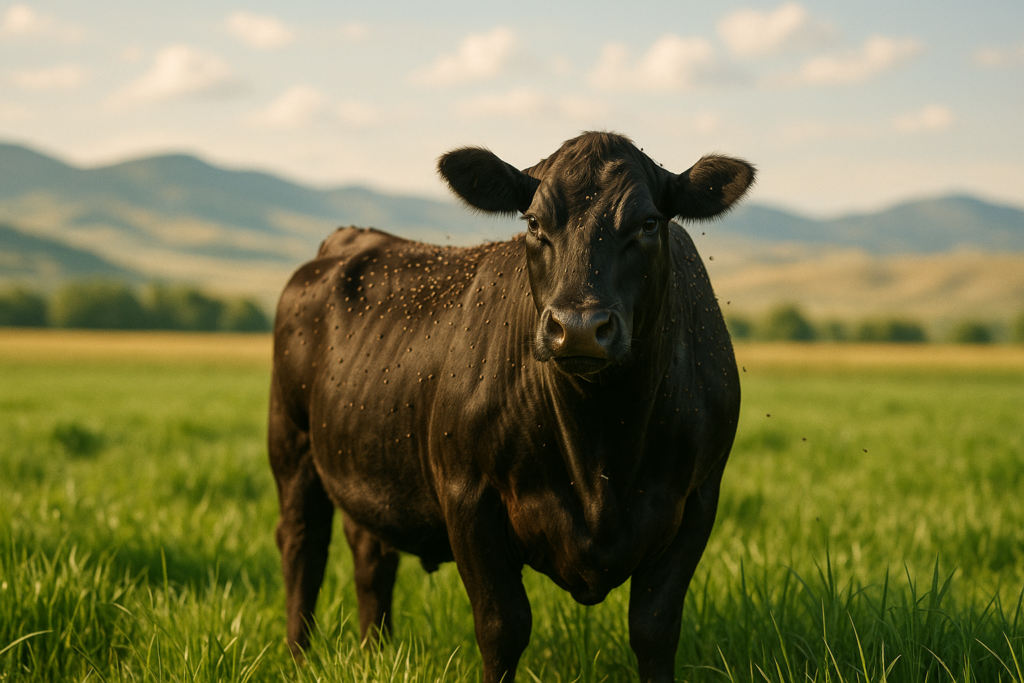
By the middle of June the horn flies are up and building fast. You can see them stacked along the topline and clustered on the belly and shoulders, dark little bunches that lift off in a cloud when a cow shakes and settle right back down. Unlike the face fly that hangs around the eyes and moves off to the next animal, a horn fly stays put. It lives its whole adult life on the cow, taking twenty or thirty blood meals a day and only leaving her long enough to lay eggs in fresh manure.
That’s the part that makes them expensive. A few dozen flies won’t hurt anything. But horn fly numbers double and double again through summer, and once a cow is carrying a couple hundred, she’s spending her day fighting instead of grazing. She bunches up, stands in the wind, quits filling. That comes straight off the calf at her side and off her own condition going into fall breeding. The damage is quiet and it adds up over ninety days, which is exactly why a lot of outfits never connect the light calves in October to the flies they shrugged at in June.
Know when it’s worth treating
You don’t chase every fly. The rough working number people use is around two hundred flies per animal before treatment pays, and two hundred is a lot less than it sounds. Picture a patch on one side of the cow about the size of two hands laid flat, solid with flies, and you’re in that neighborhood. Once the whole bunch is carrying loads like that, the flies are costing you more than the control will.
Ride through and actually look before you decide. Early June you may still be under threshold and can hold off. By late June into July, most Montana herds are past it. The country matters too. Cows on lush bottom ground and irrigated meadow, with manure staying moist, grow more flies than a set of pairs out on dry foothill range.
The tag you leave in too long is the one that quits
Insecticide ear tags are the easy button, and that’s the trouble with them. A tag works great the first year and then a little less every year after, because you’re running the same chemistry across the same flies for months at a stretch. Horn flies have a short life cycle, several generations a summer, so resistance builds quick. The pyrethroid tag that knocked them flat five years ago won’t touch them now on a lot of places, and the ranch that’s still using it is wondering why the cattle are covered in July.
A few things keep tags working:
- Don’t tag until flies are actually at threshold. Tag in May and you’ve burned through the chemistry before the worst of the season even starts.
- Pull the tags in fall, or at least when they quit. A dying tag puts out a low dose that does nothing but train the flies to survive it.
- Rotate classes year to year. If you ran a pyrethroid last summer, move to an organophosphate this year, or switch to a different method entirely instead of a tag.
One tag per cow is a light dose. Two per cow works better on heavy years, but the same rotation rules apply.
Ways to hit them besides a tag
Tags aren’t the only tool, and leaning on more than one keeps any single one from wearing out. Backrubbers and dust bags hung where cattle have to pass under them, going to water or through a gate, put insecticide on the animals every day without a chesty fight in the chute. They work best when cattle are forced to use them, not when they can walk around.
Pour-ons knock numbers down fast but don’t last long, so they fit better as a mid-summer reset than as your only plan. A feed-through insect growth regulator, fed in mineral, works from the other end. It passes through the cow and keeps horn fly larvae from developing in her manure. The catch is it only handles the flies born in your own pastures. If the neighbor isn’t feeding it and his cows are across the fence, adult flies drift over and you still need something on the animal.
None of this matters if the cattle quit eating the mineral, so keep the tubs where they’re used and check that they’re going down. The best plan is usually two methods that hit the flies different ways, changed up from what you ran last year. Fight them the same way long enough and you’ll breed a fly that laughs at all of it.