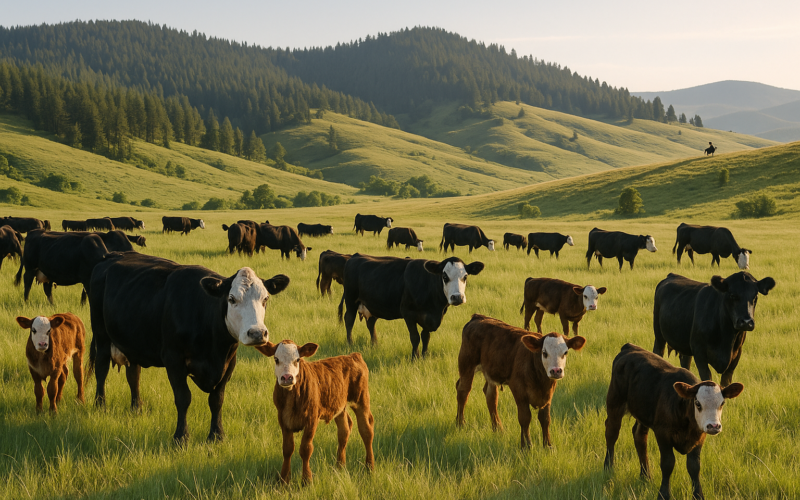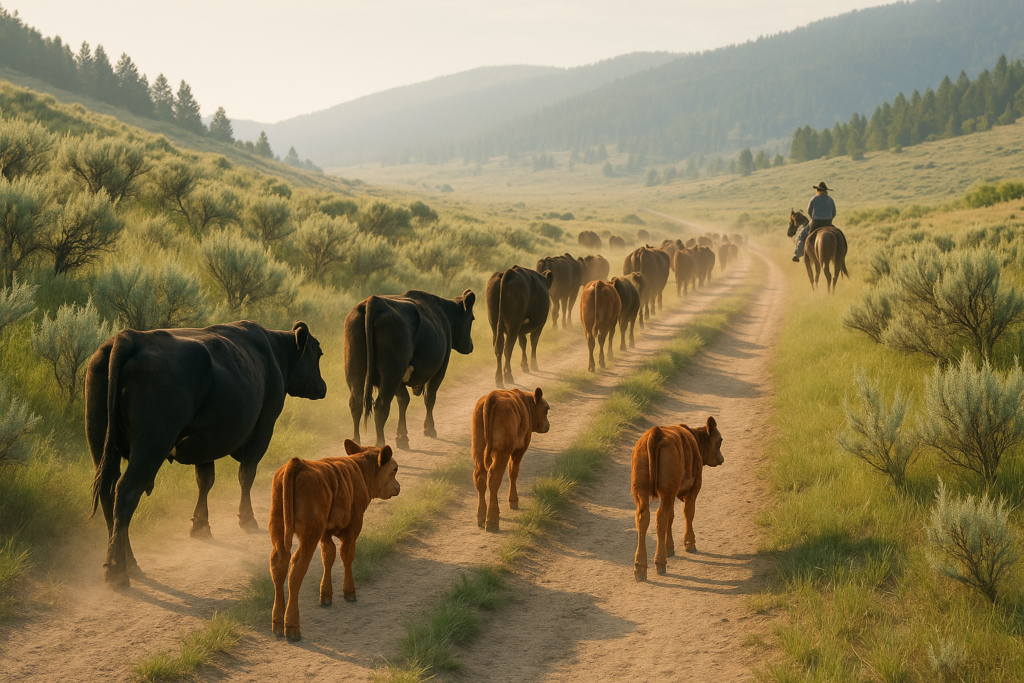
The drive to summer range looks simple on paper. Gather the pairs, point them up the trail, put them through the gate on the forest allotment or the far pasture. But the way you handle that bunch for a few hours in June decides how many calves you doctor in July, and whether you come home with a bawling cow and no calf to match her.
A cow travels fine. A three-month-old calf does not. He wants to stop, nurse, lie down in the shade, and drift off to the side while his mother keeps walking. Push the herd from behind at your pace instead of theirs, and the calves get shoved to the front, to the edges, and into the churn where pairs come apart. Once a calf and cow lose each other in a moving bunch, they may not sort it back out before you shut the gate.
Move at the calf’s pace, not yours
Pairs trail best when you let the leaders lead and work the edges instead of the tail. If you’re riding hard on the drags, you’re pushing the slowest calves into the ones ahead and building pressure that spreads through the whole herd. Cattle read pressure and release. Ride up on the flank, let them line out, then back off and let them travel. A bunch strung out along a trail, walking with their heads level, is a bunch that’s staying paired up.
Give them rest. A stop of fifteen or twenty minutes lets calves find their mothers and nurse, and lets the pairs re-sort before you ask them to move again. It feels like wasted time when you’ve got a long day and want to be back by noon. It isn’t. The pairs you let settle on the trail are the ones that walk off together at the top instead of scattering.
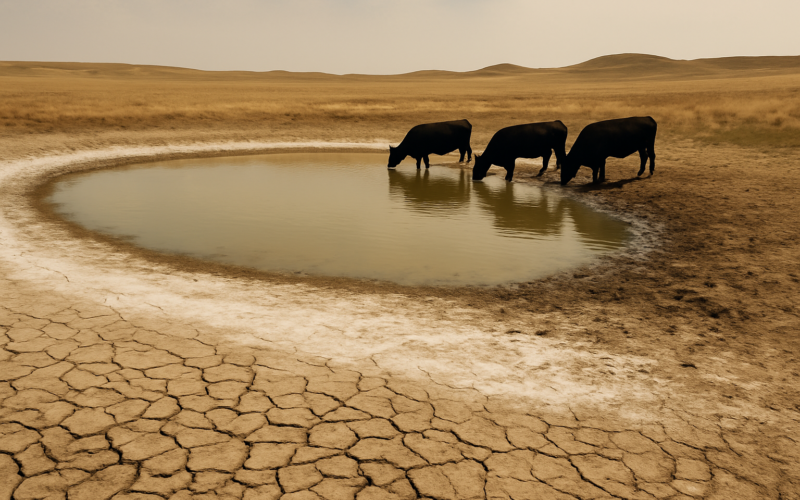
Water matters on a warm June day, especially if the country is dry early. If your route crosses a creek or a stock tank, let them drink. A calf that’s already behind on water and getting dragged up a dusty trail in the heat is the one that shows up sick a week later.
Dust is where the pneumonia starts
Bunch cattle up tight on a dry trail and push them hard, and every one of them is breathing the dust the herd kicks up. That dust carries the makings of summer pneumonia, and calves already stressed from the move and separated from their mothers are the ones that break with it. You don’t see it on the trail. You see it in the calf standing off by himself, ears down, breathing hard, ten days later.
The fix is the same thing that keeps pairs together: don’t crowd them, don’t push the tail into the front, and move early in the day before the heat and the worst of the dust build. A herd that’s spread out and walking calm raises a lot less dust than one you’ve balled up and are hollering at from behind.
Count what goes through the gate, and check the next morning
Count pairs at the gate, not just head. It’s easy to run the right number of cows onto range and still have calves mismothered or left behind in the timber. A calf that got separated on the drive will follow the nearest cow, try to suck her, get kicked off, and go hungry. He can drift back down the trail looking for the spot he last saw his mother.
The morning after you turn them out is when the trouble shows. A cow standing at the gate bawling, bag tight, no calf on her, means a pair came apart somewhere on yesterday’s drive. Ride back down the trail and check the shade and the draws before you assume the worst. Calves that got left behind are often lying up right where the herd stopped to rest, waiting.
Riding the fence and checking water before turnout gets a lot of attention, and it should. The drive itself gets treated like a chore to knock out. But the pairs you move quiet and let settle are the pairs that spread out and graze the new country instead of standing at the gate the first three days. Take the extra hour on the trail. It’s cheaper than doctoring calves the rest of the summer.