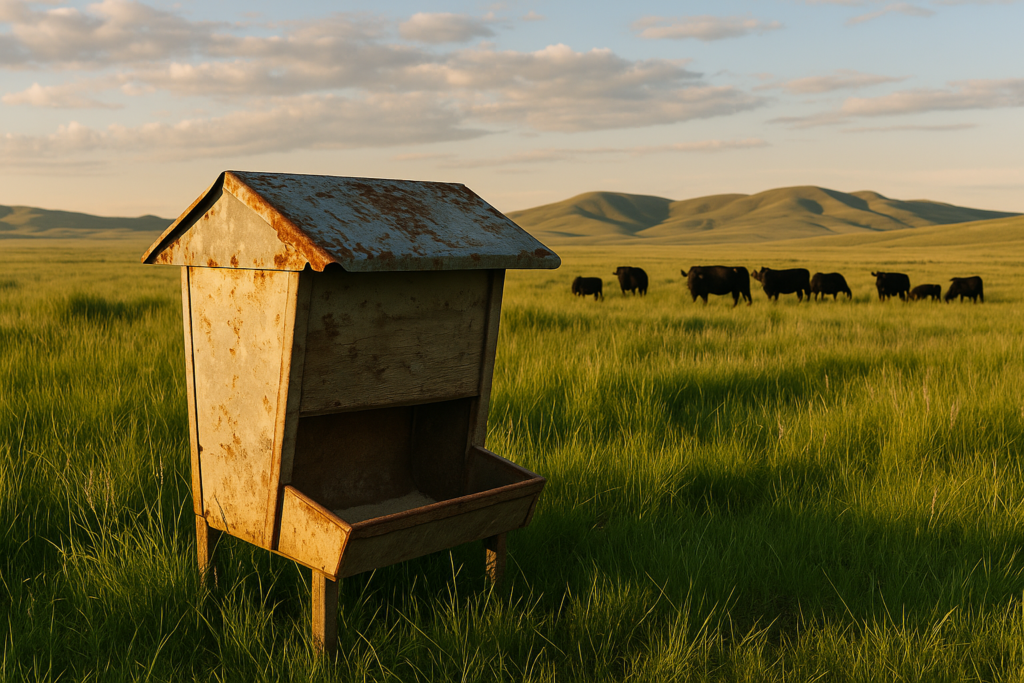
Walk out to the mineral feeder in mid-June and you’ll often find it about where you left it a week ago. The grass came on strong, the cows are slick and full, and they’ve decided they don’t need what you set out. That’s the trap. Cattle don’t eat mineral because they know they’re short of copper or phosphorus. They eat it because it tastes like salt and because they’re in the habit. Lush green forage throws both of those off, and the feeder sits untouched right when the herd is pushing hardest to breed back and raise a calf.
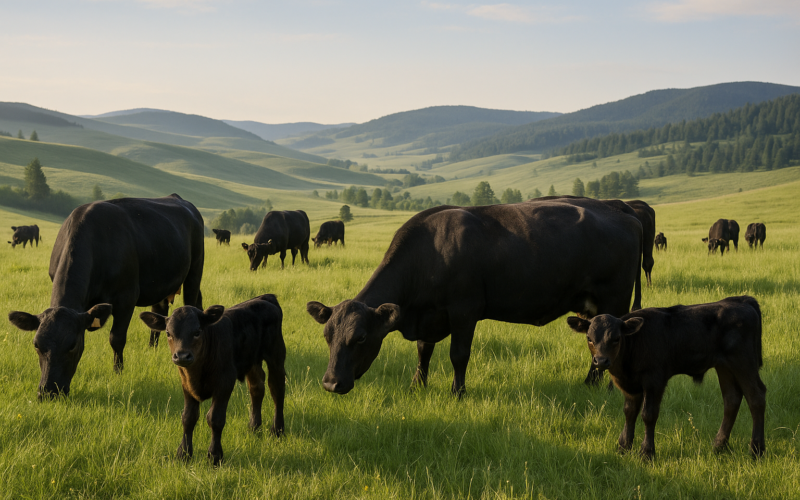
Fresh growth is high in moisture and potassium and low in a lot of what a lactating cow actually needs. She can be belly-deep in grass and still running behind on phosphorus, copper, selenium, and magnesium. You won’t see it. There’s no cow standing off looking sick. The bill comes due months later, in an open cow you ship in the fall or a weak, slow-to-suck calf next March.
What green grass hides
Early summer forage looks like the best feed of the year, and for energy and protein it mostly is. The problem is the minerals that ride along with it. Fast-growing grass on a lot of Montana range and meadow is short on phosphorus, and the trace minerals that matter for reproduction and immune function are either low or locked up where the cow can’t use much of them. High potassium in spring growth also ties up magnesium, which is why grass tetany turns up on that first flush.
A cow milking hard is spending mineral faster than she’s taking it in. Copper and selenium feed her immune system and her ability to cycle back on time. Phosphorus drives feed intake and fertility both. Run her a few weeks short during the breeding window and she may still look fine, but she’ll come up open or bred late. A bull skipping her because she never cycled looks exactly the same in June as one settling her clean. You find out at preg check.
Getting them to eat it
The fix isn’t complicated, but it takes attention, not just a full feeder. A few things that actually move the needle:
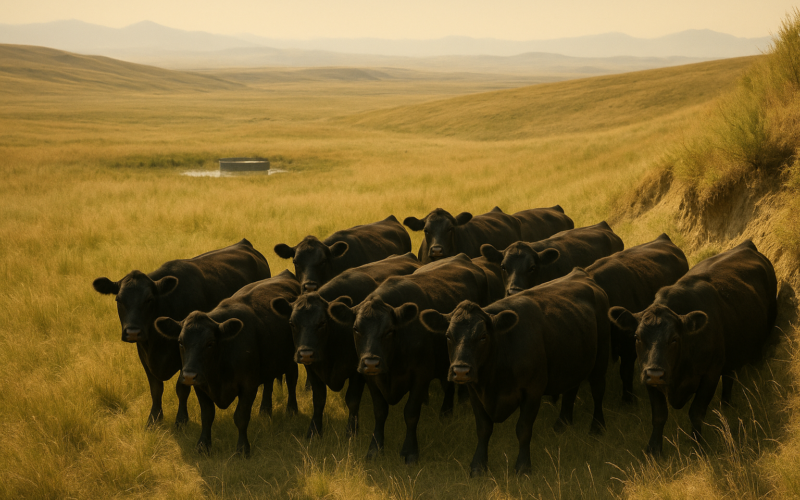
- Put the mineral where the cows already are. If they’re camped on a creek bottom and hitting one water, that’s where the feeder goes. A tub a half-mile off in the sagebrush won’t get touched no matter how good it is.
- Move it with the salt. Cattle will walk to loose salt. Set your mineral right beside it, or use a salt-and-mineral mix, and you piggyback on a craving they already have.
- Watch consumption, not the calendar. Most complete mineral programs are built around a target of a few ounces a head a day. If a feeder that should empty in a week lasts a month, you’ve got a problem, and if it disappears in two days they’re eating it for the salt and wasting money. Adjust the salt level to steer them toward the target.
- Keep it dry and keep it out. Weathered mineral cakes into a brick and cattle quit it. Covered feeders you can move and enough of them that the boss cows don’t guard the only one.
Loose mineral generally gets eaten more consistently than blocks or tubs, but the best formula in the country does nothing sitting in a bag in the shed. Consumption is the whole game.
Match the mineral to the season and your ground
A high-magnesium mineral makes sense during the spring green-up when tetany risk is up, then you can back off it as the grass matures and dries. Through breeding, you want a mineral carrying good levels of the trace minerals tied to reproduction, and one that fits what your particular ground is short on. Soils and forage vary a lot across Montana, and some country is genuinely deficient in copper or selenium while other places are fine. A forage or water test, or working with a nutritionist or your vet on what’s typical for your area, beats guessing. Selenium especially is regulated in how much you can supplement, so it’s worth knowing where you stand rather than doubling up blind.
The money you spend on mineral in June is small next to a string of open cows or a late calf crop. But it only counts if it goes through the cow. Check the feeders when you’re out riding, keep salt and mineral together where the herd lives, and pay attention to whether it’s actually moving. A full feeder in green grass isn’t a sign your cows are covered. It’s usually a sign they’ve quit eating.