Walk out to the herd on a still June morning and look at the shoulders and backs. If you see a black crust of flies that lifts and settles when a cow swings her head, you’re already behind. Horn flies come on fast once the weather warms and the manure pats stay soft. Each fly is small, but they don’t leave, and they don’t come alone. A single cow can carry a few hundred of them, and they bite for blood dozens of times a day.
The cost doesn’t show up as a dead animal. It shows up as a cow that spends her day bunched in the corner switching her tail and standing in the dust instead of grazing the ridge. It shows up as a bull that quits covering ground. And it shows up next fall as calves that weigh a little less than they should. You don’t notice a slow leak until you weigh the load.
Know which fly you’re fighting
Horn flies are the ones that matter most on grass. They live on the animal, cluster on the back and belly, and drop off just long enough to lay eggs in fresh manure. Because they breed in the pats right under your cattle, a pasture herd is a fly factory that never shuts down. Control anything and you’re really trying to break that manure cycle.
Face flies are a different problem. They don’t bite, they feed around the eyes, and they’re the ones that carry pinkeye from one calf to the next. They don’t stay on the animal, so ear tags and oilers do less against them. Stable flies bite the legs and show up worse around old hay feeding grounds and lots. Knowing which one is thick tells you what will actually work.
Pick your tools and don’t lean on just one
You’ve got a handful of ways to knock horn flies down, and none of them is a set-and-forget answer:
- Insecticide ear tags. Cheap and easy at branding or turnout, and they work well for a while. The catch is timing. Tag too early in spring and the tags are running out of juice by August when flies are still bad. A lot of outfits do better tagging closer to when flies get thick rather than the first warm week.
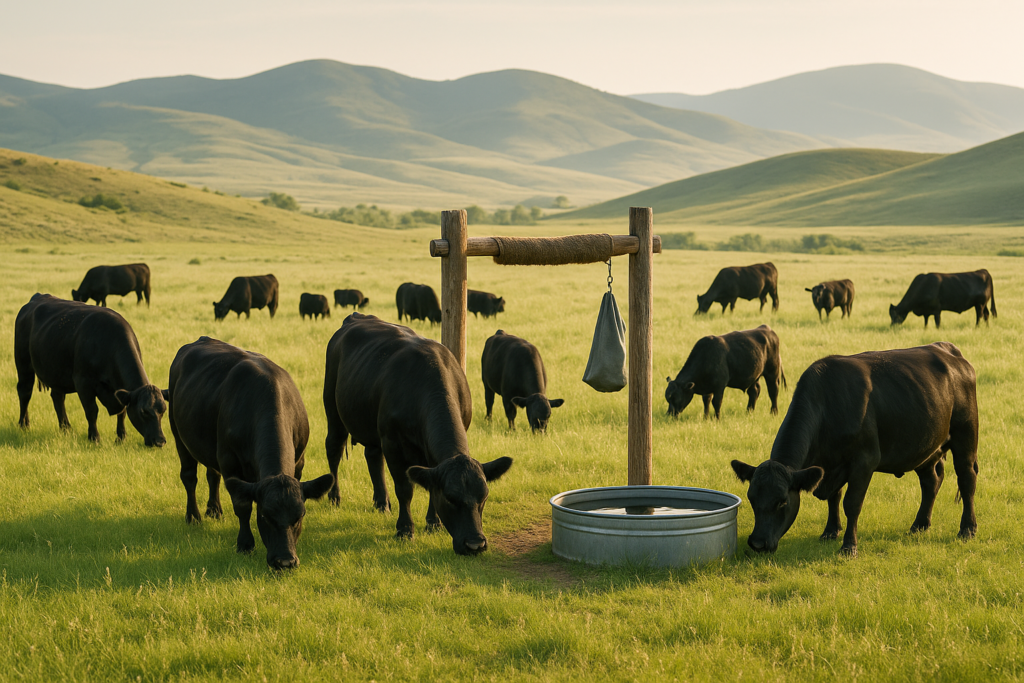
- Backrubbers and dust bags. Hang them where cattle have to pass under to get to water or mineral, and they do steady work with no extra handling. The trick is forcing the traffic. A rubber the cows can walk around doesn’t treat anybody. Keep it charged and hung low enough that it actually drags across the topline.
- Pour-ons and sprays. Good for a quick knockdown when numbers spike, but you’re gathering every time, and that gets old by July.
- Feed-through insect growth regulators. These go in mineral or a supplement and pass through the animal to keep fly larvae from developing in the manure. They only hit the flies breeding in your own pats, so a neighbor’s cattle across the fence can reload you. They also depend on cows eating the mineral consistently, which they quit doing when June grass greens up. Watch consumption.
The real key is rotation. Horn flies build resistance fast, especially to the pyrethroid tags a lot of people grabbed for years. If you run the same chemical family every summer, you’re breeding flies that shrug it off. Switch classes year to year, and don’t count a single method to carry the whole season.
Timing beats everything
The old rule of thumb is that once a cow is carrying enough flies to bother her, they’re already costing you gain. You don’t wait for the herd to look miserable. Get ahead of the build in early to mid-June, keep something working through the hot stretch, and expect to change tactics as the season wears on. A tag hung in May and forgotten is doing nothing by the time you’re putting up second cutting.
One thing worth doing that costs nothing: drag or scatter old manure in lots and around feeding grounds, and don’t leave last winter’s bedded pack sitting wet. Fewer breeding sites means fewer flies to fight all summer, no chemical involved.
Cattle can tolerate a few flies. It’s the cloud that costs you. Get out and look at the topline this week, count roughly what you’re seeing on the worst cows, and decide before the numbers get away from you. A leak you plug in June is gain you keep clear through weaning.