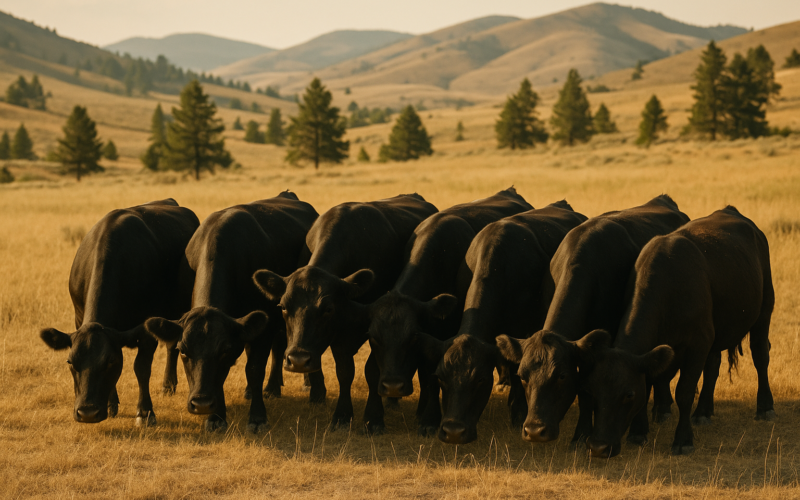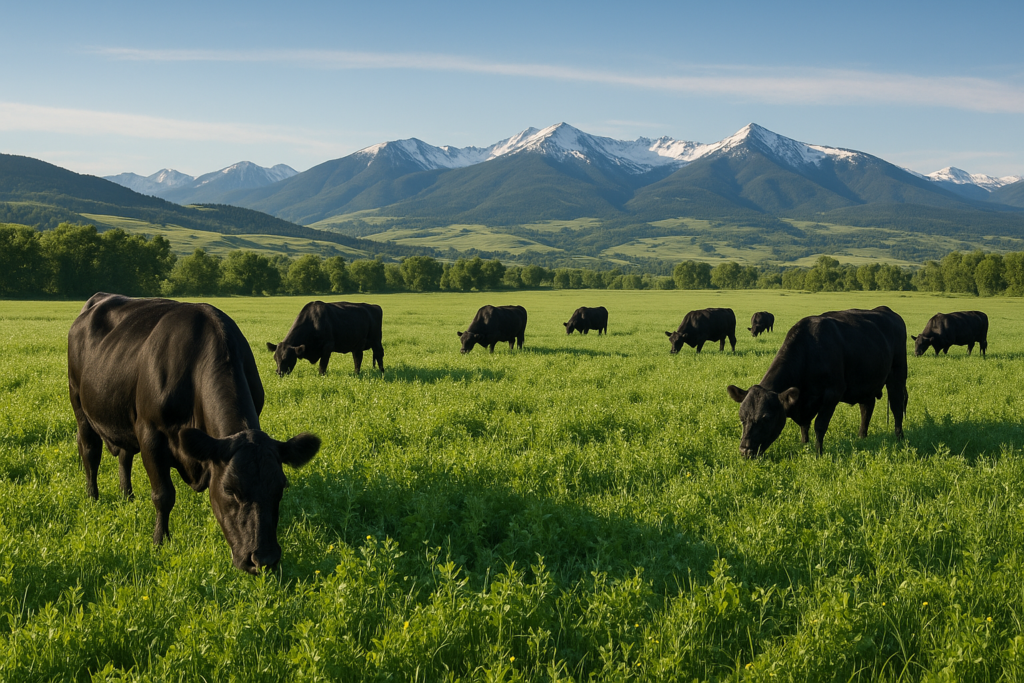
You know the picture. Cows go out onto a green, knee-high stand of alfalfa regrowth or a clover-heavy irrigated pasture, heads down, grazing hard. By mid-morning one is standing off by herself, sides pushed out, breathing like she ran a mile. By the time you get back with the pickup she’s down on her left side with her legs stiff. That’s frothy bloat, and on the right pasture in June it can go from fine to dead inside a couple of hours.
This isn’t the larkspur or water hemlock kind of trouble where a plant poisons her. Frothy bloat is mechanical. Legumes like alfalfa, red clover, white clover, and alsike ferment fast in the rumen and produce a stable foam that traps the gas the cow would normally belch out. The gas has nowhere to go, the rumen swells against the diaphragm, and she can’t breathe. Pressure does the killing, not any toxin.
Why June pasture is the setup
Fast, lush growth is the problem. Vegetative legumes before bloom are high in soluble protein and low in fiber, and that’s exactly what feeds the foam. A wet spring that pushes clover into an irrigated pasture, or a second flush of alfalfa coming after first cutting, gives you a stand that’s practically built to bloat a cow.
A few things stack the deck against you:
- Hungry cattle turned onto legume pasture for the first time. A cow that fills up in a hurry loads the rumen faster than it can handle.
- Wet forage. Dew, a morning rain, or dense growth that stays damp makes it worse. Early morning turnout onto a heavy dew is a classic way to lose one.
- A hard frost the night before, which ruptures plant cells and speeds fermentation the next day.
- Pure or near-pure legume stands. The more grass mixed in, the lower the risk.
The cattle themselves vary too. Some cows bloat every year on the same feed and their pasturemates never do. If you’ve got a repeat offender, she’s telling you something, and she probably belongs on the cull list before she costs you again.
Keep them on their feet
The cheapest prevention is a full cow. Never turn hungry cattle onto lush legume pasture. Feed hay first, or hold them on a grass pasture until mid-day so they go out with something already in the rumen and graze slower. Turn out in the afternoon once the dew has burned off, not at daylight onto a wet stand.
Introduce the pasture gradually. Short grazing periods the first several days let the rumen bugs adjust before you leave cattle on it around the clock. Once they’ve been on it a while, the danger doesn’t disappear, but a steady diet is safer than turning them on and off.
Poloxalene is the tool built for this. It’s an anti-foaming agent sold as a bloat block or mixed in feed and supplements, and fed at the labeled rate it breaks up the foam before it can trap gas. The catch is cattle have to actually eat enough of it every day. Blocks work only if cows use them consistently, so put out plenty, spread them where cattle loaf and water, and start feeding a day or two before you turn onto the risky pasture. Ionophores fed in a supplement also help shift rumen fermentation in your favor.
Grazing management does real work here too. Diluting the stand with grass, cutting a legume field for hay rather than grazing it heavy and green, or waiting until alfalfa reaches early bloom all cut the risk. Bloat drops off as the plant matures and fiber comes up.
When you catch one bloated
If you find a cow up but tight, move her slow and quiet to where you can handle her. Rough handling and running a bloated cow can finish her. A mild case sometimes works itself off if you keep her walking and off the feed.
A cow that’s frothing hard needs an anti-foaming drench down her, and poloxalene or a commercial bloat treatment works far better on froth than the old mineral-oil trick. Get it into the rumen with a tube if you can pass one; that also lets some gas off. Passing a stomach tube on frothy bloat often disappoints you, though, because the foam plugs the tube and gas won’t come free the way it would on a simple gas bloat.
A cow that’s down and struggling to breathe is a true emergency, and puncturing the rumen with a trocar on the left flank behind the last rib is a last resort to buy time. It’s a mess, it invites infection, and it’s the kind of thing you do because the alternative is a dead cow in the next few minutes. If you’re near help, a call to your vet while you’re working her is worth the minute.
The better plan is not needing any of that. Fill the cows before you turn them out, keep bloat blocks in front of them, watch the wet mornings, and ease onto lush legume ground instead of dumping a hungry bunch onto it at daylight.