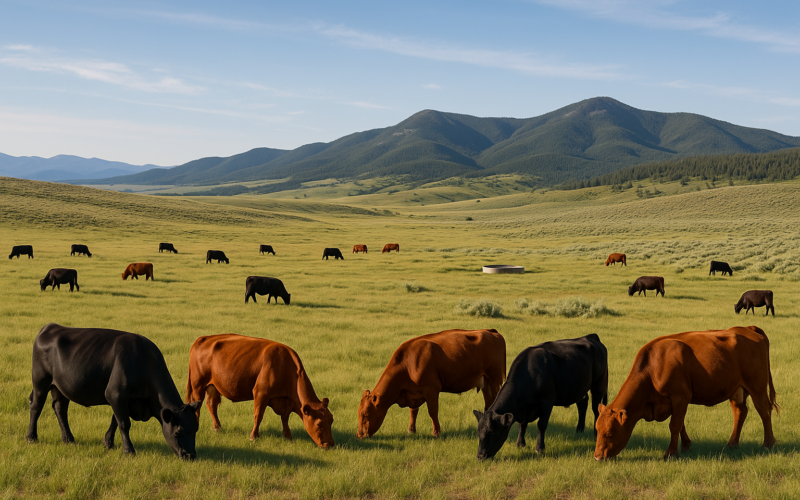
The grass that greened up in May is the fuel that carries fire in August. By late June a lot of Montana rangeland — especially the cheatgrass and old bunchgrass on south slopes — has already cured out brown and light. That’s fine feed gone to waste and fine fuel ready to run. The first dry-lightning storm that walks across your country doesn’t care which one it lands in.
You can’t stop lightning and you can’t rain-check a red-flag day. What you can do is decide, in June, how far a fire gets before it hits something you can’t afford to lose. Most of that work is cheap and boring and easy to put off until the smoke’s already up.
Give the buildings and the stack room to breathe
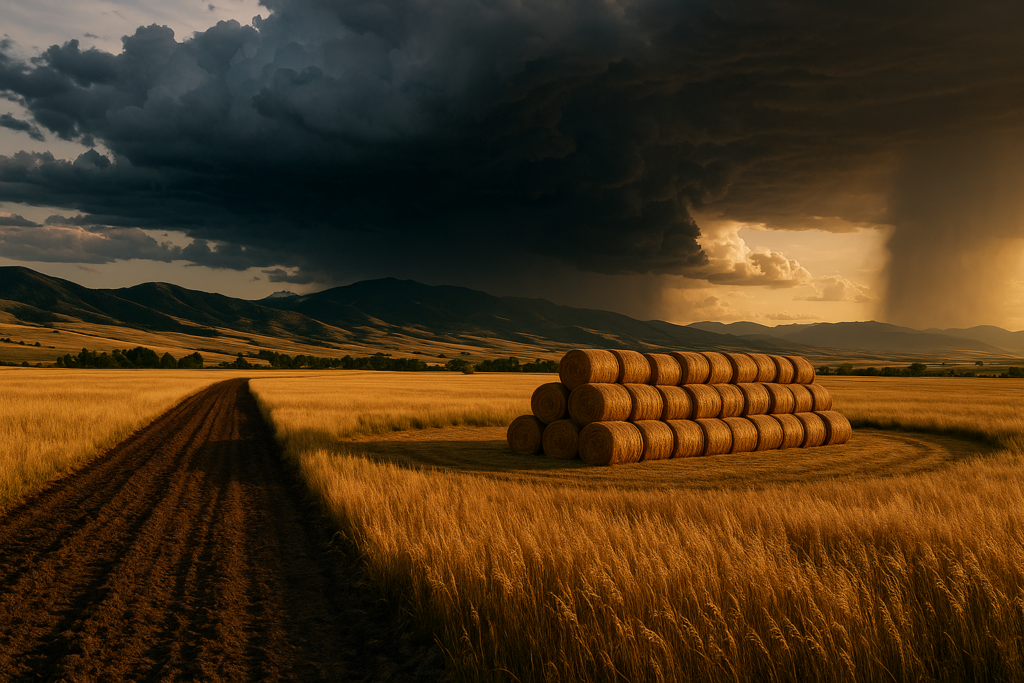
The haystack is usually the most concentrated dollar figure on the place, and it’s often sitting in tall grass at the edge of a field where nobody mows. A curing-out ring of grass around a stack yard is a wick. Mow it, graze it hard, or disc a bare strip around the whole works. Same goes for the shop, the house, the fuel barrels, and the corrals. Bare ground and short green grass don’t carry a grass fire the way knee-high cheatgrass does.
Pull the deadfall, old lumber, and dry weeds away from building walls. Keep the propane tank cleared off. If you store round bales in a long row, splitting the row with a gap so a fire can’t run the whole line is worth the diesel. Losing part of a stack beats losing all of it.
A disced firebreak doesn’t have to be pretty. Two or three passes with a disc or a plow along a fence line, a two-track, or the upwind edge of a hay meadow gives you a place to anchor a backfire and gives a rural fire department something to work from. Prevailing summer wind in a lot of Montana comes out of the west and southwest, so the ground on your west side is where a break earns its keep.
Have water and a plan you can reach in the dark
When a fire’s moving, the water you can put your hands on in five minutes is the only water that counts. A stock tank full and a gas pump that starts, a sprayer tank you keep topped instead of drained, a 200- or 300-gallon tank strapped in the flatbed with a small pump — none of it is fancy, all of it buys time. Check that the pump actually runs before you need it. A dead battery on a slip tank is a hard lesson.
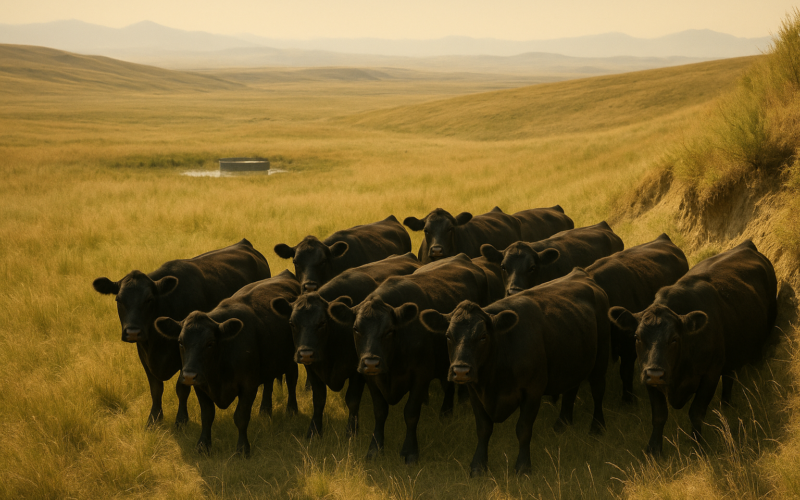
Know how you’d move cattle off a piece of ground before it’s on fire. Which gates open which way, which pasture is short enough to be a safe holding spot, whether you’d push them to a plowed field or a grazed-off flat. Cattle in short green feed or on bare ground usually ride out a grass fire fine; the danger is a bunch trapped in a fence corner with tall grass on all sides. Leave yourself an out.
Watch what you drag through cured grass
Plenty of Montana range fires don’t start with lightning at all. A dragging trailer chain throwing sparks, a hot exhaust or catalytic converter parked over dry grass, a slipping baler belt, a grinder in the shop with the door open — all of them light fires in July and August. Chains up, spark arrestors on, and think twice about parking a hot truck in tall grass at the far end of a field.
Haying itself is a fire risk once the crop cures. A swather or baler bearing that runs dry and gets hot can drop a spark into a windrow, and a windrow lights fast. Carry a fire extinguisher and a shovel on the equipment, keep a little water close, and don’t be the one who bales the last round after dark on a windy day just to finish.
None of this takes a big budget. A disc, a mower, a full water tank, and an hour spent thinking through where you’d move stock — that’s the difference between a fuse of grass you can plow out and a fire that takes the stack you’ll need come January.