If you run cattle on foothill or mountain range in western and central Montana, larkspur is the plant that can wreck a good summer in an afternoon. It doesn’t make headlines the way a wreck at the chute or a market crash does, but it quietly accounts for cattle losses on high country every June and July. The frustrating part is that the animals you lose are often your best — big, dominant cows in good flesh that go down without much warning.
Larkspur poisoning isn’t random bad luck. It follows a pattern tied to plant growth, weather, and how cattle graze through a pasture. Once you understand that pattern, you can usually keep your herd off the worst of it.
Know which larkspur you’re dealing with
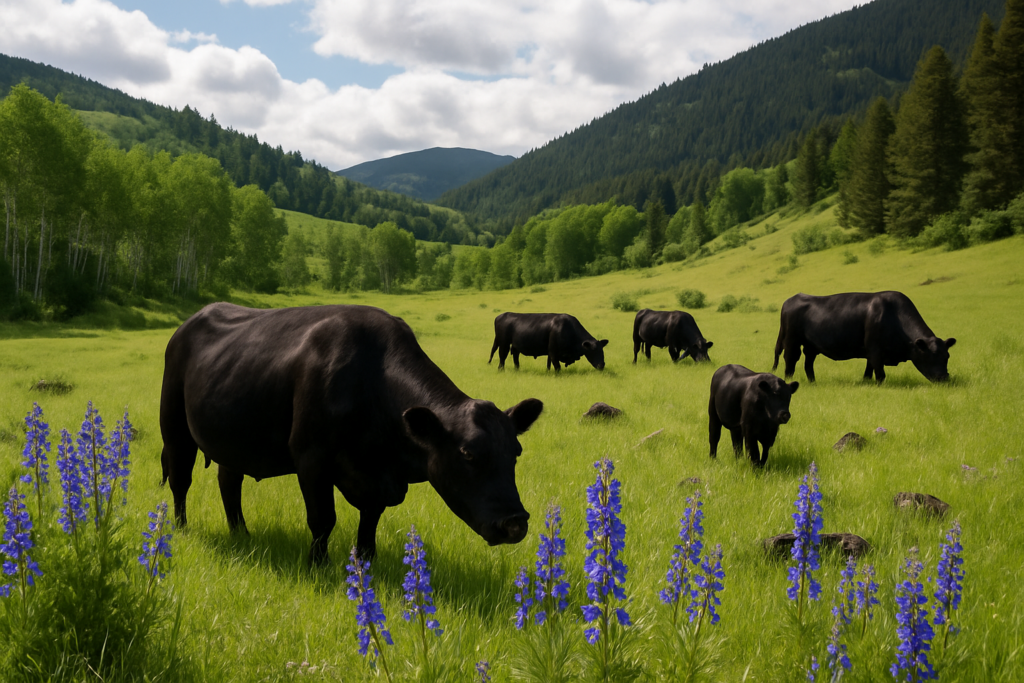
Montana has two general types that matter. Tall larkspur grows on deeper, moister soils in the higher elevations — think north slopes, aspen pockets, and along drainages in the mountains. It can reach chest height by midsummer. Low larkspur is shorter, shows up earlier on lower foothill range, and dries up and disappears by early summer. Both carry toxic alkaloids that hit the nervous system and the muscles cattle need to breathe and stay on their feet.
The poison is the same family of compounds in both, but the timing of risk differs. Low larkspur is dangerous early, often before tall larkspur is even a problem, and the danger fades as the plant matures and dries. Tall larkspur is the one that catches people in mid-to-late summer.
The danger window is about palatability, not just poison
Here’s the part that trips up a lot of producers. The alkaloid concentration in tall larkspur is actually highest when the plant is young and leafy in spring. But cattle don’t eat much of it then — it’s bitter and they leave it alone. The real losses tend to come later, during the flowering and especially the pod stage, when the alkaloid level per pound has dropped but cattle start eating the plant readily. They’ll hammer the flowering racemes and pods. More consumption of a slightly less toxic plant still adds up to a lethal dose.
That gives you a usable rule of thumb. The highest-risk period on tall larkspur range runs from flowering through pod drop. Once the pods shatter and the plant starts to senesce, palatability and toxicity both fall off and the danger eases considerably. If you can keep cattle off heavy larkspur patches during that flowering-to-pod window, you’ve handled most of the threat.
Weather plays into it too. A cold snap, a storm, or anything that knocks down the grass can push cattle onto larkspur they’d otherwise walk past. Hungry cattle and a wet, cool spell are a bad combination on larkspur ground.
Practical moves that actually work
You can’t spray your way out of larkspur on big mountain allotments, and you usually can’t fence every patch. Management is mostly about timing and grazing pressure.
- Graze high-larkspur pastures early, before flowering, or hold them until after the pods have dropped. The flowering-to-pod stretch is the time to have cattle somewhere else.
- Don’t turn hungry cattle out onto larkspur range. Cattle that have grazed and are full are far less likely to load up on it. Avoid trailing them in tired and empty.
- Keep good grass available. As long as there’s desirable forage, cattle generally pass larkspur by. It’s when the grass runs short that they switch over.
- Move bunches off larkspur during storms and cold snaps, and check them harder afterward.
- Spread cattle out. Tight bunching on a draw full of larkspur is how you turn one death into several.
Watch for the early signs when you ride: a wide, staggering stance, muscle trembling, an animal that bloats or that lies down and can’t get up. Affected cattle often die from respiratory failure or from bloating after they go down on their side. Stress and movement make it worse, so if you find one in trouble, work it slow and don’t push the rest of the herd through the patch.
There is a drug a veterinarian can use to counter the toxin in some cases, but it’s a narrow tool and only worth discussing with your vet ahead of time if larkspur is a chronic problem on your country. The honest answer is that prevention through grazing timing beats treatment every year.
Walk your high pastures before you turn out and mark where the heavy patches are. Knowing where the larkspur stands are, and when they hit the flowering-to-pod stage, is most of the battle. The plant is predictable. The trick is having your cattle somewhere else when it’s most willing to kill them.