Most ranchers don’t think about grasshoppers until the pasture looks chewed to the dirt and the bugs scatter ahead of the pickup in clouds. By then you’ve already lost the fight. The time to deal with grasshoppers in Montana is right now, in June, when they’re small, clustered, and easy to kill for a fraction of the cost.
Dry falls and warm, open springs set up big hatches. If last year was dry and the females laid heavy in your rangeland and roadside ditches, the eggs are hatching this month. A hot, dry June only speeds them along. Nobody can promise you an outbreak year or a quiet one, but the difference between a nuisance and a wreck often comes down to whether anyone was walking the ground in June.
Learn to count them
The old rule still works: pace out a square yard, watch the ground as you walk, and count how many hoppers jump out of that patch. Do it a bunch of times across the pasture and average it. A handful per square yard is background noise your grass can carry. When you’re consistently seeing double digits per square yard across a field, you’ve got an economic problem building, especially on rangeland that’s already short on moisture.
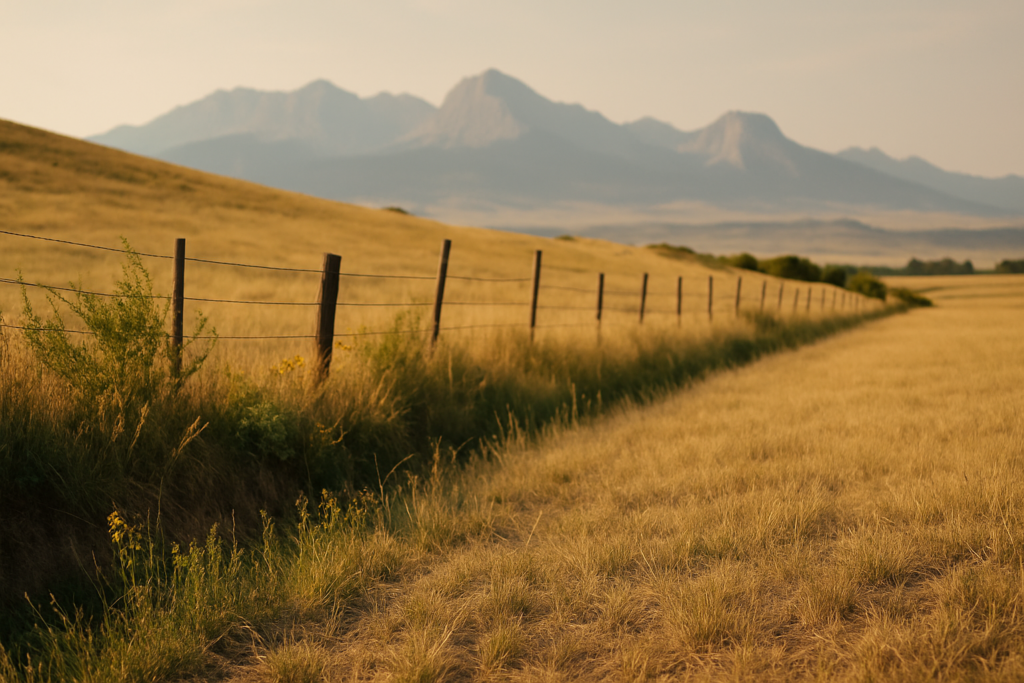
Walk the edges first. Grasshoppers hatch heaviest on south-facing slopes, field margins, weedy fencelines, ditch banks, and old CRP or idle ground where the soil didn’t get disturbed. They start there as nymphs, feed locally, then march into your good grass and hay as they grow and the near feed runs out. If you catch them while they’re still bunched on the hatch beds, you can treat a strip and skip spraying the whole country.
Size matters for timing. Little nymphs — the ones without working wings yet — are the target. They’re easier to kill, they haven’t done much damage, and they aren’t moving far. Once they get wings and start flying, control gets expensive and frustrating, and a fresh batch can fly in from your neighbor’s ground the day after you spray.
Hit them small, hit them smart
You don’t always have to blanket a field. Because young hoppers concentrate along margins and hatch beds, treating those bands and leaving the field centers alone can knock the population back and save chemical, fuel, and beneficial insects. The reduced-area, reduced-rate approach that’s been pushed for rangeland grasshopper control works on exactly this idea — spray strips, leave gaps, let the untreated bands hold predators and let hoppers wander into treated ground.
Watch your options carefully on grazed pasture. Some products that work on grasshoppers carry grazing and haying restrictions, and rangeland labels differ from cropland labels. Read the label for the specific pasture use, the pre-harvest interval on hay, and any limits near water. If you run bees or have a beekeeper working your ground, talk to them before you spray something that hammers pollinators. When populations are big and spread across several ownerships, a coordinated area-wide program run through your county or a cooperative effort covers a lot more ground than one ranch spraying alone while the neighbors don’t.
Bait products that hoppers eat are another tool, and they tend to be easier on other insects than a broadcast spray. They work best on younger hoppers that are actively feeding. Whatever you reach for, the calendar is doing half the work — an application on inch-long nymphs in June beats the same product on winged adults in late July every time.
Don’t forget the hay ground
Grasshoppers will move into alfalfa and grass hay and clip it right down, and they hit regrowth after you cut. If you’ve got a field that’s already ratty from a dry stretch, hoppers finishing it off can push you into buying feed you hadn’t budgeted for. Scout your hay margins the same way you scout pasture, and factor a hopper hit into your fall feed math while you still have time to line up hay.
None of this is complicated. Walk the ground, count what jumps, look at how big they are and where they’re bunched, and decide early. The producers who get run over by grasshoppers are almost always the ones who waited until the flying started to look up from the tractor seat.