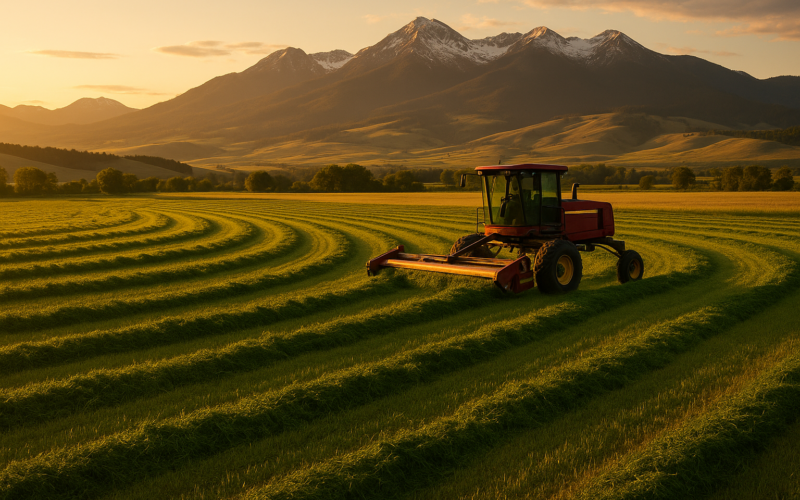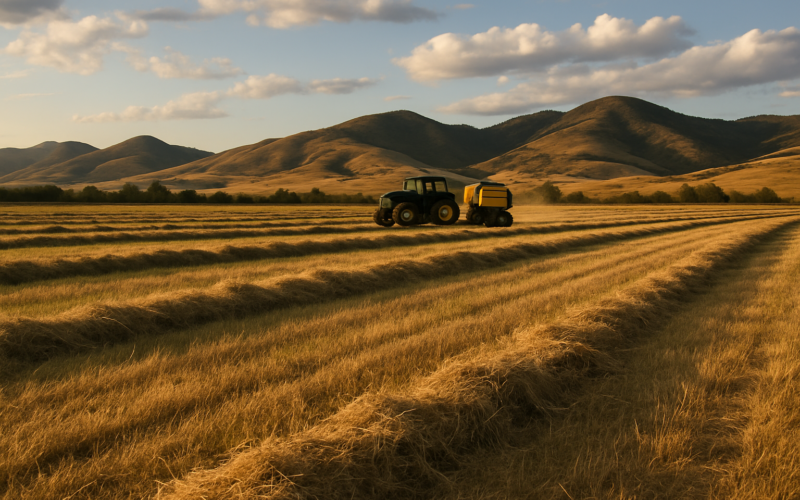
The first cutting is a race against the sky. You’ve got grass down, a thunderhead building over the Bridgers or the Little Belts, and the temptation to bale before it’s ready is strong. Nobody wants to watch a good windrow get rained on. But hay baled a few points too wet doesn’t just lose quality — it heats in the stack, molds through the middle, and in a bad case it’ll burn your shed down in July when you’ve long since forgotten about it.
This is the part of haying that catches experienced folks, not just the new ones. A tight schedule and a narrow weather window push people to roll it up before it’s cured. The bale looks fine going in. The trouble starts three days later, in the dark, in the center of the stack.
Where the moisture number matters
Dry hay for stacking wants to be in the neighborhood of 15 to 18 percent moisture for small squares and a touch drier for big rounds and large squares, since they pack more mass and shed heat poorly. Above 20 percent and you’re feeding microbes. Those bugs respire, throw off heat, and drive the internal temperature up. A little heating cures out some sugars and doesn’t hurt much. Get up around 150 degrees inside a bale and you’re losing protein and digestibility. Push past 170 and you’re into the range where chemical reactions can run away and ignite the hay on their own.
The dangerous window is roughly the first two to six weeks after baling. That’s when the biology is active and the heat has nowhere to go. A stack that felt cool the day you built it can be cooking a week later.
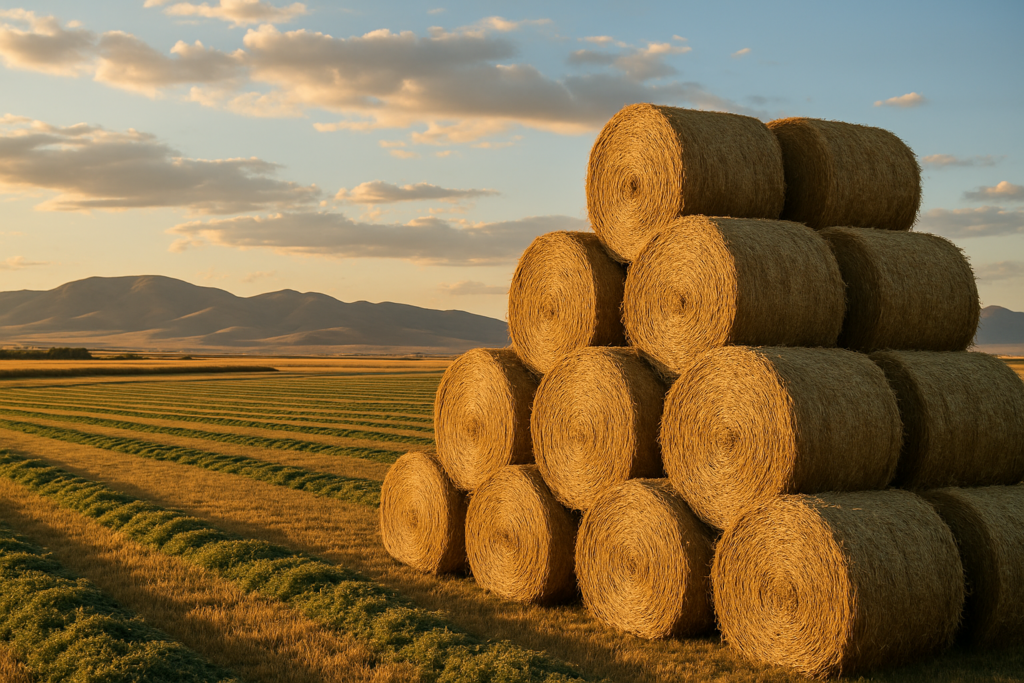
Big rounds and large squares are the ones to respect. A small square that’s marginal will usually mold and get dusty — a loss, but not a fire. A four-foot round baled wet holds heat in the core like a compost pile, and that’s where the barn fires come from.
How to actually check it
A hay moisture probe is cheap insurance and worth carrying in the truck during baling. Push it into several bales from different parts of the field — the low wet corner cures slower than the ridge. Baler-mounted moisture meters help you read on the go, but they read the surface flake, not the dense center, so treat them as a guide and not gospel.
Old-timers twist a handful and watch how it breaks. Stems that snap clean are close to ready; stems that bend and feel cool and pliable still have water in them. It’s not precise, but it tells you something, especially first thing in the morning when dew is still in the swath.
If you’re going to bale on the wet side to beat weather, that’s what preservative products are for. Buffered propionic acid applied at baling lets you put up hay a few points wetter without the heating. It costs money and it isn’t a license to bale slop, but on a marginal afternoon it can save a cutting.
Stack it so it can breathe, and keep checking
Don’t jam wet or questionable bales into a tight shed. Give them air. Leave space between rows, keep the stack off the ground where you can, and hold suspect bales outside and separate from your good hay until you know they’ve cured. Stacking marginal hay against the dry stuff in a closed building is how one bad windrow takes the whole works with it.
Watch the new stack for the first few weeks. A steam smell, a sharp musty odor, or heat you can feel with your hand pushed into the stack all mean it’s working. Drive a long metal rod or a length of pipe into the core, leave it, and pull it out to check — if you can’t hold it, you’re above 130 and climbing. A probe thermometer on a cable does the same job better.
If a stack gets hot, don’t go pulling bales apart in an enclosed space. Breaking open a bale that’s near ignition feeds it oxygen and it can flash. That’s a call to the fire department, not a job for you and a tractor by yourself. Better to catch it early with a thermometer than late with a hose.
The first cutting sets the tone for the whole hay year. Getting it dry, or knowing exactly how wet it is when you roll it, keeps that feed in the stack instead of going up in smoke.