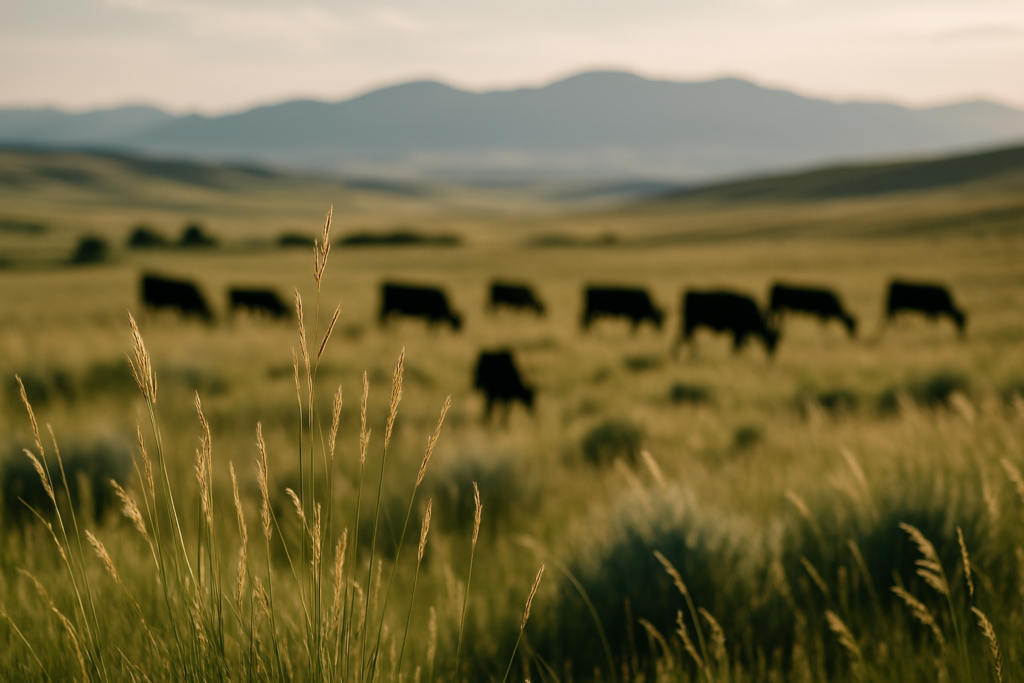
Most of the grass fights over summer feed. Not many pay attention to what gets left behind, and that’s the part that decides whether the pasture comes back strong next year or thins out and lets the weeds move in. In mid-June, the cool-season bunchgrasses that carry most Montana ranges — bluebunch wheatgrass, Idaho and rough fescue, needle-and-thread — are putting up seed heads and running hard on stored energy. Graze them too short right now and you’re pulling from the bank account, not the paycheck.
The old rule of thumb, take half and leave half, isn’t a slogan. It’s about roots. When a plant loses more than about half its leaf area, root growth slows or stops for days while it rebuilds green. Keep hammering it and the roots shrink, the plant can’t reach moisture down deep, and it goes dormant early or dies out. Leave enough leaf and the roots keep growing, the plant catches whatever rain shows up in July, and it stores carbohydrate for green-up next spring.
What “leave half” actually looks like in the field
Half by weight is not half by height, and that trips people up. On a bunchgrass, most of the leaf material sits in the bottom third. If you graze a plant down to a couple inches, you’ve removed a lot more than half the energy factory even though it still looks like there’s stubble standing.
For the cool-season grasses on foothill and benchland range, aim to pull cattle off before the stubble drops below three to four inches on the key species. On taller, more productive meadow or subirrigated ground, you can leave more and still have plenty grazed. The point isn’t a magic number carved in stone. It’s this: when you walk out and the grass the cows liked best is chewed to the crown, you waited too long.
Carry a ruler or just learn where three inches hits on your boot. Check the plants cattle prefer, not the stuff they walk past. A pasture can look grazed even when the good grass is gone and only the coarse, unpalatable stuff is standing tall.
Move before the grass tells you to
The mistake that grinds pastures down is leaving cattle in one spot until the feed runs out. By then they’ve grazed the plants they like two or three times over, hitting the regrowth each time, while the plants they ignore never get touched. That’s how a pasture shifts from good grass to weeds and clubmoss over a few years.
You don’t need fancy grazing cells to fix this. Even splitting a big pasture with a single hot wire and rotating gives the grazed plants a rest period to regrow leaf before cattle come back. In June, when growth is fast, that rest can be short. By August, when things dry out and grasses quit growing, a plant grazed hard may not recover at all until next spring, so plan longer rests or move on entirely.
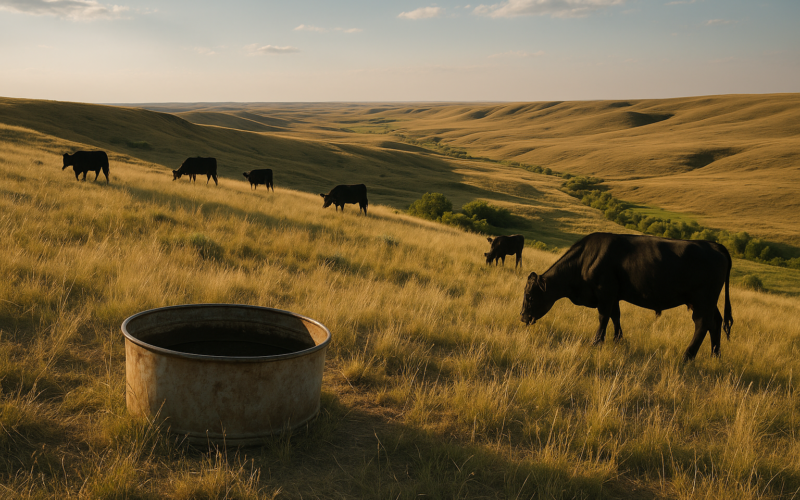
Watch water and salt placement too. Set salt away from the trough and up on the ridges, and cattle spread out instead of camping in one draw and grinding the same acre to dust.
Dry years make the leftover matter more
When the rain quits, the stubble you leave does double duty. That standing leaf and litter shades the soil, cuts evaporation, and catches snow next winter. Bare, grazed-off ground bakes hard and sheds water. Two neighbors can run the same country and the one who left cover coming into a drought will have grass showing when the overgrazed place is still brown.
This is also where your destock trigger date and your stubble targets work together. If you’ve already decided when you’ll pull cattle or ship, honoring the stubble height on the way out means the range has something to work with when the moisture finally returns. Grazing the last inch to squeeze out a few more days almost always costs more than it’s worth — you’re borrowing against next year’s calf crop of grass.
None of this asks you to run fewer cows for the sake of it. Leaving half doesn’t mean wasting half. It means the plants stay healthy enough to grow more feed, so over time the same country carries more, not less. The grass you don’t graze in June is the reason there’s grass to graze in September.