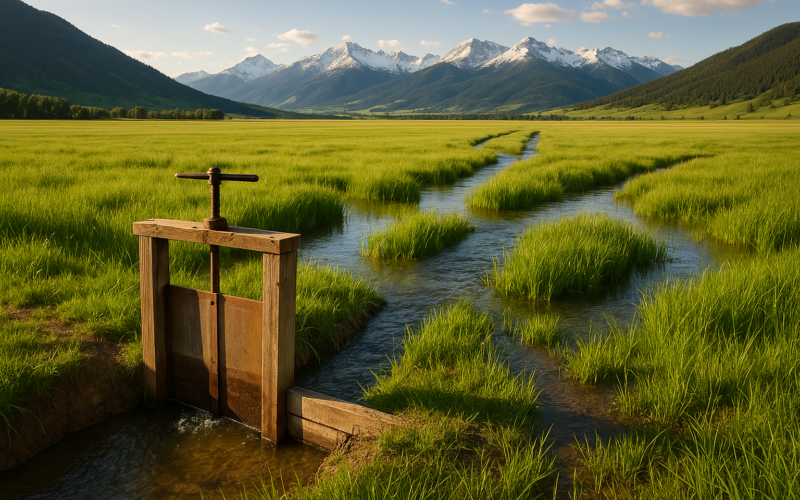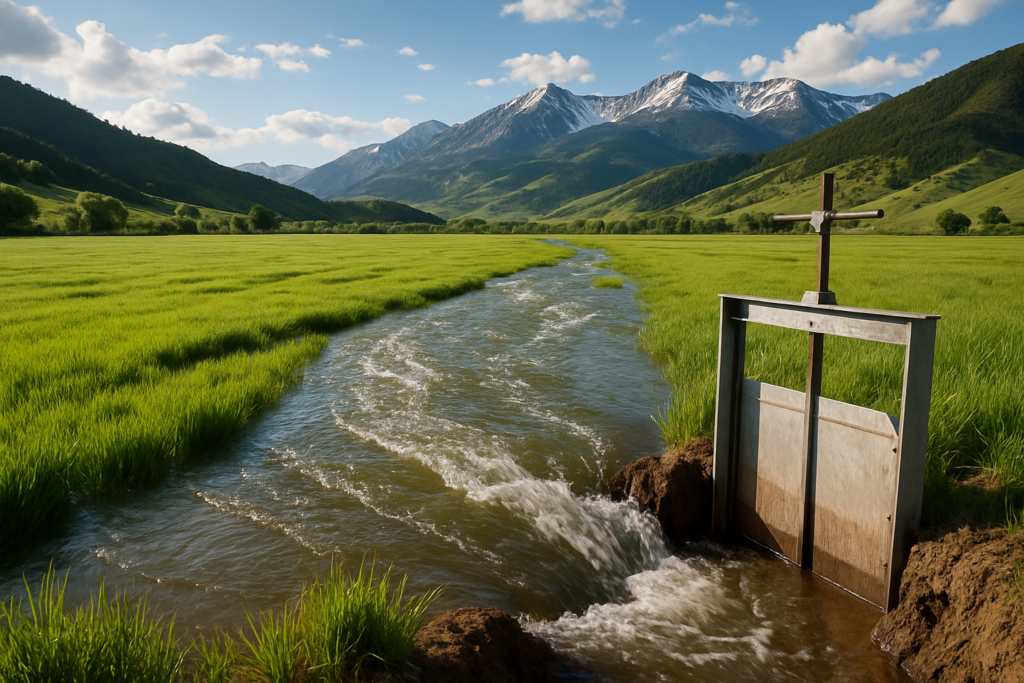
Anybody who runs a wild-flood meadow in a mountain valley knows the water is easy to turn on and hard to turn off. The ditch is running full in June, the grass is jumping, and every instinct says keep feeding it. But the calendar and the swather don’t care how much water is left in your ditch. If the ground is still soft when it’s time to cut, you’ll either rut the meadow, plug the mower, or leave hay standing while it goes to seed. Getting the timing right on that last flood is one of the quieter skills on an irrigated place, and it’s worth thinking about now rather than the week before you drop the first windrow.
Read the ground, not just the calendar
Flood ground doesn’t dry on a schedule. A gravelly bench above the river sheds water in a few days; heavy bottom ground with a shallow water table can stay spongy for two weeks after you pull the water. Walk it. If your boot heel sinks and pulls mud, the swather will do worse, and those ruts are still there next spring when you’re trying to make a clean cut.
The general rule most old hands work off of: give the meadow enough dry-down time that a tractor tire leaves a print but not a trench. On lighter ground that might be a week; on gumbo it can be closer to two. Back that number off your intended cutting date and you’ve got your shut-off. If you’re cutting at bud stage to protect quality, that shut-off date can sneak up faster than you’d think — the grass hits bud whether the ground is ready or not.
The other reason to quit early: a meadow that’s just been flooded is still pulling moisture up into the plant. Cut it wet at the roots and it lays down heavy, dries slow, and gives you fits in the windrow. Let the top few inches firm up and the crop cures the way it should.
Don’t waste the last set
There’s a temptation to squeeze one more flood in right up against cutting. Usually that water does more harm than good. The grass has already made most of its growth for the first cutting by the time you’re staring down bud stage, and a late soak mostly delays your harvest and softens your ground. Better to put that water where it’ll do something — the regrowth after you cut, or a field that’s further behind.
If you run wheel lines or handlines on part of the place, the same logic holds but you’ve got more control. Pull the line off a field a good week ahead of cutting and move it to ground that isn’t ready to hay yet. The whole point is to keep the water working on grass that can still use it instead of on stubble you’re about to drive over.
Keep your water right honest
Montana runs on prior appropriation, and beneficial use is the rule that keeps a water right alive. Flooding a hay meadow to grow a crop is textbook beneficial use — you don’t have to justify that. What gets people in trouble is sloppy conveyance: water running out the bottom of a field and back to the creek doing nothing, or a ditch left running full after the crop’s needs are met. In a dry year, that’s the kind of thing a downstream neighbor or the water commissioner notices.
Shutting the headgate at the right time isn’t just about your hay. It leaves water in the ditch for the folks below you and keeps you clean on your right. If you’re on a decreed stream with a commissioner making the rounds, being the outfit that quits taking water when the crop’s made is a good reputation to have.
A few practical things worth doing while you’re thinking about it:
- Clean the trash out of your headgate and check that it actually seals — a lot of “shut” gates still leak a couple of miner’s inches.
- Note the date and rough amount you shut off. That record matters if there’s ever a question about your use.
- Look at your ditch banks for the rodent holes and blowouts that turn into a washed-out field at 2 a.m.
The meadows that hay clean and cure fast every year usually belong to somebody who quit irrigating a week before their neighbor did. It looks like patience. It’s really just knowing that dry ground cuts better than a green one, and that the water you didn’t run in June is still there for the second crop.