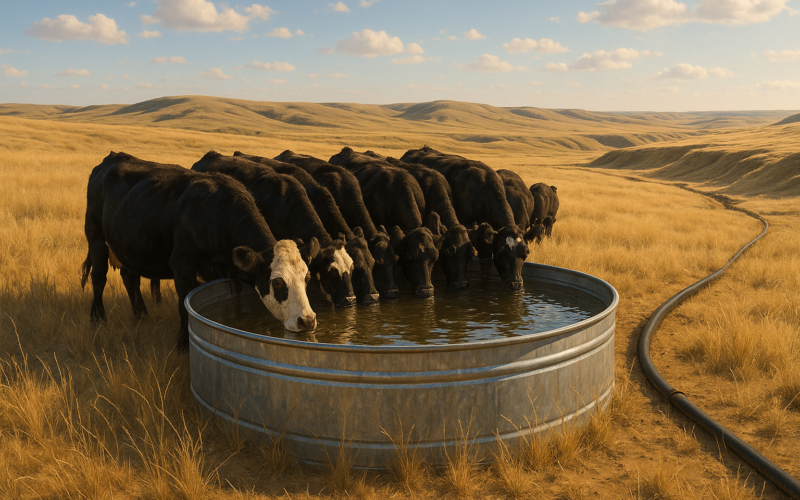
Water is the one input a cow can’t do without for even a day, and summer is exactly when the whole system that delivers it gets pushed the hardest. A dry cow in cool May weather might drink eight or ten gallons. Put a nursing pair on lush grass in July heat and that number climbs fast. Multiply it across the herd and a tank that kept up fine in the spring can run dry by early afternoon.
The trouble is that nothing about a stock water system announces it’s about to quit. A float valve sticks. A pipeline picks up an air lock. A solar panel drifts out of alignment or a battery bank quietly loses a cell. You don’t find out until you drive out to check pairs and see cattle bunched around an empty tire tank, bawling, with the ones at the back not getting a turn. Mid-June is the window to go find those problems while fixing them is a morning’s work instead of a fire drill.
Walk every tank and run the water
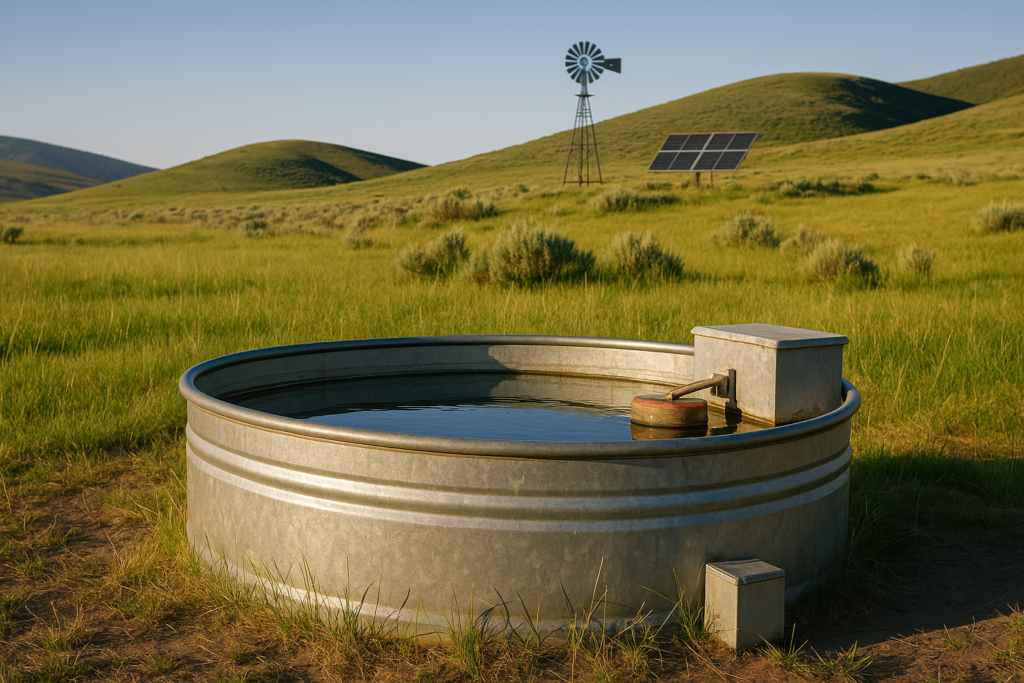
Start at the tanks and work back toward the source. Pull the lid off the float box and watch a full cycle. The valve should shut off clean and hold. A float that dribbles wastes water all summer and, worse, one that hangs open floods the site into a mudhole that breeds foot rot. Check that the overflow actually drains where you want it and isn’t cutting a gully or backing up under the tank.
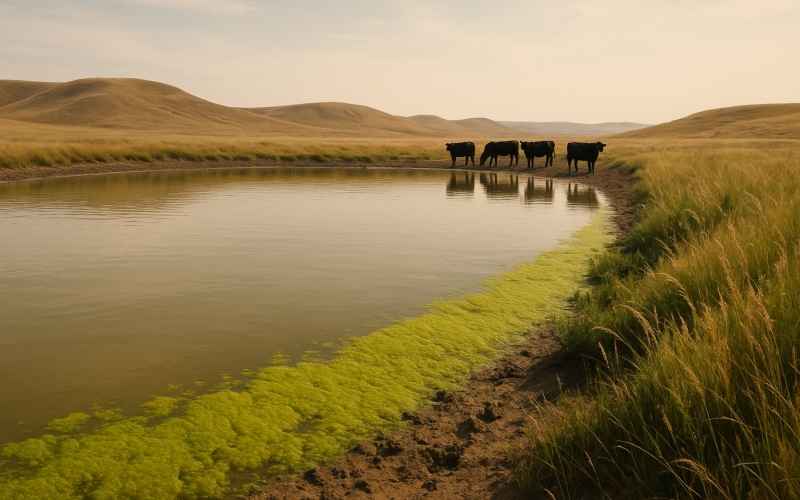
Look at the tank itself. Fiberglass and poly tanks crack at the seams over a few freeze-thaw cycles, and a slow leak that evaporated in cool weather becomes a real loss when demand doubles. Concrete tanks develop hairline cracks and grow enough algae and moss to slick the bottom. Scrub them out now. Cattle drink more from clean water, and clean water is also the first defense you’ve got against the blue-green algae problems that show up later in the heat.
Time the recovery. Draw the tank down partway and see how long it takes to refill. If it barely keeps up with a garden-hose flow now, it will not keep up with a herd hitting it hard at three in the afternoon in July. Slow recovery usually points to a plugged line, a tired pump, or a source that’s dropping faster than you think.
Chase down the pumps and lines
Solar systems are only as good as their weakest connection. Wipe the panels down, check that they’re still aimed right, and look at the wiring where it enters the controller for corrosion or rodent damage. Check the battery bank if you run one. A submersible pump that’s been down the well for years may be nearing the end of its brushes or seals, and it always seems to go on the hottest week of the year. If you’ve got a spare, know where it is.
Windmills need the gearbox oil checked and the sucker rod and leathers looked over before the summer wind picks up. On pressurized systems and long pipelines, walk the line where you can and look for wet spots, settling, or gopher work near shallow buried pipe. Bleed the air out of high points. An air lock will stop water cold even when the pump is running fine.
Don’t forget the plumbing you can’t see. Screens and foot valves plug with sediment, especially if your source is a spring or a shallow well drawing off a creek that’s carrying mud from high runoff. Pull them and clean them.
Build in a backup before you need one
The best water plan has a second option baked in. If a pasture leans on a single tank fed by a single pump, that’s one failure away from a wreck. Think about where you can haul water in a pinch, which pastures share a source, and whether a gate between two pastures could give cattle access to a creek or a second tank if the main one goes down. Some outfits keep a portable tank and a haul truck ready from June on, and it earns its keep the first time a pump quits on a Sunday.
Know your daily numbers well enough to spot trouble. If a group of pairs is emptying a tank noticeably faster week to week and the temperature explains most of it, fine. If the tank is dropping and the cattle aren’t drinking more, you’ve got a leak. Cattle that walk off water, stand in the shade, and come in strung out and gaunt are telling you the system isn’t keeping up before the scale ever will.
None of this is complicated work. It’s just work that’s easy to put off until the day it can’t wait. Do it in the cool of a June morning, and you won’t be doing it at a dead run in the heat with thirsty cattle watching.