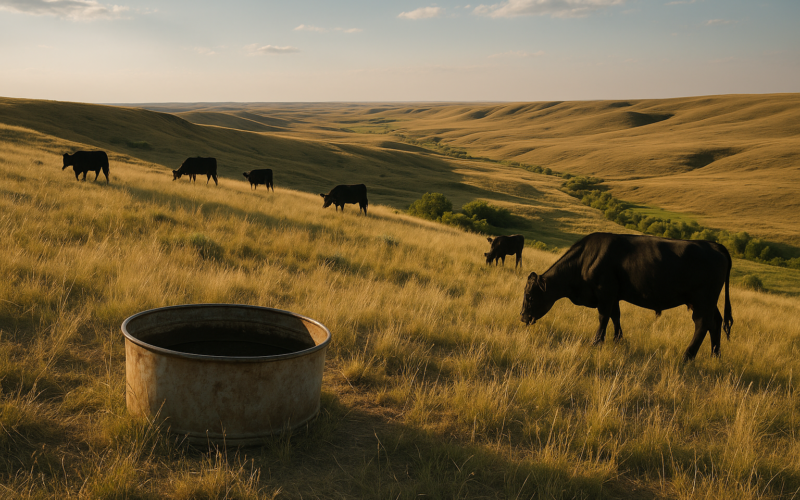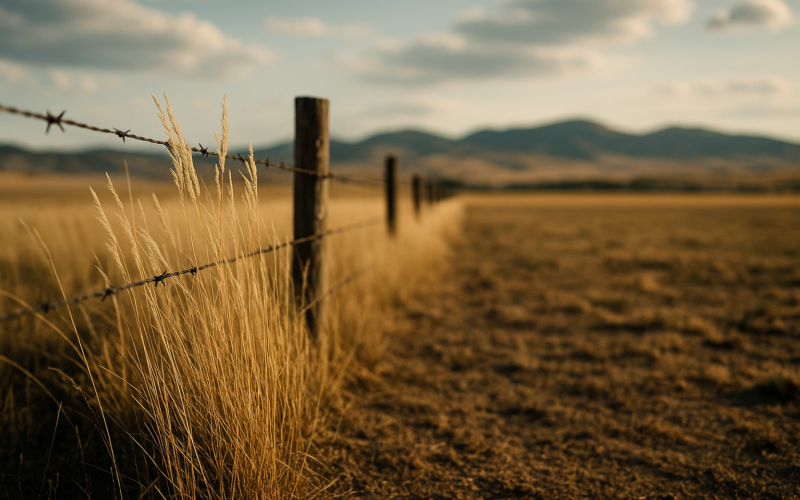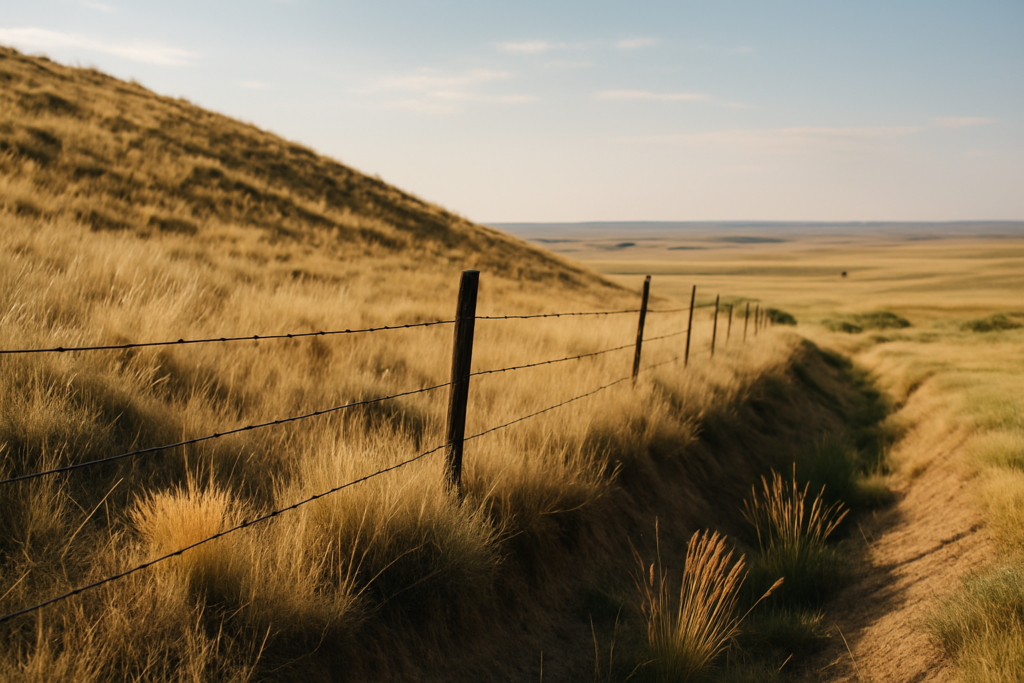
Grasshoppers don’t show up all at once. They hatch a few at a time on the warmest, driest ground you own — south-facing slopes, ditch banks, field edges, the roadside strip and the old fenceline where the soil never gets worked. That’s where the females laid eggs last fall, and that’s where the little wingless nymphs are boiling up right now while you’re busy with hay and cows. By the time they’re thick enough on your good grass that you can’t miss them, they’ve usually already grown wings and moved. At that point you’re spraying adults, which is more expensive, less effective, and mostly a way to feel like you did something.
A dry spring and a dry June are what let them build. In wet years a fungal disease knocks the population down on its own, and you might never think about them. String two or three dry summers together, though, and the numbers climb fast. Montana runs on cycles like that, and the years that dry up your stock ponds are the same years grasshoppers turn a good pasture into stubble.
Scout the edges before you scout the field
Walk the hatching ground first — the south slopes, the borrow pits, the uncropped margins. That’s your early-warning system. The nymphs look like miniature adults without working wings, and they’ll be clustered where the sun hits the soil. If you see them stacked up there in late May and early June, you know what’s coming for the interior of the pasture and the hayfield later.
The standard way to size up a population is a rough count per square yard. Pick a spot, watch the ground a few feet ahead, and count what jumps out of an imaginary square as you walk up on it. Do it in several places and average. Extension range guidelines put the economic threshold in the neighborhood of eight or more per square yard on rangeland — enough to justify the cost of treatment against the grass they’ll eat. On a hayfield or a stand you can’t afford to lose, the number that pencils out is lower. The point isn’t a magic figure. It’s that a handful scattered across a pasture is nothing, and a wall of them lifting ahead of every step is a problem you’re already late on.
Hit them small, wingless, and bunched up
Everything about control gets easier when the hoppers are young. Small nymphs can’t fly, so they stay put where they hatched instead of spreading across a section. They’re more susceptible to insecticide. And because they’re concentrated on the hatching ground, you can treat the strips where they are and leave the rest alone.
That’s the idea behind treating field margins and known hatch beds rather than blanketing everything. If you catch them on the ditch banks and the south slope before they scatter, a treated border can stop a lot of them from ever reaching the interior of the field. Reduced-area approaches — spraying alternate swaths and leaving untreated strips between — have become common on rangeland for the same reason: they cut the chemical bill, and the grasshoppers still move through enough treated ground to get a lethal dose. It also leaves habitat for the predators and parasites that help hold the next generation down.
Product choice tracks with timing. Insect growth regulators work on the immature nymphs by disrupting their molting, so they have to be applied while the hoppers are still small — they do nothing for winged adults. Contact insecticides knock down what’s out there at the moment you spray but don’t linger, so timing the application to a big hatch matters. Read the grazing and haying restrictions on whatever you use, because a short interval can wreck your cutting schedule if you’re not paying attention.
Think past the fenceline
Grasshoppers don’t respect property lines. A neighbor’s untreated hatch bed will reload your ground, and a big regional outbreak is bigger than any one operation can handle alone. In heavy years, cooperative and federal rangeland suppression programs sometimes coordinate treatment across ownership boundaries, which is worth a call to your local extension office or weed and pest people if the whole country around you is crawling.
The mistake most of us make is treating grasshoppers as a July emergency instead of a June chore. In July they’re winged, mobile, and eating your fall grass and the regrowth on your hay meadows all at once, and there’s not much cheap left to do. The money and the leverage are both in the two or three weeks right now, while they’re still small and still sitting on the ground where they hatched. Walk the south slopes this week and see what’s coming.