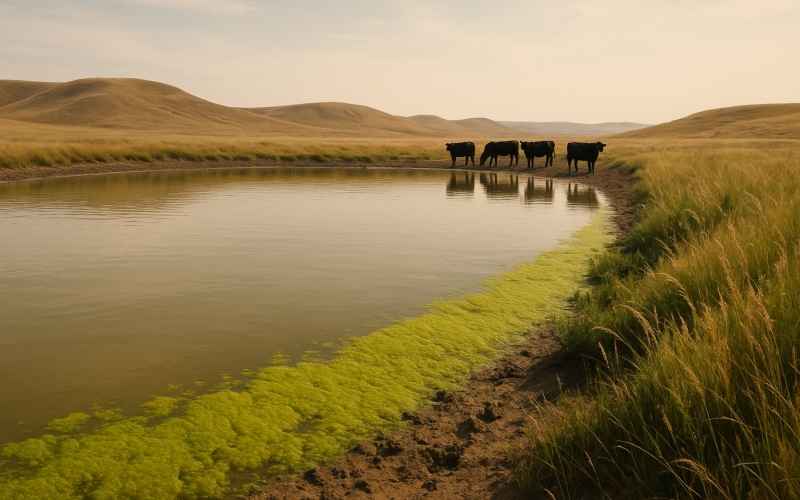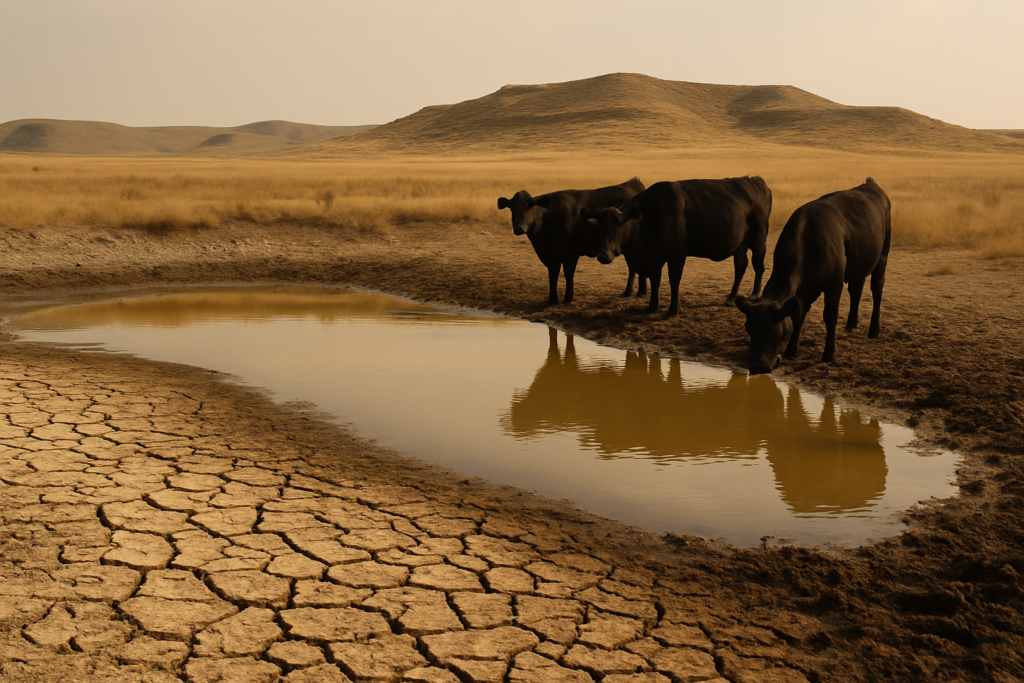
Most of us watch a stock pond drop and worry about running out of water. The bigger problem often shows up while there’s still plenty left in the hole. As a dugout or a shallow well loses volume to evaporation, everything dissolved in it stays behind and concentrates. By August a pond that was fine in May can carry two or three times the salt and sulfate it started with. Cattle keep drinking it right up until it makes them sick.
This is an eastern-Montana and prairie-country problem more than a mountain-valley one. The alkali flats and the marine shale that a lot of our ground sits on give up sulfate readily. In a wet year the water dilutes it out. In a dry one, the water works against you.
What bad water actually does to a cow
The first thing high-salt, high-sulfate water does is cut intake. Cattle don’t like the taste, so they drink less, eat less, and quit gaining. On yearlings that’s money walking off the scale you won’t see until fall. On pairs it shows up as thin milk and calves that fall behind. Loose manure and a rough hair coat go with it.
The one that kills is sulfate. When cattle take in too much sulfur — from water, from feed, or both stacked together — some of it turns into a gas in the rumen that damages the brain. The disease is called polioencephalomalacia, PEM for short, and it looks like poison because it is. A calf goes off by itself, seems blind, walks into things, stands with its head up and back like it’s stargazing, then goes down and paddles. It comes on fast. You can lose one between checks with no warning, and the ones you catch early don’t all pull through even with treatment.
Younger, lighter cattle get hit hardest, and hot weather makes it worse because they’re drinking more of the bad water to cool off. That’s why this is a July-and-August story that starts building in June.
Test the water, don’t taste it
You can’t eyeball sulfate. Clear water can be loaded with it, and muddy water can be fine. The only way to know is to pull a sample and send it to a lab. A basic livestock water test runs cheap, turns around quick, and tells you total dissolved solids and sulfate — the two numbers that matter most here. Your county Extension office can point you to a lab and help read the results.
The time to test is now, and again mid-summer on any source you’re worried about, because a pond that passed in spring can fail by the time the creek quits feeding it. Test your questionable dugouts, your shallow stock wells, and any water that smells like rotten eggs. Don’t forget that a well can go bad from over-pumping in a dry year even if it was fine before.
Sample clean. Rinse the bottle with the water you’re testing, fill it from where the cattle actually drink, keep it cool, and get it to the lab quick. A sample that sits hot in the pickup for three days doesn’t tell you much.
What to do when a source comes back bad
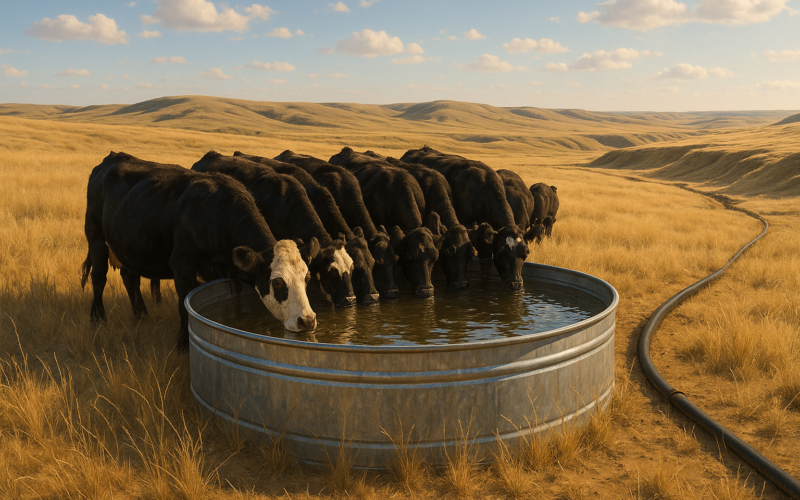
If a pond or well tests high, the cleanest fix is to keep cattle off it and give them something better. That might mean hauling water, running a pipeline off a good well, or fencing the bad dugout and moving pairs to a different pasture. Cattle that have a choice will usually pick the better water on their own, so opening up a second source can pull them off the bad one.
Watch what else you’re adding on top of the water. A high-sulfate mineral, distiller’s grains, or certain byproduct feeds stack more sulfur onto an already-loaded ration. If the water’s marginal, tighten up everything else you can control. Dilution helps too — blending a bad source with a good one, or hauling in during the worst of the heat.
And if you find cattle showing the neurological signs, get them off the water and call your vet right now. Speed matters more than anything, and knowing the sulfate number gives the vet a head start.
The water in the bottom of a shrinking pond is the most dangerous water you’ve got, and it looks the same as the water that was there in June. Pull the samples while you’re checking tanks anyway. It’s a cheap test against a dead calf you never heard cough.