You can lose a cow to your own stock pond without a rattlesnake, a poison weed, or a bad batch of hay. When the weather turns hot and the wind lays down, the water itself can do it. Blue-green algae — cyanobacteria, if you want to be technical, because it isn’t really algae at all — blooms fast in warm, still, nutrient-rich water, and some of what it produces is flat-out toxic. A cow that drinks from the wrong corner of the pond on the wrong afternoon can be down before you find her.
Most Montana ranchers know the salt-and-sulfate problem in a dry summer. This is a different animal. Sulfate water poisons slow, over days of drinking. A heavy cyanobacteria bloom can put a nerve or liver toxin into an animal that kills in an hour to a day, sometimes with no warning at all. You go out to check the herd and find one dead near the water, and the rest looking fine.
When and where it shows up
The bloom needs three things, and June starts stacking them up: warm water, still air, and nutrients. The nutrients come from what runs into a pond — manure off a heavily used bank, fertilizer or cropland runoff, or just years of cattle standing in the same shallow water. Add a stretch of hot, calm days and the stuff multiplies until the surface looks like somebody spilled paint.
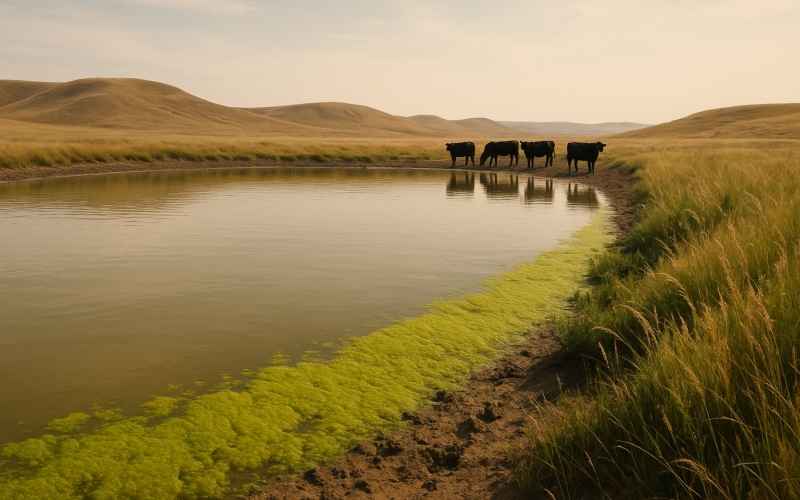
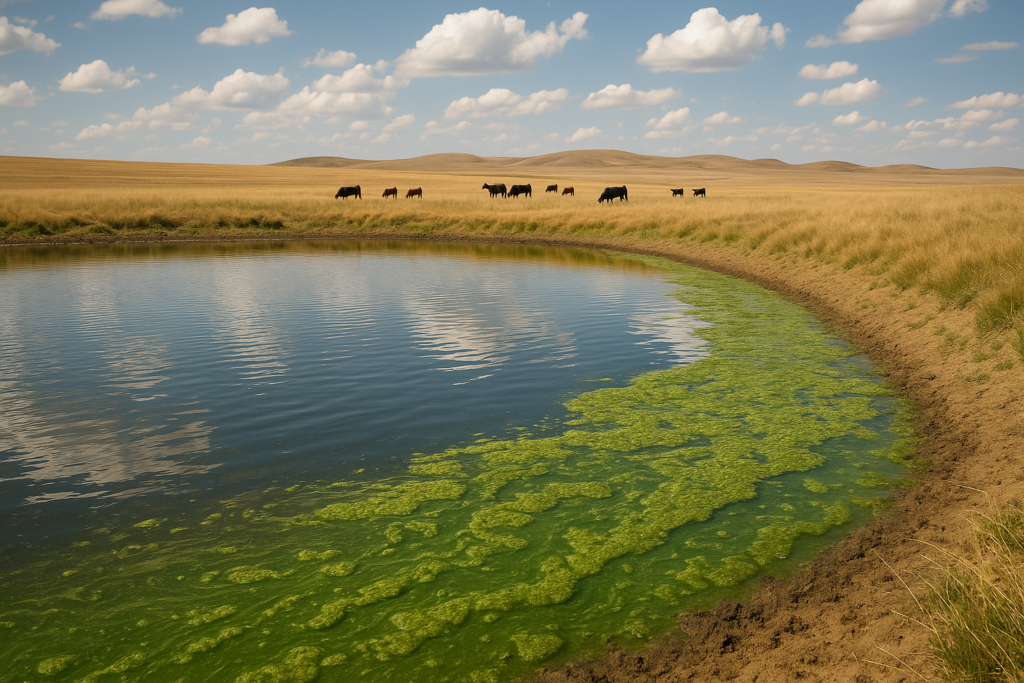
The classic look is a pea-green or blue-green scum, thickest on the downwind side where the breeze pushes it into a corner. It can look like green paint, like spilled antifreeze, or like a mat of green cottage cheese along the edge. Sometimes it’s a suspended greenish murk through the whole top foot of water. Late summer is the worst, but a warm, windless stretch in June on a shallow, well-used dugout can trigger it early.
Not every green pond is toxic. Filamentous algae — the long green hair that mats up on the bottom and floats to the top in strings — is a different thing and generally harmless. Cyanobacteria doesn’t have that stringy structure. It suspends and it scums. If you can’t tell, treat it as if it’s the bad kind until you know otherwise.
What it does to a cow
Depends on the toxin, and you don’t get to choose. The nerve toxins hit fast: muscle tremors, staggering, trouble breathing, collapse. An animal can die within minutes to a couple of hours, close to the water, because it never made it away from the pond. The liver toxins are slower — hours to a day — and you’ll see weakness, diarrhea, pale or yellowish gums, and animals that go off by themselves. Survivors sometimes show up later with photosensitized, peeling skin on the white patches and the muzzle, because the liver damage lets sunlight burn them.
The trouble with diagnosis is timing. By the time you find a dead cow, the cause is sitting right there in the pond, but a bloom can clear in a day or two once the wind picks up and breaks up the scum. If you suspect it, don’t just haul the carcass off and move on. Water samples and stomach contents can be tested, and knowing for sure changes how you manage that pond and that pasture for the rest of the year.
What to actually do about it
The first move is the cheapest one: look at your ponds when the weather’s been hot and calm, and look hard at the downwind edge where cattle drink. If it looks like green paint or a thick scum, get the herd off that water. Fence it, gate it, or move the pairs to a different pasture with a tank or a clean creek. Don’t wait to see if anything gets sick.
- Give cattle an alternative before they’re forced to drink scum. A tank on a well or a spring, or access to running water, keeps them off a suspect pond.
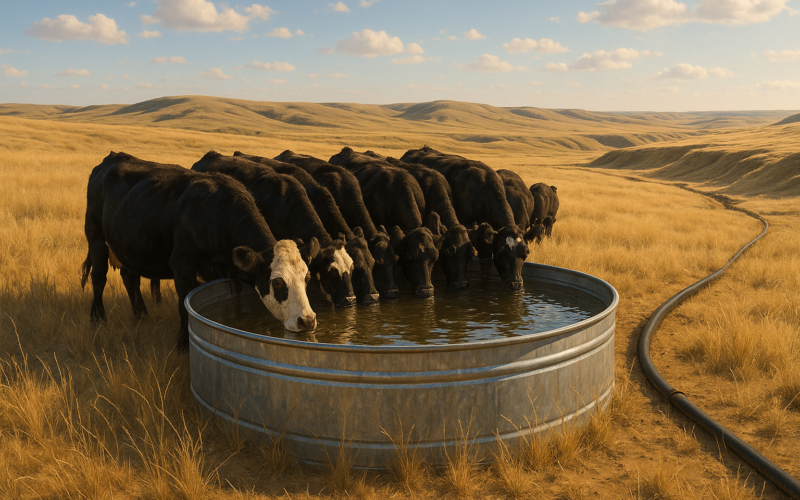
- Fence cattle back from the shallow, mucky edges of dugouts. Piping water to a tank instead of letting the herd stand in the pond cuts the manure load that feeds blooms in the first place.
- Keep the runoff down. Corrals, mineral, and salt set right above a pond load it with nutrients year after year. Move them uphill and away.
- Don’t let the dog or the saddle horses drink or swim in scummy water either — the toxins hit them too, and dogs will lap it up.
Copper products and other algaecides exist, but they’re a mixed bag on a stock pond. Killing a heavy bloom all at once dumps the toxin from every cell into the water at the same time, and you can make a bad situation worse for a few days. If you go that route, keep cattle off until it’s cleared. Honestly, the surest fix is keeping animals away from the scum and building your water system so cattle aren’t dependent on a warm, stagnant, manure-fed pond in the first place.
Walk your ponds this month. The morning it turns hot and dead calm is the morning to pay attention, and it’s a lot cheaper to string a gate than to find your best cow tipped over at the water’s edge.