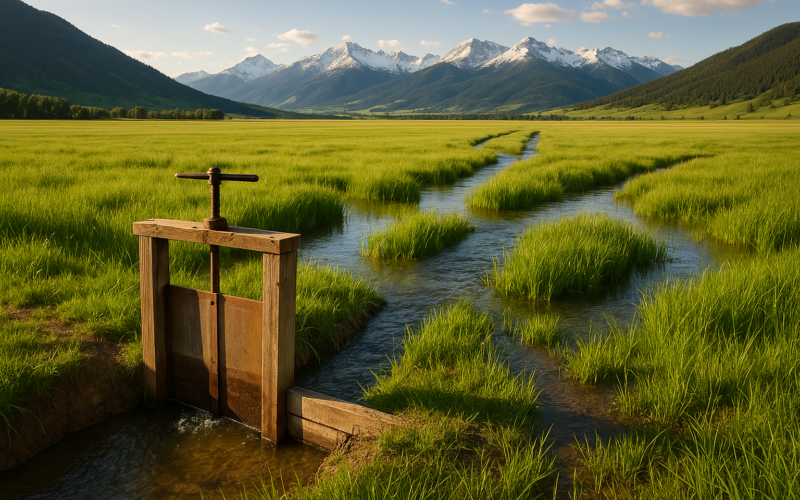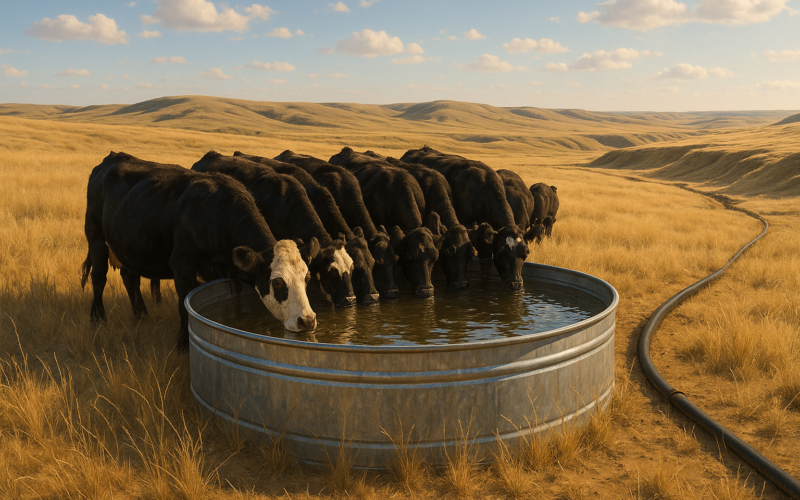
Most of the year the cows are close, on meadows and calving ground where you drive past the water every day. Come mid-June that changes. The bunch goes out to the summer country — the big pastures back off the county road, the leased range up the coulee, the far corner where you might not lay eyes on the tank for three or four days at a stretch. That’s exactly where a water problem hides longest and hurts most.
A cow that runs out of water on green grass in cool weather can coast a day or two. Once July heat sets in, she can’t. Lactating cows on summer range drink a lot, and a heavy-milking pair in the heat needs even more. Cut that off and you lose milk, you lose gain on the calf, and you knock a cow’s breeding right off the rails during the window that matters most. By the time you find them standing at a dry tank bawling, the damage to next year’s calf crop is already done.
Walk every part of the delivery before the cows do
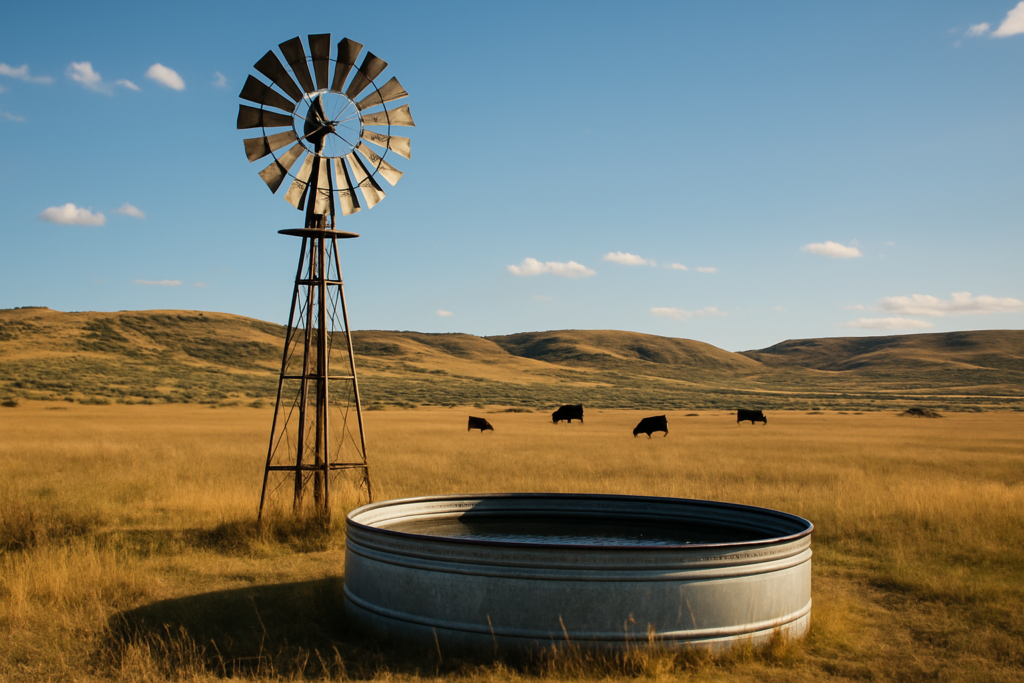
Water on the ranch comes to a tank one of a few ways — a windmill, a solar or electric submersible pump, gravity off a spring or reservoir, or a buried pipeline off the well. Every one of those has a weak spot, and June is the time to find it while you still have the tank to yourself.
On the windmills, climb up and look. Leathers wear out and quit lifting water, the brake and furl gear seizes after a winter of sitting, and a stuck check valve will let the drop pipe drain back every time the wind quits. Grease what needs grease. If the tower’s been standing since your grandfather set it, look hard at the guy anchors and the platform boards before you trust your weight to them.
Solar setups fail quiet. The panel that made plenty of water in May makes less when it’s caked in dust and pollen, and a controller or a submersible pump can quit without a single sign until the tank’s low. Wipe the panels, check the wiring where mice like to chew, and watch a full pumping cycle so you know it’s actually filling, not just humming.
The float valve is the cheapest part in the whole system and it fails more than anything else. A float that sticks open floods the site and can pump a shallow well dry; one that sticks shut leaves the tank empty with a good well right underneath it. Carry spare floats and spare valves. They’re a few dollars and they’ll save you a sixty-mile round trip.
Pipelines, tanks, and the reservoir
Buried pipeline is out of sight, so it’s the last thing anybody checks. Frost heave breaks fittings, a hoof punches a shallow-buried line at a crossing, and a leak underground shows up as a soft, green wet spot before it ever shows up as low water. Pressure the line up and walk it once. Find the leak now, not in August.
Look at the tanks themselves. Clean the sludge and last year’s leaves out of the bottom — a fouled tank cuts how much a cow will drink even when it’s full. Check the overflow so a runaway float drains away from the tank instead of turning the whole site into a bog that’ll bury a cow to the hocks. If you run rubber tire tanks, poke at the seams.
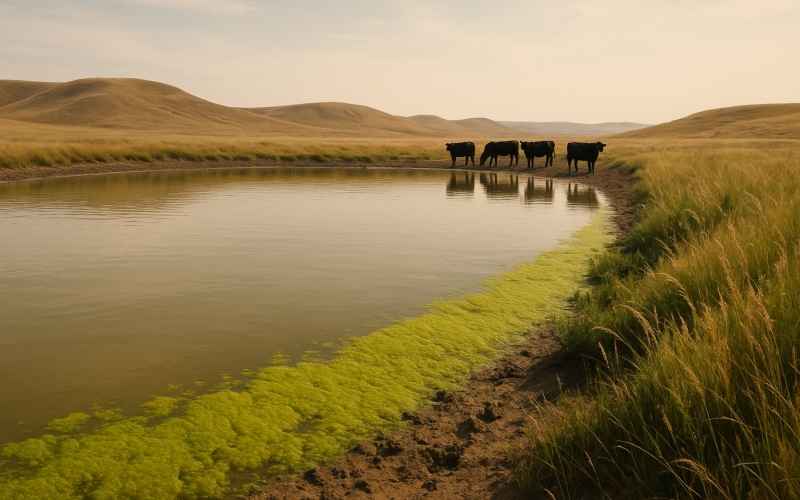
Reservoirs and spring developments need their own look. Silt fills a dugout a little every year, and a spring box plugs with sediment and roots. A reservoir that carried the pasture last year might not have the depth to make it through a dry summer this year, and that’s a math problem you want to work out in June, not when the cows have already grazed the grass down around a mud hole.
Know where the water fails first
Every ranch has a soft spot — the highest tank on the pipeline that goes dry first when pressure drops, the shallow well that can’t keep up in heat, the spring that quits in a dry year. You know yours. Set up so you can check those weak points without making a full circle of the place, and think through the backup before you need it: which pasture you’d pull to, whether you’ve got a stock trailer and a nurse tank ready to haul, who you’d call if the pump quits on a Sunday.
None of this is glamorous work, and it’s easy to put off when the hay’s ready and the branding’s barely cleaned up. But water is the one thing on summer range a cow can’t do without for even a day in the heat. Spend the time now, while the tank’s empty and you can get at it, and you buy yourself a summer of driving by full tanks instead of digging out dry ones.