The rush to beat a forecast is what gets most people in trouble at first cutting. You watch a good windrow all week, the clouds build on the Rockies front, and the temptation is to bale a little green rather than lose the crop to rain. Trouble is, hay that goes into the bale too wet doesn’t just sit there. It keeps living. The plant cells respire, bacteria and mold move in, and all that activity throws off heat inside a tight bale where it has nowhere to go.
Most of the time you lose some feed value and end up with a musty, dusty core. Once in a while, in a big stack of wet bales, the heating runs away and you get a barn fire in July from hay you cut in June. It happens every summer somewhere in this state, and it’s almost always avoidable.
Know your moisture before you tie a knot
Dry-down is the whole game. Small square bales generally need to be down around the high teens in moisture before they’re safe to stack tight. Big round and large square bales pack more mass and shed heat slower, so they want to be drier still, closer to the mid-teens, before you wrap them up and pile them. The bigger and denser the package, the less margin you have.
Guessing by feel is how people get burned, sometimes literally. A cheap probe-type moisture tester that reads off the baler or off a stabbed bale is worth its price the first cutting you own it. Twist a handful of stems from the middle of the windrow, not the top that’s already crisped in the sun. The stems dry slower than the leaves, and the stem is where the water hides. If the leaves shatter but the stems still bend and feel cool, you’re not there yet.
Alfalfa complicates this. You want to bale it with enough moisture that the leaves stay on instead of shattering into dust, but not so wet that the stems ferment. That’s a narrow window, and it usually lands in the early morning or evening when a little dew has come back onto the leaf. Learning to read that window on your own ground is worth more than any calendar date.
What heating does inside the stack
Fresh-baled hay will always warm some in the first few days. That’s normal. What you’re watching for is whether it climbs and keeps climbing. Bales that settle back down after a week are fine. Bales that keep getting hotter are burning up feed and heading somewhere bad.
You can monitor it without fancy gear. Drive a length of pipe or a long compost thermometer into the core of a few bales in the middle of the stack, where heat builds worst. Check them for the first couple of weeks. As a rough guide, once a stack pushes past about 150 degrees in the core, it’s actively cooking and you should start pulling bales apart to let heat escape. Higher than that and you’re into territory where pockets can ignite on their own, and opening the stack in the wrong way feeds it air. If you ever smell a sharp, caramel or tobacco odor, or see steam or scorched spots, treat it as an emergency and don’t climb up on a stack that may have burned-out voids underneath.
Give yourself outs when the weather won’t cooperate
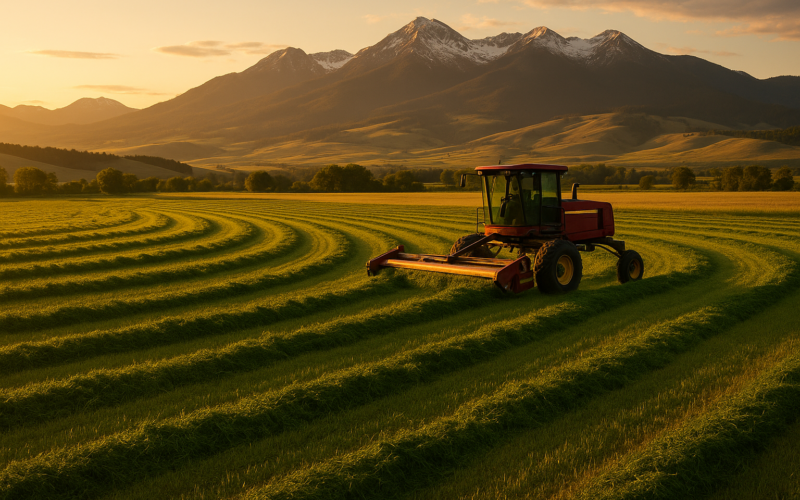
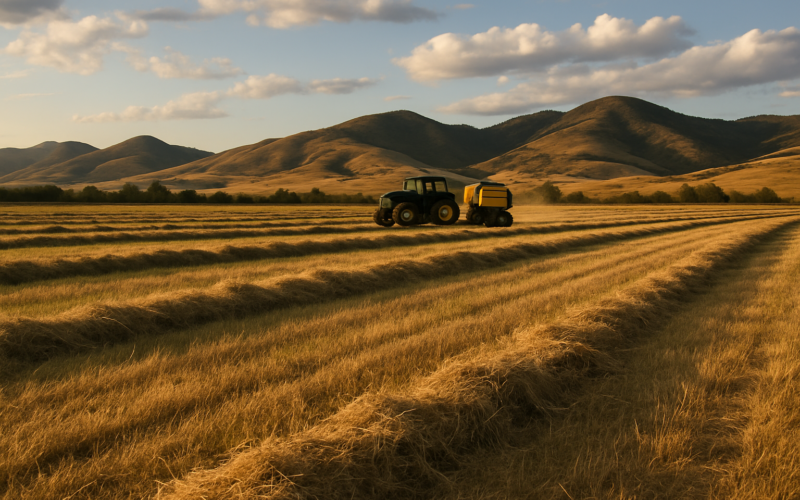
Sometimes the hay just won’t dry and rain is coming anyway. You’ve got a few honest options. A hay preservative, usually a buffered propionic acid product applied at baling, lets you put up hay a few points wetter without the mold, and it’s a standard tool for a reason. Wide windrows dry faster than narrow ropes because more surface catches sun and wind, so set your swather to lay it out if drying is your bottleneck. A tedder or rake to turn the windrow can knock a day off dry-down, though rough handling costs alfalfa leaves.
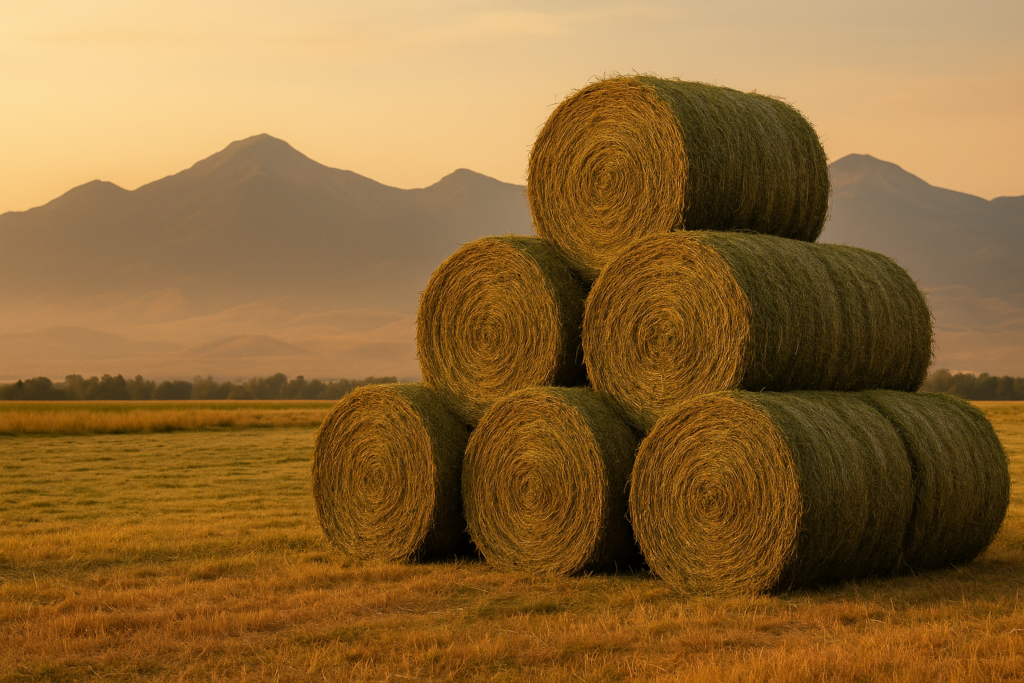
When you do stack borderline hay, don’t bury it. Stack it looser, keep the piles smaller, leave air space, and set it where you can get to it and watch it. Keep the greenest, wettest bales separate from the good dry stuff so one hot batch doesn’t take the whole winter’s feed with it. And don’t stack marginal hay tight against a barn wall or up under a shed you can’t afford to lose.
First cutting is the biggest tonnage most Montana places will put up all year. It’s worth an extra day of standing hay, or a jug of preservative, to make sure the feed you sweated over is still there in February, and that the stackyard is too.