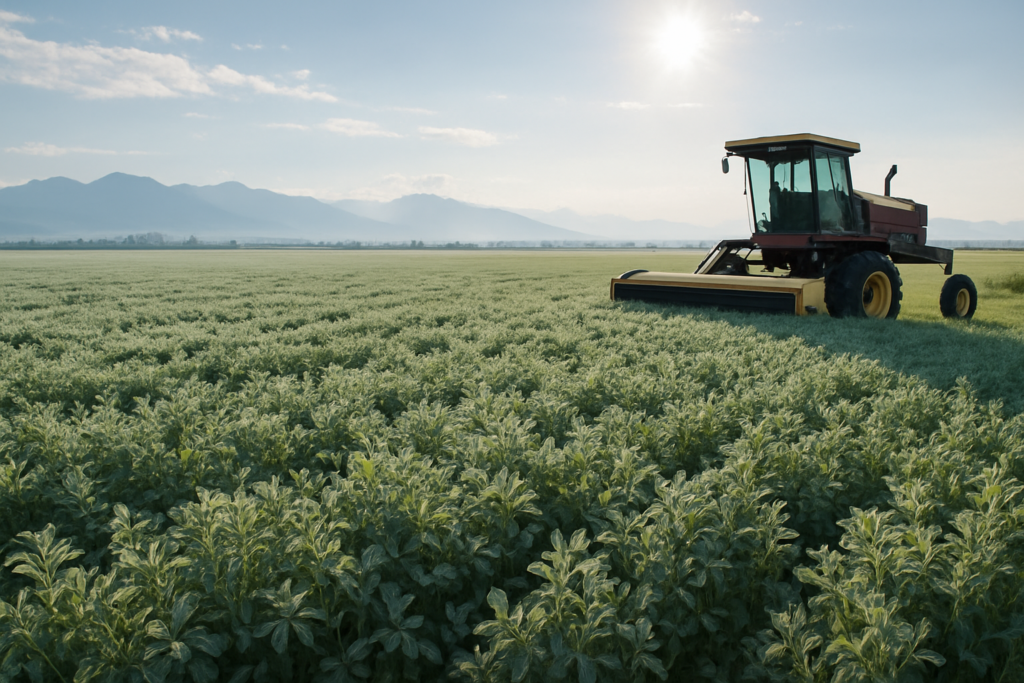
You drive past the alfalfa in early June, see it a little short, and decide to give it another week to bulk up. That week is exactly what alfalfa weevil is counting on. By the time the field looks ready to swath, the larvae have already worked the top third of the plant over, and the leaves that carry most of the feed value are gone.
It’s easy to miss because the damage happens from the top down and from a distance the field still looks green. Get out and walk it, though, and you’ll see the tips are ragged and skeletonized, chewed down to lacework. When a lot of stems are hit, the whole stand takes on a grayish, frosted cast, like somebody ran a light burn across the top. That color change is usually the first thing a producer notices from the truck, and by then you’re already behind.
Know what you’re looking for
The adult weevil is a small, dull brown snout beetle that overwinters in field trash and fencerows. It moves back into the alfalfa when things warm up and lays eggs in the stems. The trouble comes from the larvae. They’re pale green with a white stripe down the back and a shiny black head, and they curl up when you bump them. Early on they’re tiny and hard to spot, feeding down inside the folded tip leaves. As they grow they move out and start stripping whole leaves.
The way to scout is simple and worth the twenty minutes. Walk into the field, pick stems from several spots, and hold each one over a light-colored bucket. Rap it hard so the larvae drop off, and look at the tip growth while you’re at it. If you’re finding larvae on most of the stems and the tips are chewed up before the crop is anywhere near cutting maturity, you’ve got a problem building. One or two larvae in a whole handful is background noise. A larva or more on nearly every stem, with visible tip feeding, is telling you to move.
Cutting is your first and best tool
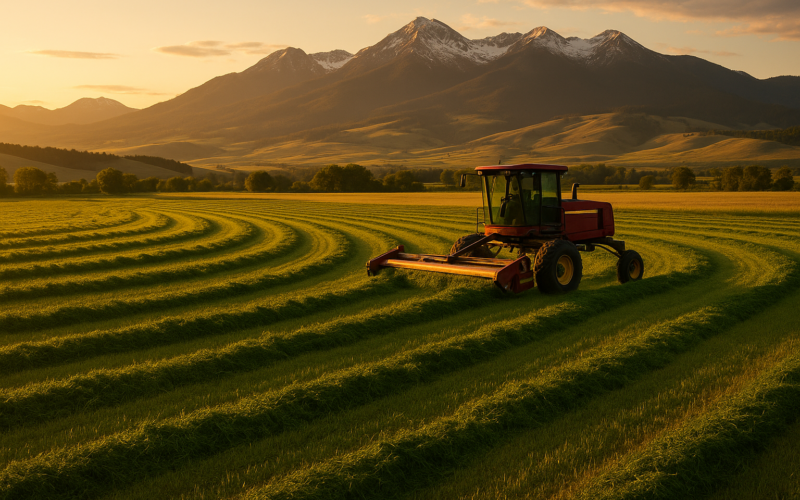
The good news is that a well-timed first cutting is one of the most effective controls you have, and you were going to make that cutting anyway. Swathing pulls the food out from under the larvae and drops them into hot, exposed windrows and stubble where a lot of them cook or starve. If the crop is close to cutting stage and the weevil is chewing on it, the answer is often to just cut a few days early rather than reach for a sprayer. You give up a little tonnage to save the quality that’s left in the leaves.
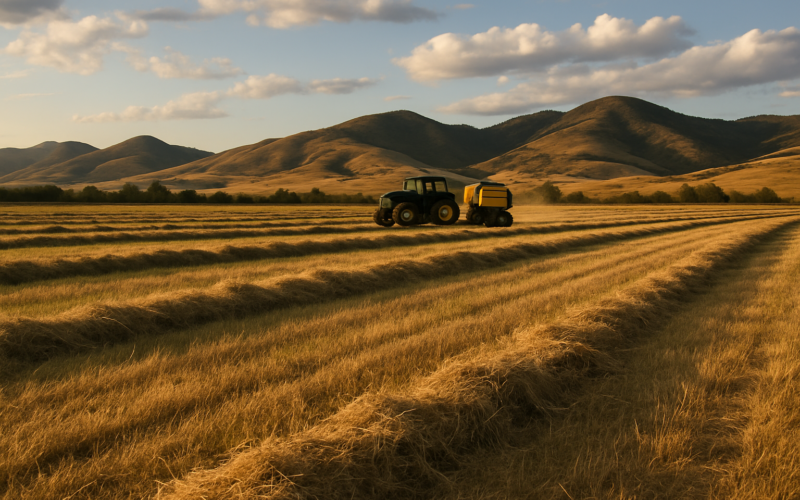
Where cutting doesn’t solve it by itself is the regrowth. After you bale, get back out and check the new shoots along the stubble. Surviving larvae will keep feeding on that green-up, and if there are enough of them they’ll stall the second cutting before it gets started. A stand that’s slow and yellow to come back after first cutting, when moisture is fine, is often weevil holding it down. That’s the time an insecticide can pay, because you’re protecting the whole rest of the season’s growth.
If you do decide to spray a heavy infestation before cutting, mind the pre-harvest interval on whatever product you use and read it against how many days out you actually are from swathing. Cutting early and spraying the same field a few days apart is a good way to blow a label restriction. Most years the cleaner play is to let the swather do the work and save the chemical for the regrowth if it needs it.
Why the first cutting is the one that matters
Weevil pressure tends to be worst in first cutting because that’s when the overwintered population lines up with the tender early growth. Later cuttings usually get some help from parasitic wasps that build up through the summer and knock the numbers down on their own. That’s another reason not to be quick with the sprayer on a whole field if you can time your cutting instead — you keep those beneficials working for you the rest of the year.
The stands that get burned worst are almost always the ones somebody let ride an extra week hoping for more bulk. In a cool, slow spring the alfalfa grows at a crawl while the weevil keeps eating at its own pace, and the math turns against you fast. Walk the field, shake a few stems into a bucket, and let what you find on the tips decide when the swather goes, not the calendar.