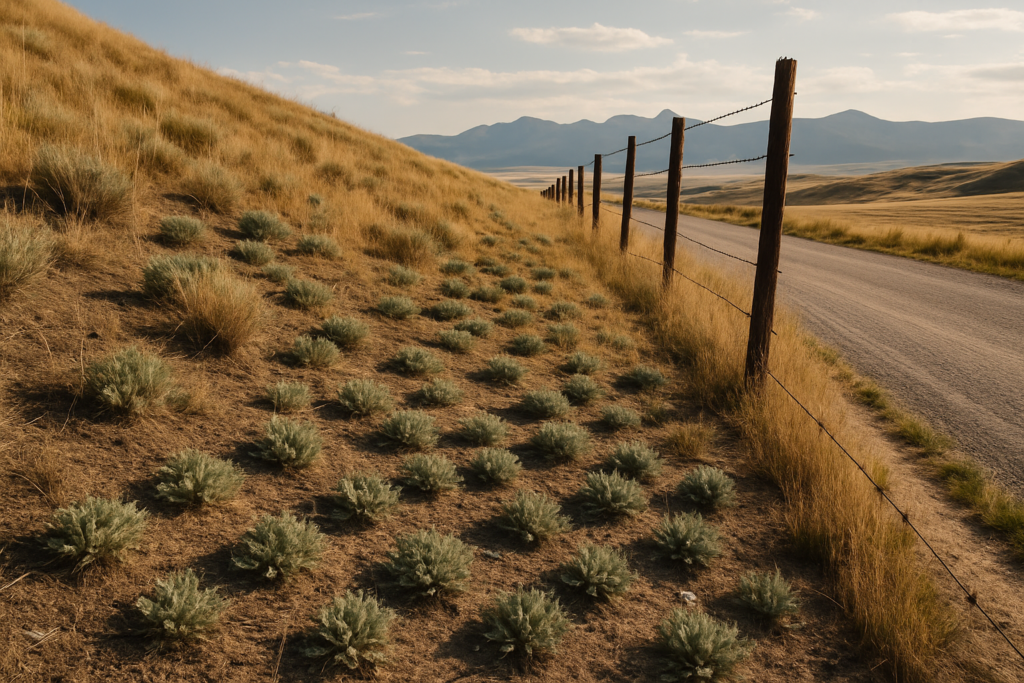
Drive any gravel road in western Montana this month and you’ll see it starting — that gray-green rosette hugging the ground on the south-facing cutbanks, the disturbed spots along the fence, the corner where the cattle always loaf. Spotted knapweed doesn’t wait for good ground. It takes the thin, dry, beat-up country first, and once it owns a hillside it’s hard to get back.
June is the month it’s still cheap to deal with. Knapweed spends its first year as a rosette and comes back the second year to bolt, flower, and throw seed. A single plant can put out thousands of seeds that stay alive in the soil for years. Kill it before the purple bloom shows in July and you’re spending a little herbicide on a small target. Wait until the whole slope is flowering and you’re buying chemical by the acre and fighting a seed bank that’ll haunt you long after.
Hit it while it’s small and growing
Timing matters more than most people give it credit for. Knapweed is easiest to kill in the rosette to early-bolt stage in spring and early summer, and again in fall when the plant is pulling nutrients back down into the root. Right now the plant is actively growing and moving product to the roots, so a foliar spray gets carried where it needs to go. Once it locks up and flowers in the heat of July, the same spray does less and you’ve already let it set seed.
Several products work on knapweed and on leafy spurge, and the label tells you the rate, the timing, and the grazing and haying restrictions. Read it. Some have a waiting period before you can turn cattle back on, and a few restrict how you handle treated forage. If you’re spraying near water, in a hay meadow, or on a leased place, know what you’re allowed to use before you fill the tank. Your county weed district and the local Extension office can point you at what’s cleared for your situation, and both deal with these weeds every single day.
Spot spraying makes sense while the infestation is still patchy. A backpack sprayer, an ATV boom, or a hand wand hits the scattered plants along the road and the fence without dousing the whole pasture. Once it’s a solid stand you’re into broadcast work, and that’s a bigger bill.
Leafy spurge is a different animal
Spurge greens up early and shows that yellow-green flower bract in late spring and June. Where knapweed is a taproot you can hit and kill, spurge runs a deep, spreading root system that laughs at a single spray. One pass rarely gets it. You’re looking at repeated treatments over years, and even then chemical alone on rough, brushy, or steep ground is a losing proposition.
That’s where the flea beetles earn their keep. The little brown Aphthona beetles feed on spurge and their larvae work the roots, and once a colony gets established they’ll knock a stand back on country you can’t spray or won’t want to. They’re not overnight magic — it takes a few seasons for a release to build up — but on the big, broken drainages where spurge loves to live, they do work you can’t do with a sprayer. Sheep and goats will graze spurge too, and running them on it does real damage to the plant while turning a weed into a little bit of gain.
The grass is your best weed control
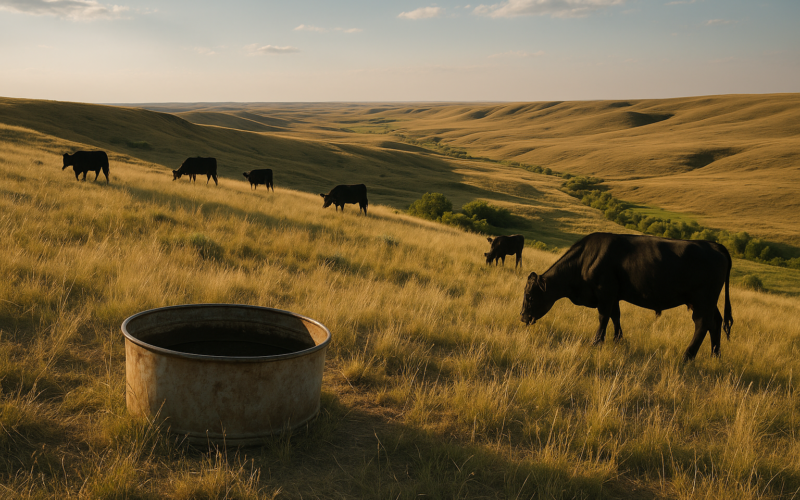
Here’s the part that’s easy to skip. Knapweed and spurge move into ground where the grass has already been weakened. Overgraze a hillside every June, hammer the same water and salt corners year after year, and you’re rolling out the welcome mat. A vigorous stand of native grass with a healthy root system competes for the same water and light the weeds want, and it’s the cheapest defense you’ve got.
So the spray and the beetles are only half the job. Move the salt off the beat-up ground, spread the cattle out, give the good country enough rest to hold its own. A weed patch is often the range telling you something about how it’s been grazed.
Walk your worst spots this month — the roads, the loafing corners, the old corrals, the trailheads on the forest allotment where seed rides in on a truck. Mark what you find, plan the treatment while the plants are small, and get the label figured out before you spray. The knapweed you tackle as a rosette in June is a chore. The solid purple slope you let go until August is a project you’ll be at for years.