Every June a few cows die on summer range in Montana and never show a sick day beforehand. You ride up on one stiff and bloated at the edge of a draw, no wounds, no sign of a fight, and the grass around her chewed short. Larkspur does that. It’s one of the few plants on a mountain allotment that can take a full-grown cow in an afternoon, and it does its worst damage in the same weeks you’re trailing pairs uphill onto fresh feed.
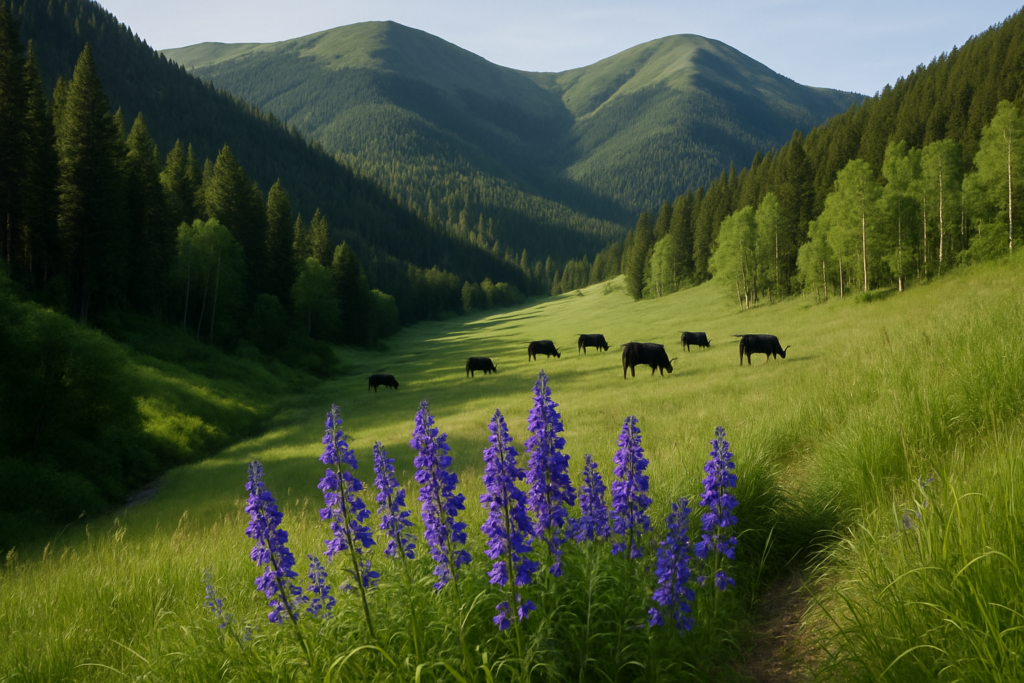
Two kinds matter here. Low larkspur comes early on the foothills and open benches, greens up ahead of the good grass, and is usually gone by midsummer. Tall larkspur lives higher, on the deeper, moister soils of north slopes, aspen pockets, and along mountain draws, and it hangs on later into the summer. Both carry the same class of alkaloids that jam up the signal between nerve and muscle. Cattle are the ones that pay. Sheep can eat a surprising amount of it, and horses fall somewhere in between, but a cow is built to die from this plant.
Why the timing catches you
The trap is that larkspur is greenest and leafiest right when the rest of the range is still short. A cow turned out onto thin early feed goes looking for anything with size and moisture to it, and a patch of larkspur standing a foot tall looks like a meal. She can put away a lethal dose in a short stretch of grazing without ever acting hungry for it.
Palatability and toxicity don’t line up neatly. Early growth is loaded with alkaloid but cattle don’t always hit it hard. As the plant moves into bud and flower, cattle tend to eat more of it, and that’s often when the wrecks pile up. Once it sets seed, the pods are extremely concentrated, so a late-season patch that’s gone to pod is still dangerous even though it looks dried out and past its prime.
Watch the weather, too. A cold, wet spring pushes everything back and can stack larkspur’s dangerous window right on top of your turnout. A warm, dry year burns the low larkspur off early and shortens the risk, but tall larkspur in a shaded draw stays green long after the ridges have cured.
What it does to a cow
The alkaloids shut down the muscles, including the ones she needs to stand and to belch. An affected cow gets weak and trembly, stands with her legs spread, staggers, and goes down. Once she’s on her side she bloats, because she can’t burp off the gas, and the bloat finishes what the poison started. Stress and exertion make it worse. A cow that’s just eaten larkspur and then gets pushed hard, run through a gate, chased by a dog, or spooked by a storm is a lot more likely to die than one left alone. That’s why you’ll sometimes lose several at once after moving cattle through a larkspur patch on a hot day.
There’s no barn-side antidote you can count on out on the mountain. By the time you find her, the fight is usually over. That makes this a plant you manage against instead of treat.
How to keep the loss down
Know your country. Larkspur grows in the same spots year after year, so you already know which draws and slopes hold it. Walk or ride those before you turn out and see what stage the plant is in.
- Delay grazing the worst larkspur ground until the plant is past its most dangerous stage, or graze those pastures early with the low larkspur before it really comes on, then move off.
- Keep cattle on good grass. A cow with plenty to eat is far less likely to load up on larkspur than one turned onto short feed.
- Don’t stress cattle in or near a larkspur patch. Trail them through in the cool of the day, move slow, and keep the dog off. Give them time to settle before you push.
- Run sheep ahead of cattle where you can. They’ll knock the larkspur down without much risk to themselves.
- Spot-spray dense patches. Herbicide on a manageable stand pays for itself the first year it saves a cow, and it beats finding out in the fall how many you’re short.
You won’t clear larkspur off a mountain allotment, and you don’t need to. Know where it grows, watch the stage, and keep your cattle fed and calm when they’re on it. That’s most of the battle right there.