By the middle of June the creeks are coming off their peak, the meadows are stooling up, and whether you flood-irrigate a wild hay bottom or run wheel lines on a stand of orchardgrass, this is the stretch that decides what you’ll be stacking come August. Water is doing more work now than at any other point in the season. It’s also the easiest to waste. A head that runs down the ditch and off the end of the field never grew a pound of feed, and in a dry year you don’t get a second crack at it.
Most of us learned to irrigate by watching whoever ran the place before us. That’s not a bad way to learn, but it also means a lot of ground gets watered the same way it did forty years ago, whether or not the water’s there to do it.
Move Water to the Ground That Pays
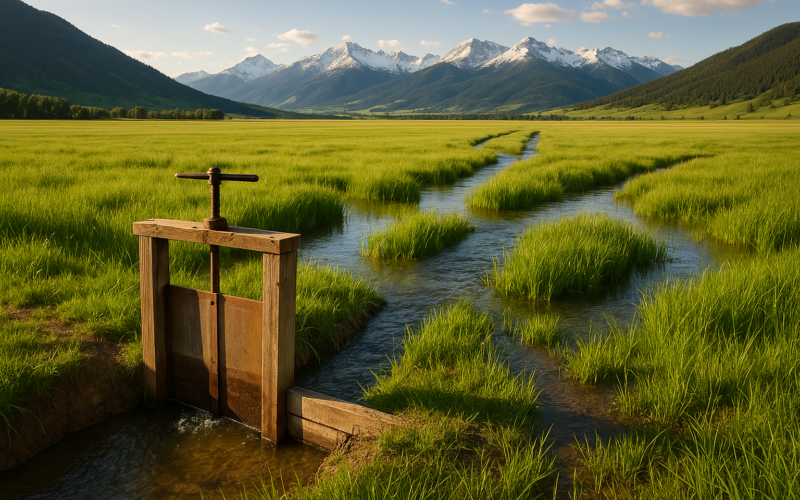
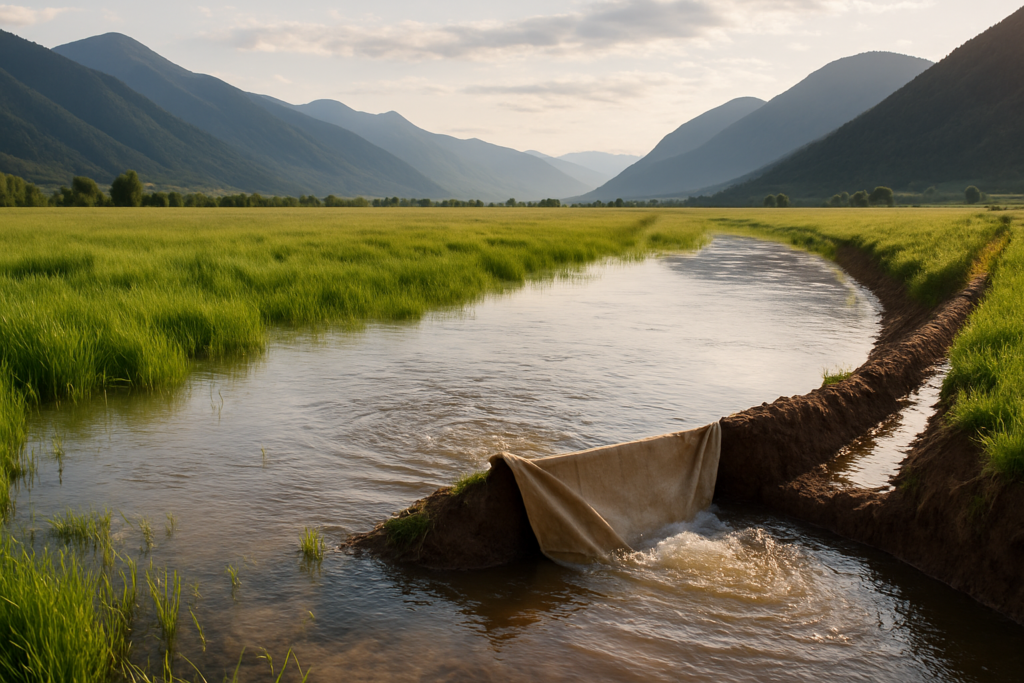
On a flood meadow, the temptation is to open the head gate, throw a few dams, and let it spread wherever gravity takes it. Trouble is, the low ground drinks first and holds water long after it’s had enough, while the shoulders and the high corners stay dry. You end up with sour, boggy spots that grow sedge and rush, and thin high ground that quits early. Walk the field before you set water and look at where it’s pooling. A dam moved twenty feet, or a spreader ditch cleaned out so it actually carries, will pull water onto ground that’s been going dry for years.
Wild flooding works best when you keep the sheet moving. Standing water past a couple of days starts to hurt the stand instead of helping it, especially on the cooler valley bottoms where the ground was already saturated coming out of runoff. The goal is to wet the root zone and move on, not to build a pond.
If you’re on wheel lines or hand lines, the June job is matching your set times to what the soil will actually take. Heavy meadow soil holds water and needs longer intervals between sets. Lighter, gravelly ground down along the river bench takes water fast and gives it back just as quick, so short, frequent sets beat one long soaking that runs past the roots and disappears.
Watch the Tail End
Tail water is the clearest sign you’re pushing more down a strip than the ground can absorb. A little runoff at the bottom of a flood set is normal, and on some systems that tail water feeds the next field or the return ditch. But if you’ve got a steady stream leaving the field all day, you’re watering the county road ditch and paying for it in the water you don’t have later. Cut the head back, split it across more of the field, or shorten the run.
Same idea on sprinklers. If water is standing in the wheel tracks and running off before the set is done, the ground already had enough an hour ago. You’re not adding moisture, you’re compacting soil and washing fertilizer downhill.
Keep One Eye on the Second Crop
How you water now sets up the regrowth after first cutting. A meadow that got even, timely water in June comes back strong for a second cut or fall grazing. One that was flooded hard and left standing tends to lag, and the wet spots turn to weeds. If you plan to graze the aftermath, don’t drown it right up to haying, either, or you’ll be cutting through mud and rutting the field with the swather.
Water rights matter here too, and June is when they get tested. In a dry year the junior rights on a stream start coming up short right about now, and the call can come sooner than you’d like. If your priority date is late, plan around it. Get your first good irrigation on before the water tightens up, and set your cutting schedule so you’re not counting on a late June head that may not show.
None of this takes new equipment. It takes walking the field with a shovel, watching where the water actually goes, and moving it before it goes where it does you no good. The difference between a field that quits in July and one that carries a second crop is usually just how the water got set in June.